Effectiveness of Household Fabrics in Preventing COVID-19 Spread
Introduction to Mask Wearing Debate
The discussion surrounding mask wearing has intensified during the global pandemic caused by SARS-CoV-2. Critics often highlight the insufficient high-quality evidence specifically assessing the impact of masks on COVID-19 transmission. Conducting experimental research in this context poses ethical challenges, as it would likely involve increasing the risk of infection for participants. Consequently, research efforts have shifted towards understanding how and why masks, including cloth face coverings, mitigate the virus’s spread, rather than proving their effectiveness through direct experimentation.
Study Overview
A recent study published in the journal Extreme Mechanics Letters aims to address this gap. The focus of the research is to evaluate the effectiveness of various fabrics in blocking large, high-velocity droplets. It is widely accepted that COVID-19 primarily spreads through larger droplets (greater than 10 µm in diameter) rather than smaller aerosol particles, which typically measure between 10 nm and 5-10 µm. While aerosol droplets can linger in the air over extended distances, larger droplets settle quickly. Thus, a fabric mask capable of effectively blocking these larger droplets can significantly reduce the transmission risk from infected individuals.
Considerations for Mask Fabric
When assessing the optimal fabric for masks, droplet-blocking efficiency is just one factor. Breathability is equally important—not only for user comfort but also for mask effectiveness. If a mask is too cumbersome, air may bypass the fabric, leading to increased leakage. Therefore, the researchers in this study considered the suitability of mask materials as a balance between breathability and droplet-blocking capabilities.
Experimental Methodology
To determine droplet-blocking efficiency, the researchers conducted a mechanistic experiment. A standard metered dose inhaler was utilized to simulate the large droplets released during activities like speaking, sneezing, or coughing. The inhaler contained a suspension of fluorescent beads that mimic the size of the SARS-CoV-2 virus (70-100 nm in diameter). Each inhaler dose represented how the virus might be emitted by an infectious person, with the beads suspended in large droplets.
A petri dish was positioned opposite the inhaler to capture the expelled droplets, allowing for the observation of the fluorescent beads. Various fabrics were placed between the inhaler and the petri dish to assess their blocking capabilities. The distance from the inhaler to the fabric was adjusted to simulate droplet speeds corresponding to both coughing/sneezing and talking.
Breathability was tested using a plug flow tube. Different fabric samples were placed over one end of the tube, and pressurized air was forced through. This generated a pressure differential, allowing for the measurement of airflow changes through the fabric based on variations in pressure.
Results on Fabric Effectiveness
The researchers analyzed a range of household fabrics, including bed sheets, t-shirts, dishcloths, and shirts. They also explored the effects of layering fabrics and compared them with medical masks. Overall, most fabrics demonstrated a strong ability to block droplets, with median values ranging from 71.7% blockage by new quilt cloth to 98.7% by a used woven shirt. When three layers of fabric were applied, the effectiveness increased to 98.9%. Even two layers of a permeable fabric like t-shirt cloth blocked over 94% of droplets.
Breathability was found to be positively correlated with the fabric’s porosity; more porous materials allowed for greater airflow. However, porosity inversely affected blocking efficiency, underscoring the trade-off between these two essential attributes.
Conclusions and Cautions
This study clearly illustrates the mechanisms by which fabric face coverings can help prevent the spread of COVID-19. The findings suggest that various household fabrics can achieve a high level of droplet blocking. Choosing less porous materials and layering fabrics are effective strategies to enhance cloth mask performance.
However, the authors note an important caveat. The study primarily focuses on larger droplet transmission, which is recognized as the primary transmission route for SARS-CoV-2. Evidence suggests that under certain conditions, smaller aerosolized droplets may also contribute to transmission. Previous studies indicate that fabric masks might offer some level of protection against these smaller particles. Future research is necessary to ascertain the frequency of aerosol transmission in COVID-19 cases and to evaluate how effective fabric masks are in preventing such transmission.
Written by Michael McCarthy
1. Aydin O, Emon B, Cheng S, Hong L, Chamorro LP, Saif MTA. Performance of fabrics for home-made masks against the spread of COVID-19 through droplets: A quantitative mechanistic study. Extreme Mechanics Letters. 2020;40:100924.
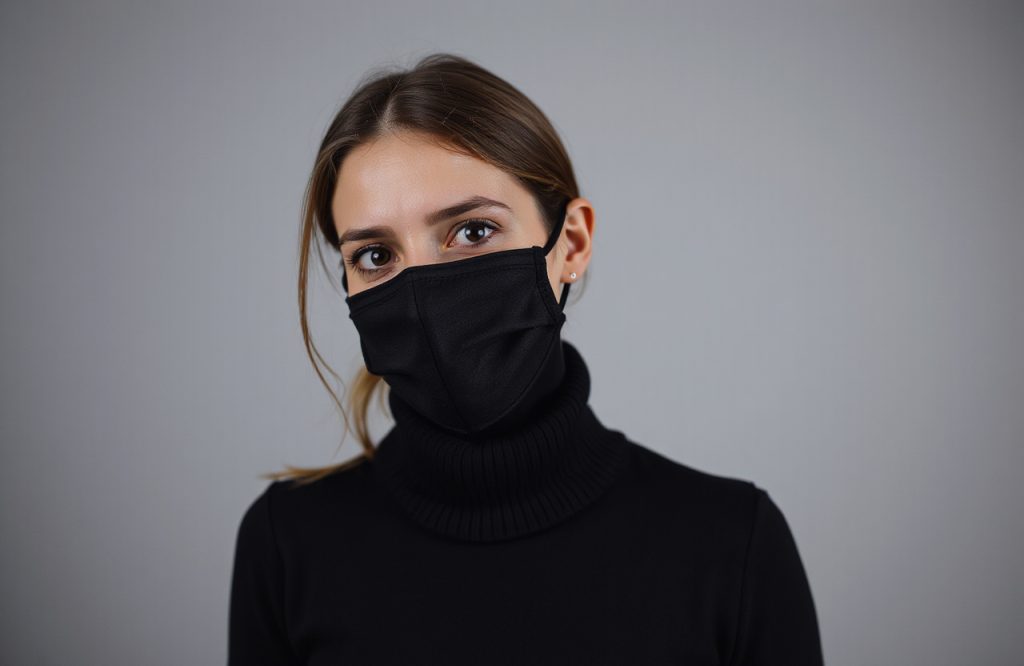
Image by Innviertlerin from Pixabay