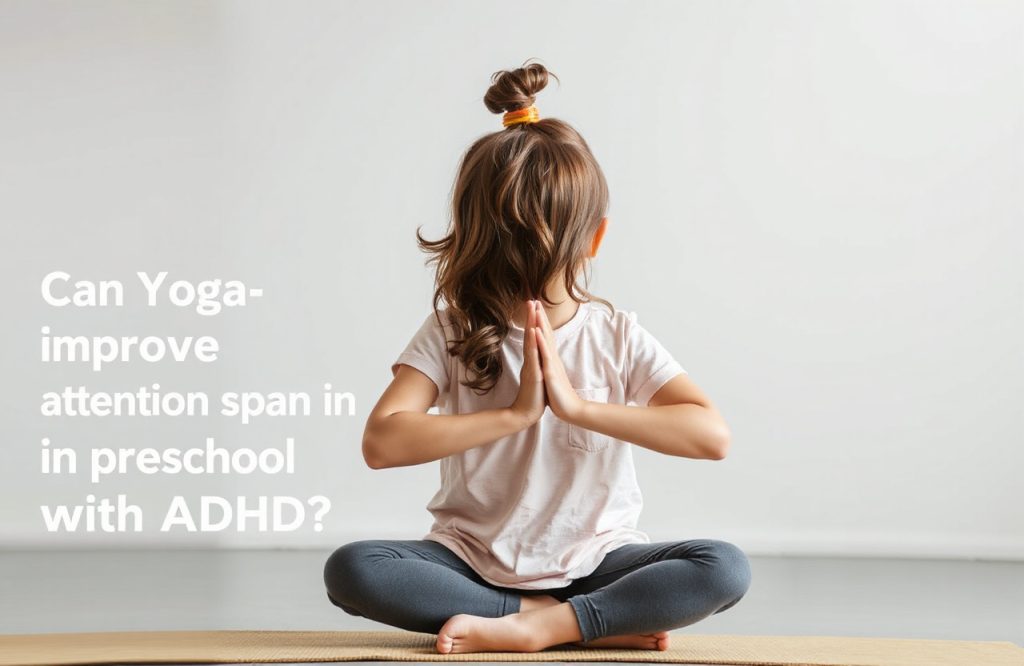
The Impact of Yoga on Preschoolers with ADHD
Understanding ADHD in Children
A recent study explored the effects of yoga on a small cohort of preschoolers to assess its influence on attention span in children diagnosed with attention deficit hyperactivity disorder (ADHD). ADHD affects approximately 7% of children and adolescents, characterized by symptoms such as impulsivity, hyperactivity, and inattention. A significant challenge faced by individuals with ADHD is related to decision-making and self-regulation. Poor outcomes for 70-80% of these children may include criminal behavior, difficulties in maintaining friendships, occupational challenges, and substance use. Mindfulness practices, including yoga, have been recognized as beneficial complements in the treatment of ADHD for school-aged children.
The Role of Yoga
Yoga is a holistic exercise form that integrates postures, breathing techniques, and movement, promoting self-regulation of both mind and body. This practice merges physical activity with mindfulness. Previous studies have indicated that school-aged children with ADHD who engage in yoga experience substantial improvements in self-regulation. Additionally, yoga has been shown to influence heart rate variability, a metric associated with attentional control.
Study Overview
A recent research study conducted in the United States aimed to evaluate the efficacy of yoga in preschool-aged children with ADHD. The study had two primary objectives: to assess the impact of a six-week yoga program on behavioral symptoms, attentional control, and heart rate variability, and to investigate the long-term retention of intervention effects. The findings were published in the Journal of Developmental and Behavioral Pediatrics.
The study employed a randomized waitlist-controlled trial format, focusing on preschoolers exhibiting four or more ADHD symptoms as measured by the ADHD Rating Scale-IV Preschool Version. Participants aged three to five years were recruited from California, with non-English speakers and those with medical limitations preventing yoga participation excluded from the study. Researchers utilized the Kinder Test of Attention Performance (KiTAP) for measuring attention and heart rate variability as a physiological gauge of self-regulation. Interviews, focus groups, and questionnaires were conducted with teachers, parents, and yoga instructors following each six-week intervention period.
Yoga Practice at Home and School
To optimize the yoga experience, sessions were held in familiar and comfortable settings, either at home or in school. The first six weeks involved children in the yoga group practicing at both locations. The control group, initially informed of their waitlist status, had no exposure to yoga and continued with standard class and home routines. After the initial six weeks, the groups exchanged their routines, allowing the control group to practice yoga in their regular classrooms while the first group continued in a separate classroom.
Results and Improvements in Attention
Data collection occurred at four intervals: prior to yoga, after six weeks, after twelve weeks, and three months later. Parent and teacher rating questionnaires indicated overall satisfaction with the intervention. Notably, parents reported modest improvements in attention among children participating in yoga, with objective tests also reflecting some enhancements in attention, albeit not in hyperactivity. Teacher assessments yielded less conclusive results, as measuring subtle improvements in a busy classroom can be challenging. The study’s findings suggest that yoga is more effective when practiced in the classroom setting. These results align with previous research indicating improvements on parent rating scales, though teacher ratings were less pronounced.
Conclusion and Future Research
One of the study’s strengths is its randomized design. Researchers concluded that yoga positively affects parent ratings of inattention and other symptoms in children who initially exhibited a higher number of ADHD symptoms. However, no significant changes in heart rate variability were observed post-yoga, potentially due to the study’s limited duration. Overall, yoga emerged as a feasible and well-received intervention among parents and teachers of children with ADHD. Further research is essential to establish whether yoga can serve as an effective supplementary intervention for enhancing attention in children with ADHD.
Reference
Cohen, S. C., Harvey, D. J., Shields, R. H., Shields, G. S., Rashedi, R. N., Tancredi, D. J., … & Schweitzer, J. B. (2018). Effects of Yoga on Attention, Impulsivity, and Hyperactivity in Preschool-Aged Children with Attention-Deficit Hyperactivity Disorder Symptoms. Journal of Developmental and Behavioral Pediatrics: JDBP.