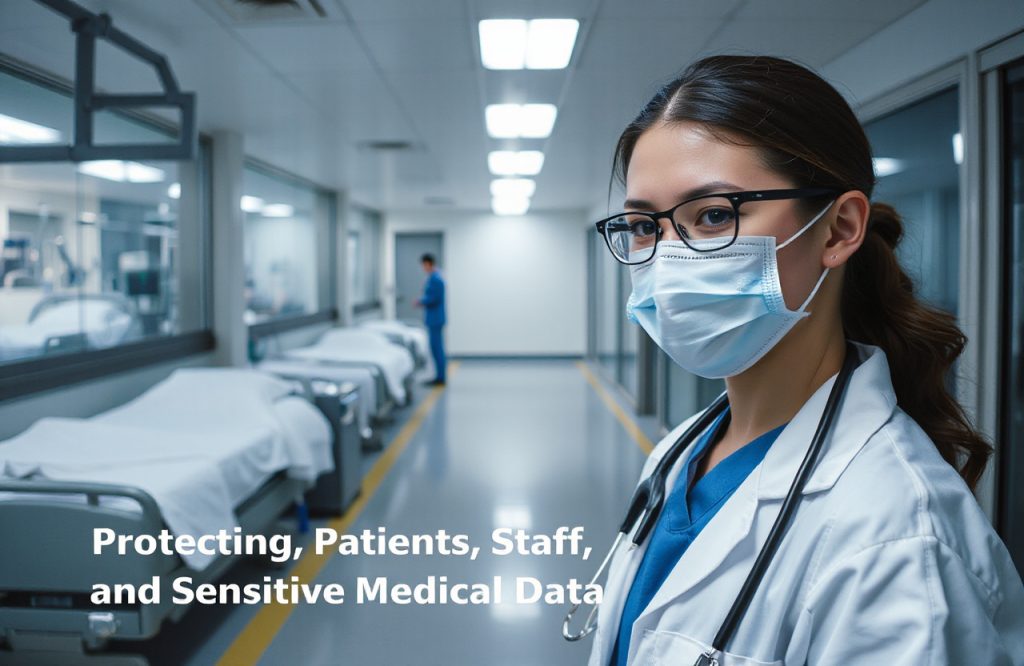
The Importance of Security in Hospitals
Challenges in Hospital Environments
Hospitals represent some of the most complex environments in today’s world. They operate continuously to treat individuals with life-threatening health conditions, accommodating thousands of patients, family members, and staff daily. Unlike many workplaces, hospitals must remain open and accessible while also protecting vulnerable patients, expensive medical equipment, restricted medications, and sensitive medical records.
Rising Security Challenges
Hospital staff face increasing security challenges, including a rise in workplace violence, data breaches involving patient records, and the need to respond effectively to crises like pandemics and natural disasters. Consequently, security measures have evolved from basic security guards and cameras to comprehensive, integrated systems that incorporate intelligent surveillance, controlled access, cybersecurity, emergency response coordination, and staff training.
Core Components of a Hospital Security System
The Need for Enhanced Security
Hospitals face unique safety risks compared to other public institutions, necessitating stronger and smarter security systems. The healthcare sector experiences the highest rate of workplace violence, particularly in emergency departments where patients may exhibit unsafe behaviors.
Protecting At-Risk Patients
Hospitals care for many at-risk patients who cannot ensure their own safety, including children, the elderly, and those with mental or physical impairments. Proactive measures are essential to safeguard these individuals.
Improving Patient and Employee Safety
Implementing best security practices enhances patient safety while ensuring dignity and quality of care are maintained.
Preventing Theft and Loss of Assets
Hospitals utilize expensive medical equipment and pharmaceuticals. Theft of these assets can disrupt operations and compromise patient safety. Security systems help monitor supply rooms and pharmacies to prevent loss and ensure accountability.
Protecting Sensitive Patient Data
Health records contain sensitive information that cybercriminals target. Hospitals must secure patient data to comply with privacy laws and maintain patient trust.
Key Elements of a Modern Hospital Security System
Technology and Procedures
Effective hospital security integrates technology with procedural protocols. Electronic security systems can detect unauthorized access, aggressive behaviors, loitering, and unattended items, sending real-time alerts to security teams for swift action.
Controlled Access to Sensitive Areas
Hospitals have restricted areas, including operating rooms and pharmacies, which must remain secure. Modern access control solutions utilize badges, biometrics, and other technologies to manage entry, while access logs help identify trends and anomalies.
Visitor Management Systems
With high visitor traffic, hospitals require systems to track and monitor access. Digital kiosks facilitate check-ins, generate temporary badges, and verify appointments, ensuring visitor management enhances security.
Data and Cybersecurity Protection
Hospital security extends into the digital realm, necessitating robust data protection measures such as encryption, secure authentication, and monitoring tools. Staff training is crucial for recognizing cybersecurity threats.
Integrating Security and Emergency Response
Security systems must align with emergency management strategies for effective incident response. An integrated approach facilitates communication between security personnel, medical staff, facility management, and emergency responders.
Balancing Security and Patient Privacy
Hospitals must maintain a balance between security and patient privacy, adhering to laws and ethical principles. Best practices include limiting camera placements and ensuring transparency about surveillance policies.
The Benefits of Modern Hospital Security Systems
Creating Safe Environments
Effective security solutions deter violent behavior and enhance safety for staff and patients, contributing to a safer hospital atmosphere.
Ensuring Quick Response Times
Real-time alerts enable rapid responses to incidents, preventing escalation into more significant threats.
Regulatory Compliance
Implementing security systems aids hospitals in meeting regulatory requirements and preserving patient privacy.
Boosting Patient Confidence
A demonstrated commitment to safety and security increases the sense of security among staff and patients.
Emerging Trends in Hospital Security
AI and Predictive Monitoring
Artificial intelligence enables the analysis of historical data to identify potential risks and implement preventative measures.
No-Touch Access Control Systems
These systems improve security and hygiene, essential in environments where infection prevention is critical.
Conclusion
The complexity and interconnectedness of modern healthcare necessitate effective security measures to protect patients, healthcare workers, and sensitive records. Hospitals must invest in integrated solutions that combine intelligent surveillance, controlled access, and coordinated emergency responses to foster a safe environment for recovery and high-quality care. Moving forward, those hospitals that prioritize modern security infrastructure will be better equipped to handle emerging threats while maintaining trust and operational excellence in delivering compassionate care.