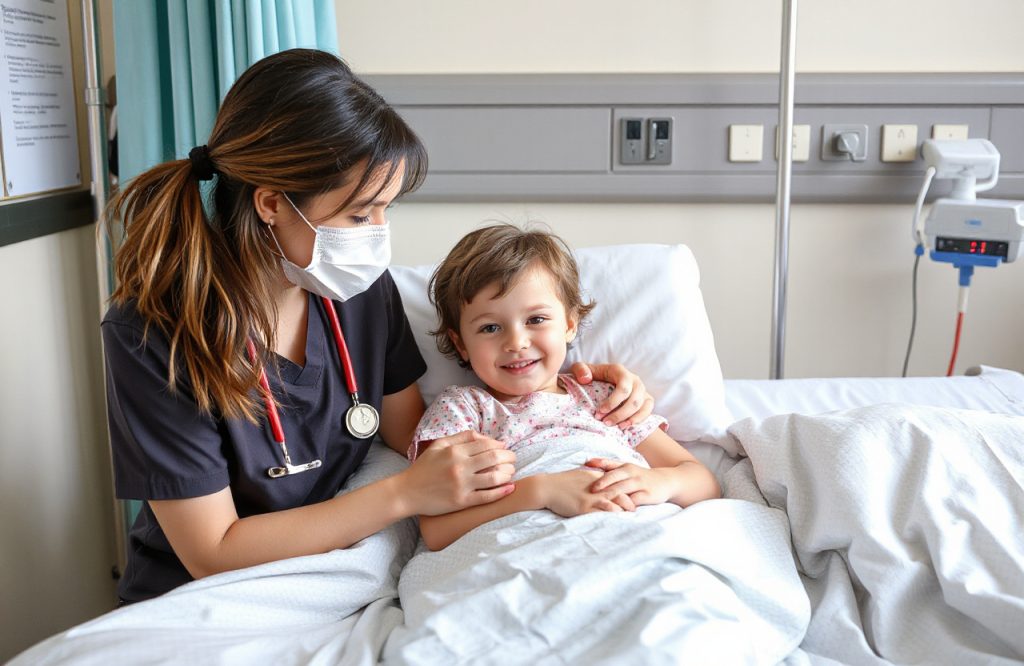
Study Investigates Drug Safety in Pediatric Patients in Mexico
Importance of Drug Safety
A recent study published in BMC Pharmacology and Toxicology has examined drug safety among hospitalized pediatric patients in Mexico. The significance of drug safety is underscored by the increasing global incidents of adverse drug reactions (ADRs), which not only jeopardize patient safety but also incur substantial costs to healthcare systems worldwide. According to the World Health Organization (WHO), ADRs are defined as “any noxious, unintended and undesired effect of a drug which occurs at the dosages used in humans for prophylaxis, diagnosis, or therapy.” The incidence of ADRs rose from an estimated 2.2 million in 1994 to 10 million by 2014. Additionally, drug-related issues contributing to hospital admissions have become more prevalent, with rates reaching up to 28% in the United States, resulting in costs nearing $170 billion annually.
Pediatric Vulnerability to ADRs
Children are particularly vulnerable to ADRs. The WHO Global Individual Case Safety Report database indicates that the rate of ADRs in children aged 0 to 17 years is approximately 7.7%. However, these figures are believed to underestimate the actual incidence of ADRs among children. Some studies have highlighted more than 7,000 serious or fatal ADRs in children under two years of age.
Prescription Dosing in Children
Unique Considerations for Pediatric Dosing
Dosing for children requires careful consideration of various factors, as their physiological immaturity necessitates specific adjustments. Doses must be tailored based on a child’s weight, body surface area, gestational age, and liver and kidney function, among other criteria. Furthermore, much of the existing scientific data on drug safety is derived from studies conducted on adults, leading to a situation where children are often seen as therapeutic orphans due to the lack of age-appropriate safety data.
The Role of Pharmacovigilance
Enhancing Drug Safety Through Monitoring
Intensive pharmacovigilance involves the ongoing monitoring of ADRs throughout the prescribing period, serving as a crucial tool for preventing and identifying both preventable and non-preventable adverse reactions. In pediatric populations, effective pharmacovigilance supports drug safety assessments and enhances ADR detection within hospital settings.
Study Findings
The primary objective of the study was to assess ADRs in hospitalized children at a regional hospital in Mexico, employing the intensive pharmacovigilance (IPV) method to bolster medication safety. The results, which were published in BMC Pharmacology and Toxicology, revealed 19 ADRs among 1,083 hospital admissions. Antibiotics and anti-inflammatory drugs were the most frequently prescribed drug classes, with an approximate ADR incidence of 17 per 1,000 children. Notably, 21% of the ADRs were classified as “preventable,” with the most severe reactions observed including hemolysis and toxic epidermal necrolysis.
Conclusion
The study effectively demonstrated that intensive pharmacovigilance enhances the monitoring of hospitalized pediatric patients, leading to improved detection of drug-related issues and suspected ADRs. This approach allows researchers to identify the frequency and types of drugs associated with ADRs, ultimately contributing to improved drug safety for the pediatric population.
About the Author
Written by Jade Marie Evans, MPharm, Medical Writer.
References
(1) Vázquez-Alvarez.O et al. (2017). Improved drug safety through intensive pharmacovigilance in hospitalized pediatric patients. Available: https://bmcpharmacoltoxicol.biomedcentral.com/articles/10.1186/s40360-017-0186-x. Last accessed 24th Dec 2017.
(2) WHO. (2017). Adverse drug reaction database. Available: http://www.adr-database.com/What%20are%20ADRs.html. Last accessed 24th Dec 2017.