Understanding Spinal Injuries
The Impact of Spinal Injuries
Spinal injuries can be daunting, significantly diminishing a person’s mobility and overall quality of life. Unlike many other types of injuries, the nerve tissue comprising the spinal cord has a slow regeneration rate, and in some cases, it may not regenerate at all. Furthermore, spinal injuries can lead to partial or complete paralysis. This paralysis occurs when the communication pathways between the brain, spinal cord, and the rest of the body become disrupted, resulting in the inability to receive movement signals.
Promising Advances in Treatment
Recent research published in *Nature* offers hope for individuals affected by paralysis, suggesting that walking may once again be possible for some patients.
Innovative Treatments for Spinal Cord Injury
Epidural Electrical Stimulation (EES)
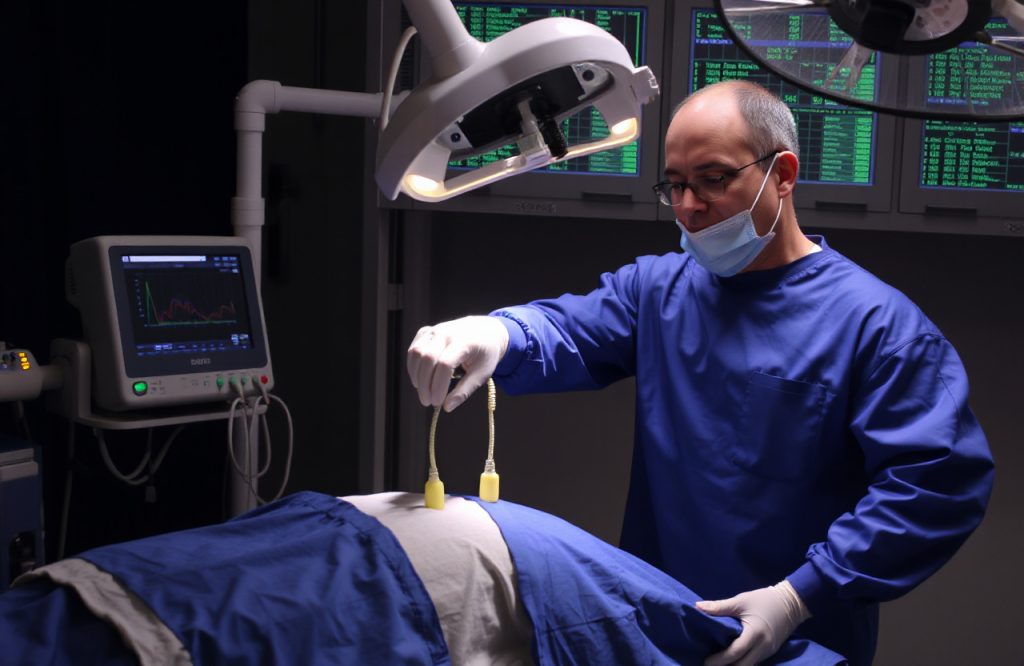
Epidural electrical stimulation (EES) employs small electric currents to stimulate the nerves crucial for walking, primarily located in the lumbar spine, or lower back. EES rehabilitation (EES-R) entails the implantation of a device that mimics the lumbar spine, providing necessary electrical stimulation to the neurons that facilitate walking. This device not only stimulates the nerves but also acts as a physical support system, helping to keep the patient upright and enabling movement.
Clinical Testing of EES-R
To evaluate the effectiveness of the EES-R program, a study involving nine participants with chronic spinal cord injuries was conducted. Participants received stimulation four to five times weekly over a five-month period. Results indicated a gradual yet significant improvement in their ability to walk and bear weight. This suggests that electrical stimulation combined with rehabilitation exercises may help remodel the spinal cord, as observed in preliminary studies with mice.
Research on Signal Reorganization in the Spinal Cord
Identifying Key Neuronal Cells
Researchers have pinpointed specific neuronal cells that likely play a crucial role in restoring walking ability following spinal injuries. These “recovery-organizing cells” are interneurons that facilitate the connection between the brain’s signals and the spinal cord. Effective communication from the brain to the spinal cord is essential for muscle coordination and movement actions, such as walking.
Initial Findings from Genetic Sequencing
Early tests and analyses focused on genetic sequencing in mice that had sustained severe spinal cord injuries. Activation of these recovery-organizing cells in mice produced walking recovery results comparable to those observed in patients undergoing EES-R. Conversely, the absence of these cells hindered the ability to regain walking function.
Future Directions in Spinal Injury Recovery Research
Insights from the EES-R Study
The EES-R study represents a significant step forward in understanding the mechanisms that underpin how epidural electrical stimulation can effectively promote recovery after spinal cord injuries. While the study was limited by a small sample size, the findings underscore the necessity for further research into reactivating signals and remodeling spinal cord tissues. The outcomes of the EES-R study offer a ray of hope for individuals living with paralysis, indicating a brighter future ahead.
References
Kathe, C., Skinnider, M.A., Hutson, T.H. et al. The neurons that restore walking after paralysis. Nature. 2022;611:540-547. https://doi.org/10.1038/s41586-022-05385-7