Why understanding disabilities matters
Disability awareness matters because it prevents accidental exclusion and helps create fair, supportive environments in homes, schools, workplaces, and public spaces. Many people only consider disabilities when they meet someone who has one, and even then they may not fully understand the day-to-day challenges involved. Learning about common disability types and how they affect daily function allows you to offer the right support instead of guessing — and that makes activities and interactions easier and more respectful for everyone.
Practical awareness centers on two simple principles: ask about needs, not causes; and offer help in ways that respect the person’s autonomy. If you don’t know what kind of support someone needs, it’s appropriate to ask how their disability affects tasks and whether they would like assistance. Do not ask how the disability happened — that is private information.
Common types of disabilities and how they can affect people
Below are common disability categories and clear, practical notes about how they can affect a person and how to interact respectfully. The descriptions focus on functional impacts and reasonable ways to communicate or provide assistance.
Vision impairment
Vision impairment ranges from partial sight to complete blindness. People with vision impairment may need verbal descriptions of spaces, help navigating unfamiliar areas, or alternative formats for written material (large print, audio). When you meet someone with a vision impairment, always identify yourself and offer assistance; follow their instructions about how they prefer to be helped. If a guide dog is present, do not touch or distract the dog while it is working.
People who are deaf or hard of hearing
Hearing differences include mild difficulties, reliance on hearing aids, lip-reading, use of notes, or sign language. When communicating, face the person and speak clearly; if information is missed, politely ask them whether they prefer repetition, writing, or another method. Maintain eye contact and avoid covering your mouth when speaking if the person lip-reads.
Mental health conditions
Mental health conditions such as depression, anxiety, bipolar disorder, or schizophrenia can affect thinking, emotion regulation, concentration, and energy levels. Medications and symptoms may increase fatigue or reduce the ability to cope with stress. Reducing unnecessary pressure, allowing for rest, and communicating clearly and calmly are helpful approaches.
Intellectual disability
Intellectual disability can affect learning, communication, self-care, and social interaction. Tasks or instructions may take longer to process, and people may benefit from repetition or breaking activities into smaller steps. Treat people with intellectual disabilities with respect and patience; simple, clear language and visual supports often help.
Acquired brain injury (ABI)
An acquired brain injury occurs after birth and can result from events such as falls, vehicle accidents, illness, or reduced oxygen to the brain. Effects vary widely: some people have slower thinking, memory problems, or changes in movement or coordination. ABI does not imply a lack of intelligence or a psychiatric disorder; it indicates a need for targeted support and understanding of functional limitations.
Autism spectrum disorder
Autism affects communication, behavior, sensory perception, and social interaction. Individuals on the autism spectrum may engage in repetitive behaviors, have strong preferences or sensitivities, and become overwhelmed by bright lights or loud sounds. Predictability and routines are often beneficial — giving advance notice of changes and explaining what will happen next can reduce anxiety.
Physical disabilities
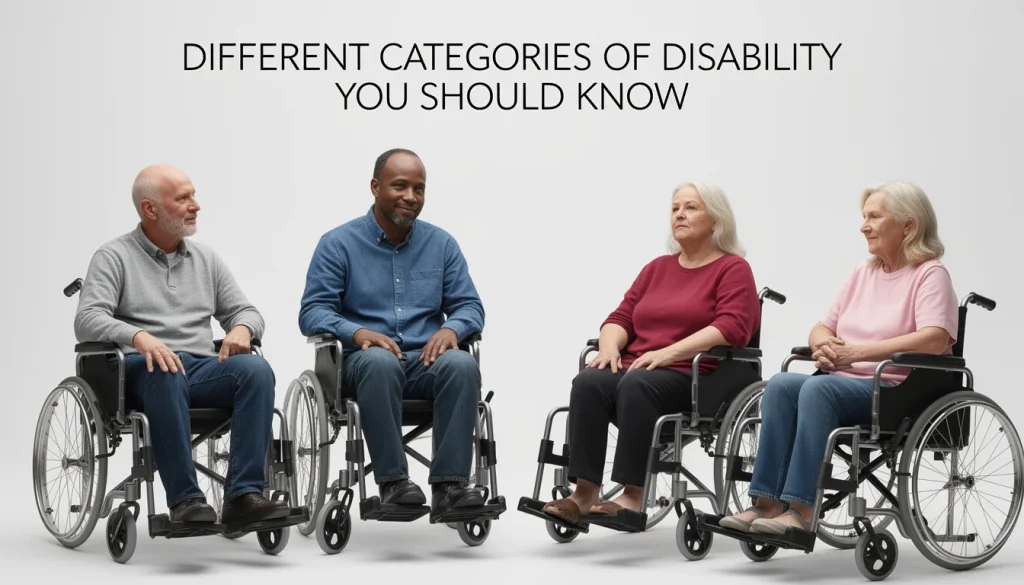
Physical disabilities affect mobility, strength, coordination, or endurance and may require mobility aids such as wheelchairs, canes, or other assistive devices. Some physical conditions are permanent; others can be temporary. People with similar diagnoses may have different abilities and needs, so avoid assumptions and ask what assistance, if any, is preferred.
Developmental disabilities
Developmental disabilities arise in childhood and affect learning, behavior, and self-care. Examples include autism, cerebral palsy, intellectual disability, ADHD, and various learning differences. These conditions often interact with education and social development, so early supports and appropriate accommodations can make a significant difference.
Learning differences: dyslexia, dysgraphia, dyscalculia
Learning differences affect specific cognitive skills: dyslexia involves reading and decoding text, dysgraphia affects handwriting and written expression, and dyscalculia impacts math skills. People with these differences may require alternative formats, extra time, or specialized instruction to demonstrate their capabilities.
Attention-deficit/hyperactivity disorder (ADHD)
ADHD can influence attention, impulsivity, and activity levels. People with ADHD may benefit from structured routines, clear instructions, and environments that minimize distracting stimuli. Allowing for breaks and flexible approaches to task completion can improve participation.
Neurodevelopmental motor disorders
Neurodevelopmental motor disorders affect coordination, fine and gross motor control, and movement planning. These challenges can impact daily tasks such as dressing, writing, or participating in physical activities, and may require assistive strategies or occupational therapy supports.
Simple, respectful practices for inclusive interactions
– Ask before helping: Offer assistance and follow the person’s directions if they accept.
– Focus on function: When you’re unsure, ask how their disability affects activities rather than asking about causes.
– Communicate clearly: Use plain language, face the person when speaking, and be patient with repetition or clarification.
– Respect privacy and autonomy: Avoid personal questions about the origin of a disability and treat people as individuals with unique abilities and preferences.
– Make environments accessible: Small adjustments — clear signage, alternative formats, predictable routines, or quiet spaces — go a long way toward inclusion.
Conclusion: learning leads to fairer, more inclusive spaces
Understanding disability types and how they influence daily life helps you provide appropriate support, reduces barriers, and fosters dignity. Learning common functional impacts — and applying straightforward, respectful practices — makes schools, workplaces, and communities more accessible. Rather than guessing, ask about needs and preferences; that approach both empowers the person and creates fairer outcomes for everyone.
About this content
The views expressed in this article reflect the information provided by the contributor and do not necessarily represent the views of medichelpline. medichelpline does not accept liability for any loss or damage arising from the use of the information presented, nor does it endorse specific products or services mentioned in sponsored content.