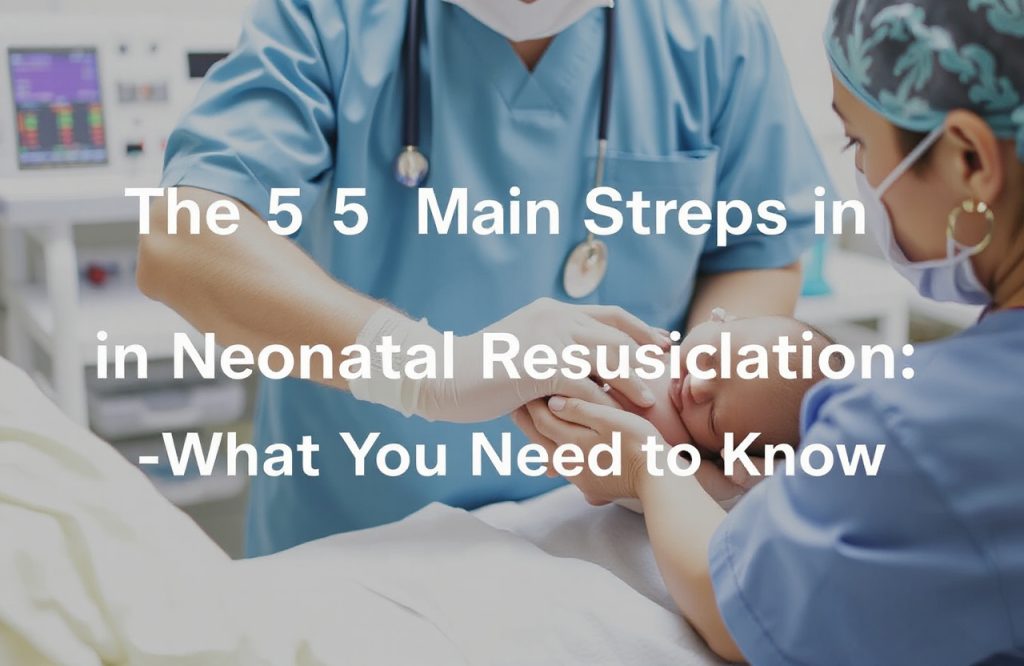
Understanding Neonatal Resuscitation: Essential Steps
When a newborn faces breathing difficulties, the neonatal resuscitation team plays a critical role in stabilizing the infant during the first hour. Knowing the five main steps of neonatal resuscitation is vital for anyone who might encounter this situation. The following sections delve into each step and offer guidance for assisting in emergencies.
Step One: Keep the Baby Warm
Maintaining the baby’s warmth is one of the most essential actions you can take during resuscitation. This seemingly straightforward step is crucial for providing comfort and reducing stress on the baby. A warm environment facilitates better oxygen absorption by the infant’s body. In a resuscitation scenario, wrap the baby in a dry blanket and gently rub them to help keep them warm.
Step Two: Clear the Baby’s Airway
The next critical step involves clearing the baby’s airway to aid in easier breathing. Use a suction device to remove any mucus or fluid from the nose and mouth. If a suction device is unavailable, you can use your fingers for gentle clearing. If you have a bulb syringe, it can effectively remove any secretions blocking the baby’s respiratory tract. Ensure the baby is lying flat on their back with their head in a neutral position, which can be achieved by placing a three-centimeter thick folded towel under the baby’s shoulders.
Step Three: Breathe for the Baby
Once the airway is clear, you should begin to provide breaths for the baby. If you have a resuscitation mask, position it over the baby’s mouth and nose and deliver two gentle breaths. If a mask is not available, use your mouth to cover the baby’s mouth and nose, giving two gentle breaths.
Step Four: Check for a Heartbeat
After administering two breaths, it is crucial to check for a heartbeat using a pulse oximeter or your fingers. Place your index and middle fingers on the lower half of the baby’s sternum and press down gently. If you detect a heartbeat, continue providing breaths at a rate of one every three to five seconds.
Step Five: Start Chest Compressions
If no heartbeat is felt, initiate chest compressions. Position your two hands on the lower half of the baby’s sternum and compress to a depth of about one-third to one-half of the chest. Allow the sternum to return to its normal position between compressions. Aim for a compression rate of 100 to 120 per minute.
Conclusion: Preparing for Emergencies
These five steps in neonatal resuscitation are critical for anyone expecting a baby. Familiarizing yourself with these procedures can prepare you for potential emergencies. Consider obtaining a neonatal resuscitation certification for comprehensive training on these techniques. While performing these steps at home is possible, always seek professional medical assistance for further evaluation and guidance.
Photo by Pixabay from Pexels
Any websites linked from Medical News Bulletin are operated by external organizations and are solely their responsibility. These links are provided solely for convenience and do not imply endorsement by Medical News Bulletin. We do not offer specific medical advice, diagnosis, or treatment and disclaim any obligations regarding the content of third-party sites.