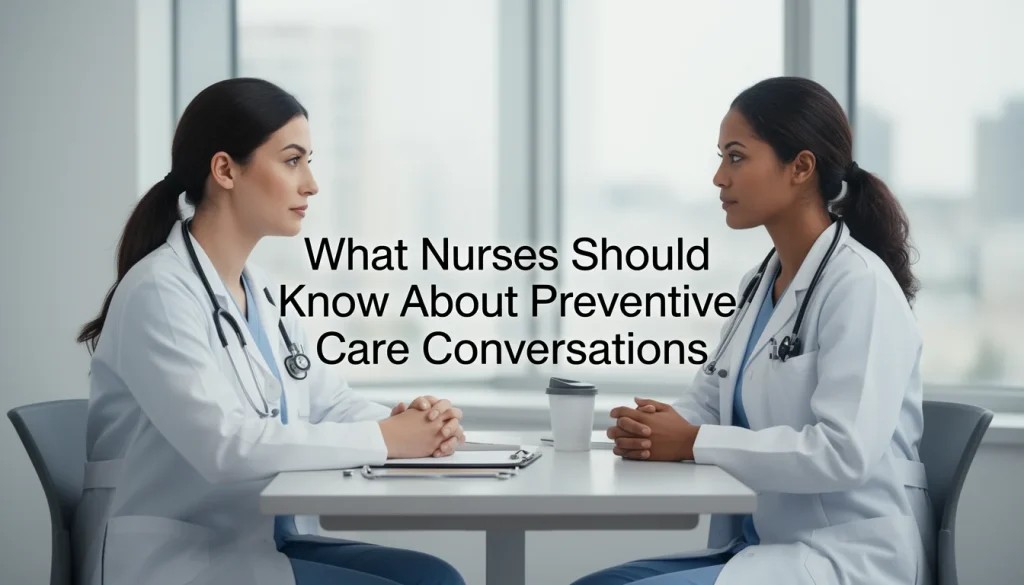
Why People Wait Until It Hurts: Understanding the Gap in Preventive Care
For many adults, health care often follows a familiar pattern: something starts to hurt, a symptom worsens, or a routine checkup is missed — and only then does a call get made to a provider. A sore knee escalates, an odd mole changes, or long‑managed blood pressure creeps upward until it spikes. Preventive care can feel optional until an acute problem forces it into priority. Frontline health professionals — those working in busy clinics, rural hospitals and community health centers — see this pattern every day. Their daily conversations with patients reveal that the barrier to prevention is rarely apathy; it’s a mix of discomfort, limited time, fear of bad news and unclear communication about what steps are most meaningful.
These clinically grounded encounters are small but powerful opportunities to shift how people view their health. In the sections that follow, we explore why these conversations matter, which communication techniques work in practice, and how training and changing care cultures can make prevention part of routine care rather than an afterthought.
How Conversations Can Change Outcomes
Frontline providers are uniquely positioned to reframe prevention. Unlike broad public health campaigns, a one‑to‑one conversation in a clinic can be tailored to a person’s history, concerns and day‑to‑day realities. But bringing up prevention isn’t always straightforward. Many patients don’t visit specifically for a preventive service; they come with an immediate concern. Mentioning overdue screenings or routine checks can feel uncomfortable or intrusive. Some patients will politely nod, others may change the subject.
That only means the approach has to be right. Clinical teams with strong communication skills — learned through both on‑the‑job experience and formal training — are better at turning those moments into meaningful steps. Educational programs focused on working professionals emphasize not only clinical knowledge but practical communication: how to talk with patients, not at them. This combination of clinical expertise and patient‑centered communication is central to helping patients understand why prevention matters and how to take an achievable next step.
Training that Reflects Modern Practice
Online training formats that support working clinicians are increasingly common and relevant. Flexible online programs allow learners to continue clinical work while building skills in community health, collaboration and evidence‑based care. That real‑world experience strengthens patient conversations because students practice communication in contexts that mirror the settings where they work.
The virtual learning environment also mirrors the shifting landscape of care — where telehealth, digital health records and remote monitoring are part of daily practice. Learning through a digital platform helps future providers understand how to build trust and communicate effectively even when an interaction is not face to face.
Why Preventive Care Feels Hard—and How to Make It Easier
It may seem like people don’t care about prevention, but the reality is more complex. Time constraints, fear of bad findings, uncertainty about why a test is needed and confusing medical language all reduce follow‑through. That’s why communication matters as much as the clinical recommendation.
Effective prevention conversations are not about giving a long checklist. They’re about making the next step feel doable and relevant. Practical approaches include:
– Framing recommendations around the patient’s life and priorities. Linking screening or monitoring to a concrete concern — for example, fatigue or sleep problems — makes it easier to see the value.
– Listening as much as advising. Knowing when to speak and when to listen helps clinicians identify what will motivate a patient.
– Breaking down actions into a single, clear next step rather than demanding a full lifestyle overhaul.
Simple phrasing examples that resonate in real visits include:
“Let’s look at your family history and decide which screenings make sense.”
“This test helps us catch things early — not just fix problems later.”
“What’s one health concern you’ve been thinking about lately?”
These kinds of lines invite participation rather than pressure. If a patient feels judged or overwhelmed, they shut down. If they feel informed and supported, they are far more likely to act.
Practical Tactics That Work in the Clinic
Integrating prevention into routine care doesn’t have to feel forced. Frontline clinicians regularly use practical methods to make prevention a natural part of the visit:
– Ask early: Bring up prevention while reviewing vitals or history so it feels part of the flow, not an add‑on at the end.
– Keep it simple: Avoid jargon; use plain language like “heart check” instead of technical terms.
– Be specific: Replace vague demands with concrete plans: “Let’s check your blood pressure once a year.”
– Tie it to daily life: Begin with sleep, diet or activity when those issues are most relevant.
– Don’t rush: If someone is not ready, provide a simple handout and suggest revisiting the topic at the next visit.
Not all preventive care is clinical. Short conversations about movement, sleep and diet often uncover early signs and practical solutions that labs and imaging don’t capture.
Shifting the Culture of Care Toward Prevention
There is growing attention to prevention at policy and community levels, but the change depends on people who lead at the point of care. Training programs that teach how to build trust, guide patients over time and treat the whole person rather than only the data are essential. When prevention feels shared — a collaborative plan rather than a lecture — care is more effective, sustainable and humane.
The future of primary care is grounded in real connection and lasting trust. When conversations about prevention become routine parts of visits, everyone benefits: patients experience fewer missed signs and emergencies, providers build more meaningful relationships, and the health system functions more efficiently. It all begins with a single conversation — honest, helpful and human — that turns an appointment into the start of better long‑term care.