Understanding Parkinson’s Disease and Its Impact on Oral Health
Overview of Parkinson’s Disease
Parkinson’s disease is a progressive neurological condition that leads to the gradual deterioration of specific brain regions over many years. The primary symptoms include slow, stiff, and inflexible movements, as well as involuntary shaking or tremors.
Importance of Oral Health for Individuals with Parkinson’s
Maintaining oral health is crucial for individuals with Parkinson’s disease, as the symptoms can complicate both oral hygiene management and dental care. On World Parkinson’s Day, we aim to shed light on these challenges and offer practical solutions to simplify oral health management.
Common Oral Health Issues Associated with Parkinson’s Disease
Identifying Common Mouth Problems
People with Parkinson’s may experience several oral health issues, including:
– Dry mouth, which increases the risk of tooth decay, gum disease, and oral infections.
– A burning sensation in the mouth.
– Difficulty swallowing (dysphagia).
– Excessive drooling (sialorrhea).
– Challenges with denture control.
– Trouble cleaning teeth.
– Heightened risk of gum disease.
Oral Health Challenges Linked to Parkinson’s Disease
Understanding the Risks
Recognizing the challenges associated with Parkinson’s can help prevent complications. Key issues include:
Muscle Function Changes
Parkinson’s disease can alter the function of facial and tongue muscles, impacting speech and chewing abilities. Missing teeth can further complicate these functions, potentially leading to depression and unhealthy dietary choices.
Swallowing Difficulties
The disease can weaken throat muscles, reflexes, and sensation, affecting the ability to swallow effectively. Poorly chewed food raises the risk of choking and aspiration, which can lead to serious conditions such as acid reflux and pneumonia.
Muscle Rigidity
Parkinson’s-related rigidity, tremors, and dyskinesia can hinder effective tooth brushing. These symptoms may result in cracked teeth, tooth wear, changes in denture fit, and tooth grinding. Muscle rigidity can also complicate dental treatments, making it difficult to keep the mouth open during appointments. In such cases, a referral to a specialist dentist might be necessary.
Tips for Maintaining Oral Health for Individuals with Parkinson’s
Making Dental Care Easier at Home
Proper care of teeth and gums is essential to prevent decay and gum disease, but the symptoms of Parkinson’s can complicate daily oral hygiene. Here are some strategies to simplify the process:
Simplifying Dental Care
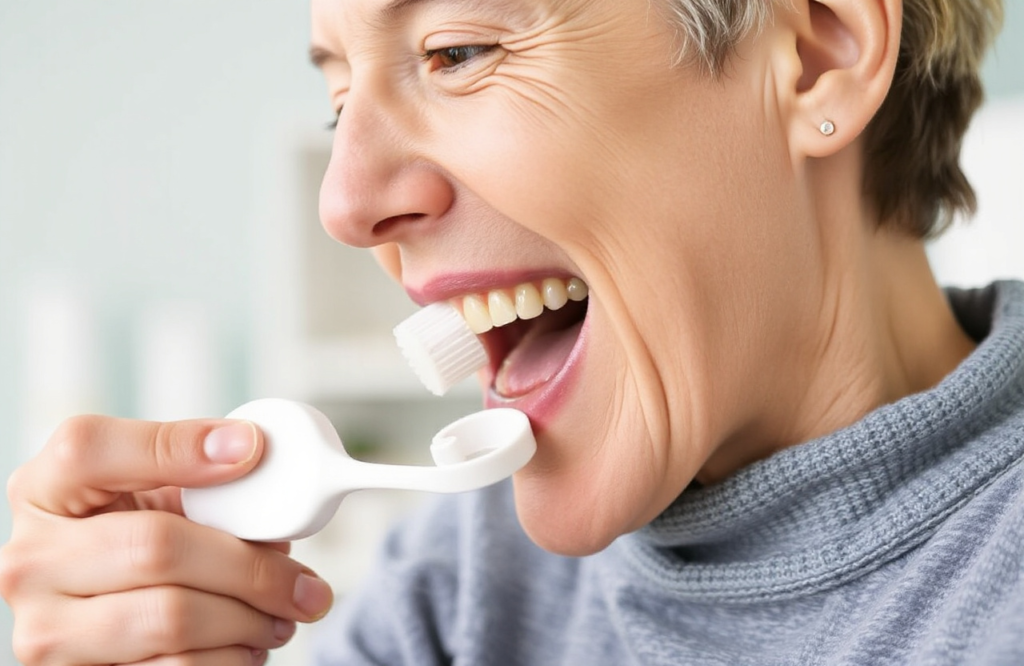
– **Choosing the Right Toothbrush:** Opt for a toothbrush with a large handle and soft bristles. A smaller brush head can help reach difficult areas. To enhance grip, consider using a bike handlebar grip or tennis ball on the handle, or utilize an electric toothbrush.
– **Cleaning Between Teeth:** Daily interdental cleaning is important, which may require assistance from a caregiver. Water flossers can be effective for those who can manage spitting, while pre-threaded flossers and interdental brushes with longer handles can also be beneficial.
– **Using Fluoride Rinses:** If swishing and spitting are challenging, dentists may suggest using a brush or sponge applicator for fluoride rinses.
Managing Denture Care
– **Daily Cleaning:** Brush dentures daily with a non-abrasive cleaner instead of toothpaste.
– **Soaking Dentures:** Use a denture cleanser daily to remove plaque and maintain cleanliness.
– **Nighttime Care:** Soak dentures overnight in water or a solution, and clean them before reinserting.
Enhancing Communication During Dental Visits
– **Disclose Symptoms:** Inform your dentist of your Parkinson’s symptoms to facilitate better treatment.
– **Schedule Appointments Wisely:** Choose short appointments when symptoms are most manageable.
– **Discuss Medications:** Share information about medications with your dentist, as some can affect oral health.
– **Notify About Anaesthetic Needs:** If you take Parkinson’s medications, inform your dentist about any potential interactions with anaesthetics.
Conclusion
While managing dental care can be challenging for those with Parkinson’s disease, simple adaptations and appropriate support can significantly improve oral health outcomes. By utilizing the right tools, attending regular dental check-ups, and maintaining open communication with dental professionals, individuals can foster better oral health and minimize complications. For further assistance, consult a dental professional for personalized advice.
For more information about Parkinson’s disease, please visit the Parkinson’s UK website.
Published: 26th March, 2025
Updated: 11th April, 2025
Author: Sophie Turner