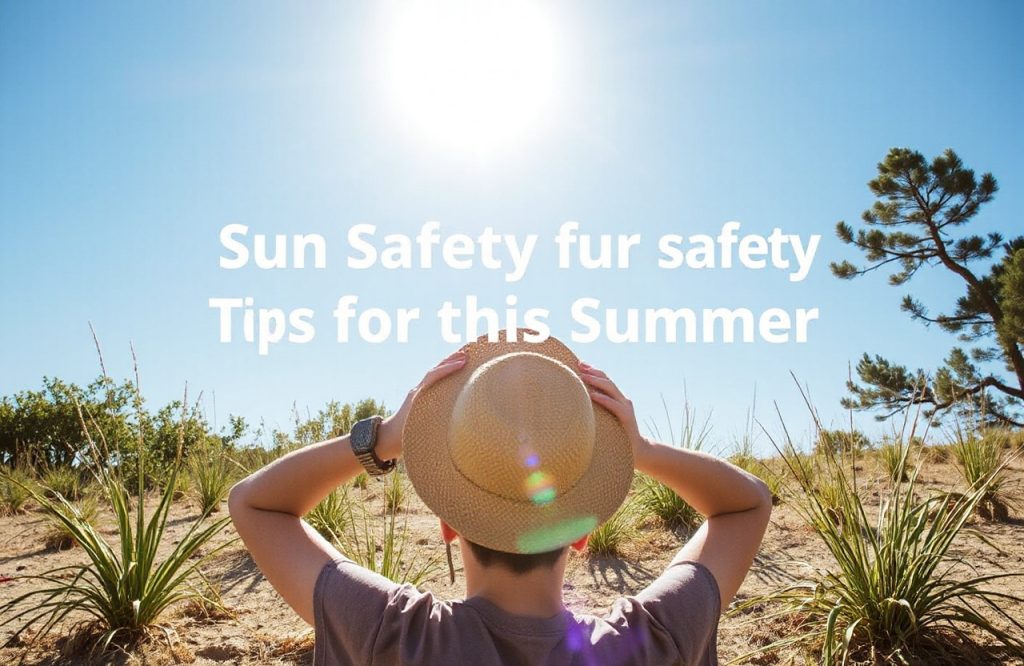
Understanding Sun Safety
The Importance of Vitamin D and UV Rays
While sunlight is an excellent source of Vitamin D, its ultraviolet (UV) rays can pose significant risks to the skin. There are two main types of UV rays: UVA and UVB. UVA rays penetrate the deeper layers of the skin (dermis), while UVB rays affect only the superficial layers. The American Cancer Society identifies UV rays as the leading cause of skin cancer, with both UVA and UVB contributing to this risk. To enjoy the sun safely, consider the following sun protection tips.
Sun Protection Tips
Protect Your Eyes
UV rays can also harm the eyes, leading to various conditions such as macular degeneration, eye cancer, premature cataracts, and corneal sunburns, as highlighted by Prevent Blindness, an eye health organization. To safeguard your eyes and the delicate skin around them, always wear protective eyewear like sunglasses or a wide-brimmed hat.
Choose the Right Sunscreen
When selecting sunscreen, many people focus on the SPF, or sun protection factor. SPF indicates the percentage of UVB rays blocked by the product. Higher SPF values provide slightly better protection, but the increase in percentage diminishes with higher numbers. For instance, SPF 15 blocks approximately 93% of UVB rays, while SPF 30 blocks around 97%. However, no sunscreen can filter out 100% of UVB rays. Anything below SPF 15 offers limited protection against sunburns and is ineffective against skin cancer. For optimal sun safety, choose a broad-spectrum sunscreen with a higher SPF to protect against both UVA and UVB rays.
Clothing as Coverage
According to the Centers for Disease Control and Prevention (CDC), clothing can significantly contribute to sun protection. Dark-colored, long-sleeved garments can provide a level of defense comparable to SPF 15 sunscreen. It is essential to cover the head, face, nose, and ears, as these areas are particularly vulnerable to sun exposure.
Stay Hydrated
Prolonged sun exposure can lead to lethargy and overheating, potentially resulting in dehydration. As the body loses water and essential salts, the risk of heat stroke increases. This serious condition can arise when the body becomes dehydrated and cannot regulate its temperature effectively. Symptoms to watch for include headaches, fatigue, rapid heartbeat, seizures, and loss of consciousness. To prevent heat stroke, ensure proper hydration by drinking more fluids than you may be losing, especially on hot days.
Daily UV Index
The intensity of UV rays varies throughout the day, measured by the UV Index, which ranges from 0 to 11+. A higher index indicates stronger sunlight and a greater need for protective measures. The Government of Canada recommends sun protection when the index reaches three or higher and advises avoiding peak sun hours from 10 a.m. to 2 p.m.
Opt for Shade Whenever Possible
Seeking shade is one of the simplest ways to protect yourself from the sun. However, it’s important to note that UV rays can still reflect off surfaces. Research from the Journal of the American Academy of Dermatology indicates that nearly 53% of skin cancers occur on the left side of the body, often due to sun exposure while driving. Glass windows can block only 47% of UVB rays and offer no protection against UVA rays. Consider using transparent window film to enhance protection against UV rays.
Conclusion
Implementing these sun safety tips is crucial for protecting your skin from harmful UV rays. To ensure effective sun protection, practice these recommendations consistently and enjoy your time in the sun safely.
References
Dehydration and Heat Stroke. (2019). Retrieved from https://www.hopkinsmedicine.org/health-conditions-and-diseases/dehydration-and-heat-stroke
Government of Canada. (2018, October 30). Retrieved from https://www.canada.ca/en/environment-climate-change/services/weather-health/uv-index-sun-safety.html
How Can UV Rays Damage Your Eyes? (2019). Retrieved from https://www.preventblindness.org/how-can-uv-rays-damage-your-eyes
Simon, S. (2019, May 21). Have a Sun-safe Summer. Retrieved from https://www.cancer.org/latest-news-stay-sun-safe-this-summer.html
Skin Cancer Foundation. (n.d.). Retrieved from https://www.skincancer.org/prevention/sun-protection/shade/seek-the-shade
Sun Safety. (2018, April 24). Retrieved from https://www.cdc.gov/cancer/skin/basic_info/sun-safety.htm