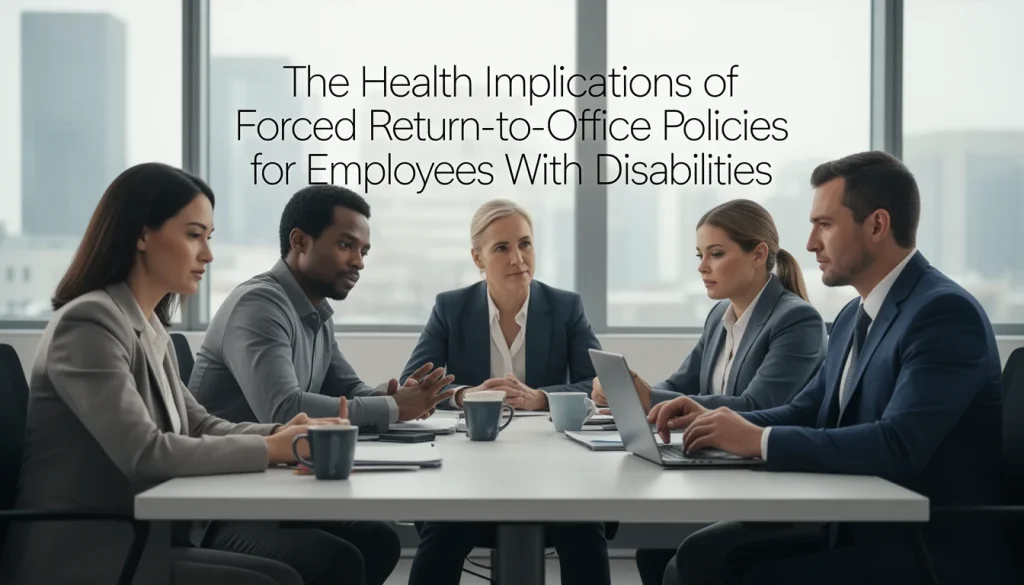
The motivation of re-putting the workers back to the physical work locations has raised deep apprehensions among the disabled workers. The medical recommendation or the treatment regime or the incapacity of a person to carry out some functions may be a direct violation of a coming back to work order to others, leading them to consider filing a long term disability claim rather than returning to the office, even when they would otherwise prefer to keep working. The health effects of the policies should be comprehended to find out whether the strict workplace demands are positive in the long-term for the workers or the employers.
Physical Health Risks Associated With Mandatory Office Attendance
The forced return to office policies may have a great impact on the physically disabled or chronically ill employees. Moving around the office design, commuting and having a strict or routine schedule may increase the pain, fatigue or mobility which otherwise would be bearable in a remote setting. These stressors can result in the worsening of the symptoms and the deterioration of the functioning capacity in the long run.
Employees can also be exposed to health triggers at workplaces, which can easily be managed at home. Among the sources which can have a negative impact on the physical well-being, it is possible to distinguish poor air quality, inefficient ergonomic layout, and insufficient access to rest areas. Even small environmental variations can cause a disproportionate impact on health in those people who have complex conditions.
Mental Health Strain and Psychological Impact
One of the most widespread disabilities impacted by the return to the office requirements is mental health issues. When the employees have to go back to the environment that seems to be unsafe or overwhelming, anxiety disorders, depression, and post-traumatic stress may be aggravated. The fact that flexibility and autonomy are lost usually imposes emotional pressure, destabilizing the situation.
Mental health problems may be further contributed to by the fear of being seen as uncooperative or replaceable. Employees can be forced to make a dilemma between their health and their lives. This conflict may result in burnout, escalated absenteeism and deterioration in general psychological strength.
Chronic Illness and Energy Limitation Challenges
A large number of disabilities consist of variable symptoms, as opposed to permanent impairment. Autoimmune disorder, neurological diseases, and long term post viral syndromes are among the conditions that may change daily, and therefore, strict attendance policies are especially detrimental. Telecommuting usually enables one to take his/her own pace and be more effective in energy management.
The employees can be tempted to work beyond the safe limits to achieve expectations when there is no flexibility. This may initiate symptom exacerbation, which results in long-term recovery or irreversible health complications. In other instances, the overworking can make people leave the workforce altogether, although they can work in modified conditions.
The Role of Workplace Accommodations in Health Outcomes
Workplace accommodations are very important in ensuring the health and productivity of employees. Remote or hybrid work set-ups can be a reasonable accommodation enabling disabled workers to keep on working without affecting their well-being. In the case of withdrawal of such accommodations, without personal evaluation, health risks are highly amplified.
Employers embracing homogeneous policies on returning to work will ignore the medical facts of disability. Failure to accommodate may breed a vicious circle where poor health results in poor performance, which further perpetuates the negative perception. This is not only unfavorable to the employee and the organization but, in most cases, leads to unnecessary conflicts or lawsuits.
Long-Term Consequences for Workforce Participation
Forced attendance at offices has health consequences that go beyond the immediate symptoms. With repeated health setbacks, the employees would in the long-run face long term disability or may have to leave the workforce altogether. This is a waste of skilled and experienced employees who could otherwise be kept occupied by means of flexible arrangements.
In a more general view, rigid policies may deter the disabled from taking up or continuing to work. Workplace structures which are not adaptive have the effect of constricting participation instead of broadening it. This will erode inclusion and put further pressure on health and disability systems in the long run.
Final Thoughts
Forced return to office policies may have severe and permanent health consequences for the disabled employees. Workplace expectations can be met in a variety of ways, both related to physical strain, mental health issues, and management of chronic illnesses.
A health-informed approach which says that individualized accommodations and flexibility should take priority to safeguard employees, not only but also enhances long-term organizational success and sustainable workforce participation.
Image by Online Marketing from Unsplash
The editorial staff of Medical News Bulletin had no role in the preparation of this post. The views and opinions expressed in this post are those of the advertiser and do not reflect those of Medical News Bulletin. Medical News Bulletin does not accept liability for any loss or damages caused by the use of any products or services, nor do we endorse any products, services, or links in our Sponsored Articles.