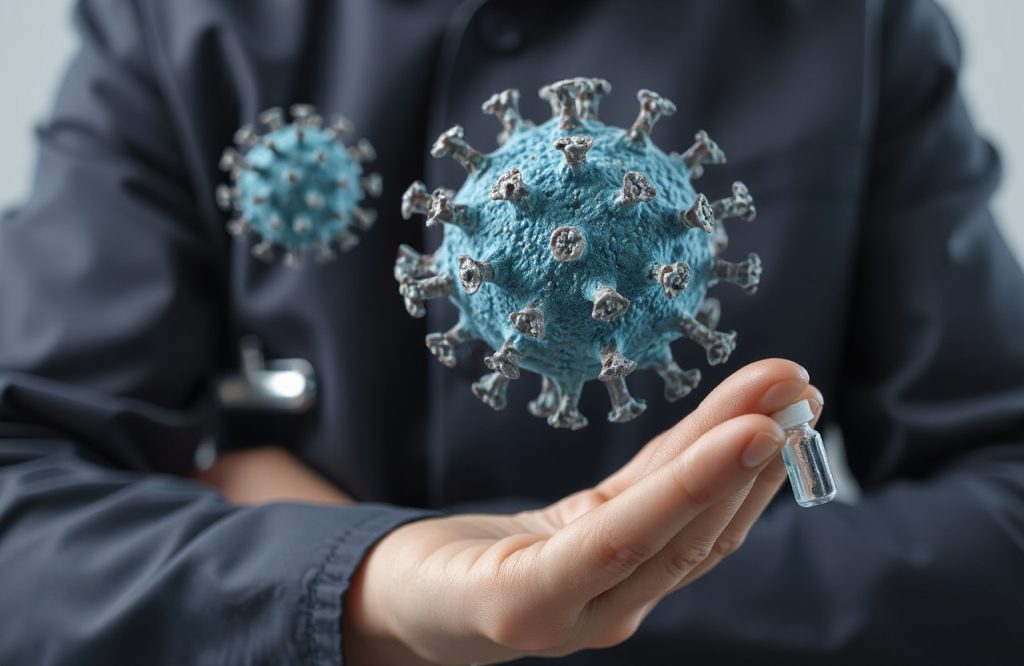
Cancer Drug Acalabrutinib as a Potential Treatment for COVID-19 Cytokine Storm
Understanding Cytokine Storm in COVID-19
The SARS-CoV-2 pandemic has introduced several new terms into public discourse, including “cytokine storm.” This term describes an exaggerated immune response that can occur in some COVID-19 patients, leading to acute respiratory distress syndrome and potentially resulting in death. Given the severe implications of this reaction, identifying effective treatments is crucial.
New Research Insights
A recent study published in the journal *Science Immunology* proposes a hypothesis regarding the mechanisms by which COVID-19 triggers a cytokine storm, while also exploring a potential therapeutic avenue. The researchers identify bruton tyrosine kinase (BTK) as a critical signaling molecule that plays a role in initiating cytokine storms. They propose that when macrophages, a type of immune cell, ingest viral RNA, this BTK signaling is activated, leading to the production of inflammatory cytokines and further recruitment of macrophages to the infection site.
Potential of Acalabrutinib
If this hypothesis holds true, a medication that inhibits BTK signaling could be beneficial for COVID-19 patients experiencing a hyperinflammatory response. Acalabrutinib, a biological agent specifically designed to inhibit BTK signaling, has been previously utilized to treat specific types of leukemia and lymphoma. Its effectiveness is now being evaluated in COVID-19 patients exhibiting severe immune responses.
Study Overview
In the study, 19 COVID-19 patients were treated with acalabrutinib. Among them, eight were on mechanical ventilation, while the remaining 11 were receiving supplemental oxygen. Most patients had comorbidities such as obesity and hypertension. The patients were monitored for an average of 12 days after treatment initiation.
Clinical Outcomes
The clinical outcomes for the supplemental oxygen group were promising, with eight of the 11 patients discharged from the hospital without the need for further supplemental oxygen. The three remaining patients showed significant improvements in respiratory performance.
Conversely, outcomes for the mechanical ventilation subgroup were less favorable. Four out of eight patients were weaned off mechanical ventilation during the study, but one tragically died from a pulmonary embolism. Two patients were discharged, while one continued to require supplemental oxygen at the follow-up.
Extended Follow-Up Results
Due to the short initial follow-up period, the authors conducted a secondary follow-up approximately one month later to assess longer-term outcomes. In the supplemental oxygen group, one patient had died, while another had been discharged on room air. Of the original 11 patients, nine were discharged, one remained hospitalized, and one had died.
In the mechanical ventilation group, the follow-up revealed that of the eight initial patients, four had died, three were discharged and doing well, while one remained in respite care.
Limitations of the Study
The study has several limitations, the most significant being the lack of a control group. However, with the high number of COVID-19 cases in hospitals worldwide, there may be future opportunities to create a retrospective control cohort. Additionally, the variability in treatments received by participants, with some also taking hydroxychloroquine, complicates the results. The relatively small sample size further restricts the ability to draw definitive conclusions.
Conclusions
Despite these limitations, the study provides valuable insights. It proposes a plausible mechanism by which COVID-19 can induce a cytokine storm and emphasizes a critical step in this pathway. The findings suggest that acalabrutinib may be effective in intercepting this process, warranting further investigation into its therapeutic potential.
Written by Michael McCarthy
1. Roschewski M, Lionakis MS, Sharman JP, Roswarski J, Goy A, Monticelli MA, et al. Inhibition of Bruton tyrosine kinase in patients with severe COVID-19. *Science Immunology*. 2020;5(48):eabd0110.
Image by Miguel Á. Padriñán from Pixabay