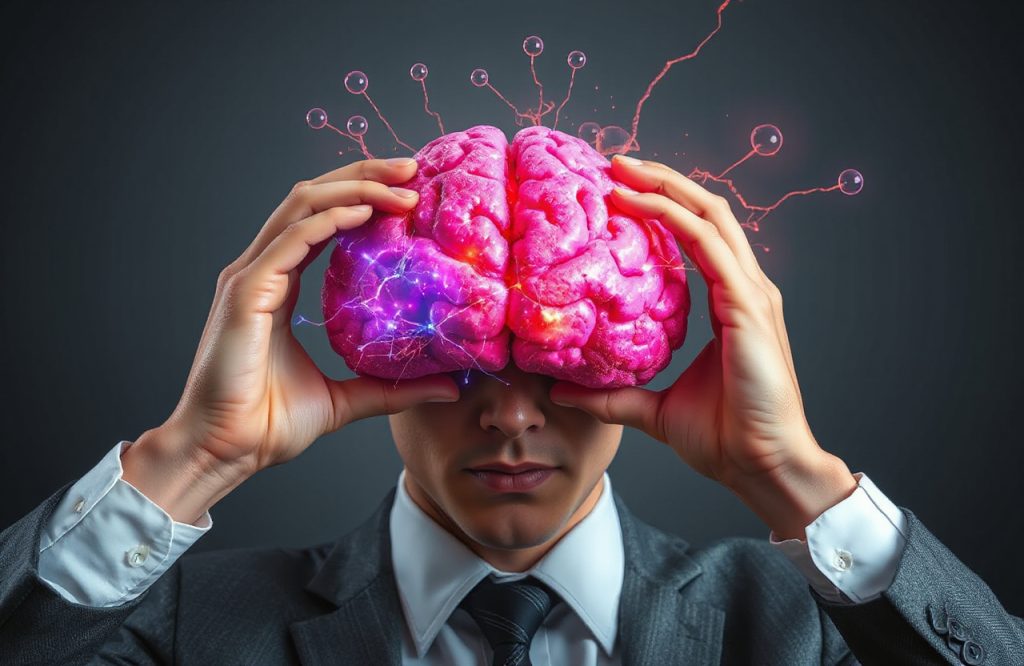
Investigating Brain Response Patterns in Migraine Sufferers
Understanding Migraine Symptoms
Migraine is characterized by intermittent severe headaches, typically more intense on one side of the head, and often accompanied by nausea, vomiting, and heightened sensitivity to light, smell, or sound. Approximately 20% of migraine sufferers experience visual symptoms, such as flashing lights, wavy lines, or blurred vision, prior to the onset of a headache. This condition is referred to as “migraine with aura.” The duration of migraine attacks can vary, lasting from several hours to a few days, and can be profoundly debilitating.
Link Between Visual Sensations and Migraine Attacks
Gaining a deeper understanding of how migraine attacks occur could pave the way for new prevention and treatment strategies. Although the exact mechanisms behind migraine development remain unclear, they may involve temporary changes in nerve activity, chemical levels, and blood vessel function in the brain. Given that many migraine sufferers report abnormal visual sensations, researchers are investigating potential connections between migraines and the visual cortex, the brain region responsible for processing visual information.
Research Study on Visual Cortex Responses
Researchers at the Universities of Birmingham and Lancaster in the UK recently conducted a study comparing the visual cortex responses of 29 migraine sufferers with those of 31 healthy participants. The study, published in the journal NeuroImage: Clinical, involved presenting all participants with a striped grating pattern as a visual stimulus. Participants completed questionnaires assessing their discomfort levels while viewing the pattern and reported any visual disturbances or hallucinations experienced during the task. Additionally, electroencephalogram (EEG) tests were performed to measure brain activity responses in the visual cortex.
Findings on Hyper-Excitability in Migraine Sufferers
The results indicated a significantly larger, hyper-excitable response in the EEG readings of migraine sufferers compared to non-sufferers when exposed to the grating patterns. Notably, a subgroup of non-migraine participants who reported visual disturbances also exhibited a hyper-excitable response, although it was less pronounced than that observed in migraine sufferers.
Implications and Future Research Directions
These findings suggest that migraine sufferers may process sensory stimulation differently in their visual cortex compared to non-sufferers. However, further research is necessary to elucidate how these differences could contribute to migraine attacks. Dr. Ali Mazaheri, the senior author of the study, remarked, “We suspect that is only part of the picture since the same patterns of activity can also be seen in non-migraineurs who are sensitive to certain visual stimuli.” The research team plans to continue their investigation to observe changes in brain responses as participants approach a migraine attack, potentially leading to methods for predicting or preventing these episodes.
References
Fong CY, Law WHC, Braithwaite JJ, et al. Differences in early and late pattern onset visual-evoked potentials between self-reported migraineurs and controls. Neuroimage: Clinical 2020 25:102122. Doi:10.1016/j.nicl.2019.102122.
University of Birmingham, Press release 10 Feb 2020. “The brain of migraine sufferers is hyperexcitable, new study suggests.” https://www.eurekalert.org/pub_releases/2020-02/uob-tbo021020.php
Image by Pete Linforth from Pixabay.