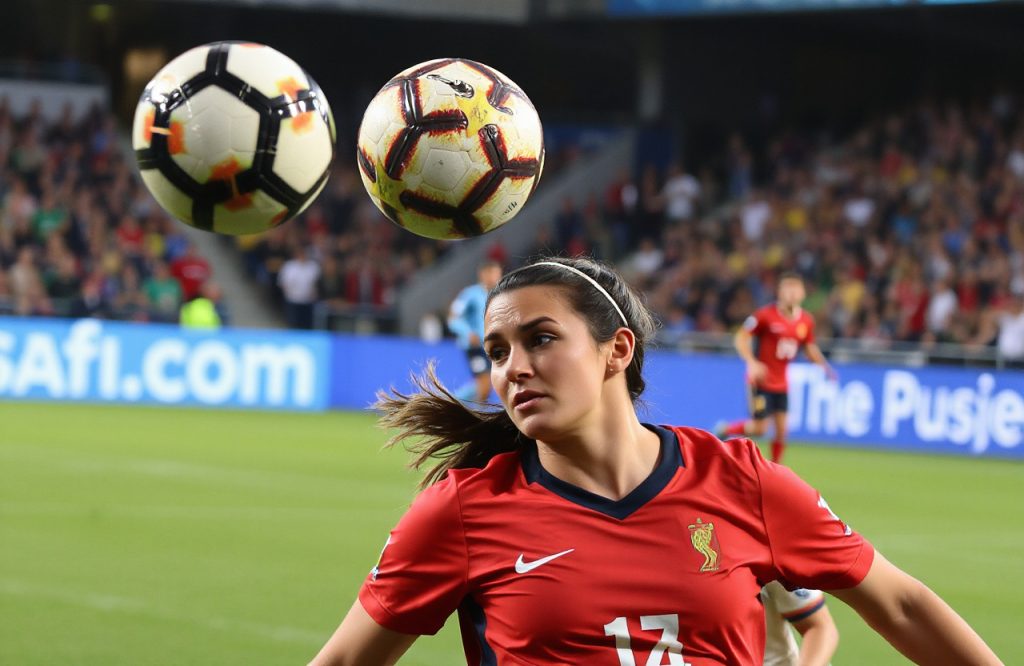
Understanding Soccer-Related Concussions and Brain Injuries
Causes of Soccer Concussions
Soccer concussions primarily occur due to player collisions. However, heading the ball poses a significant risk for serious brain injuries. Recent research by U.S. scientists has examined the effects of brain injuries resulting from headers in both female and male athletes.
Long-Term Effects of Repetitive Head Injuries
Repetitive head injuries in contact sports can lead to enduring damage, including chronic traumatic encephalopathy. This condition can impair cognitive function and result in behavioral changes. The frequent act of heading the ball in soccer raises concerns regarding cognitive decline, which encompasses attention, learning, reasoning, language, and memory. Although collisions and falls contribute to soccer concussions, studies suggest that regular heading may lead to greater cognitive impairments.
Gender Differences in Brain Injury Risks
Female Athletes at Higher Risk
Research indicates that female athletes are more susceptible to long-term complications following brain injuries than their male counterparts. While concussions are more prevalent in men, largely due to their higher engagement in risky activities, women tend to experience more severe long-term effects. This discrepancy is controversial, as women are often more forthcoming about their symptoms. Conversely, men typically encounter longer recovery times before returning to regular activities. This necessitates a more objective approach to evaluating brain injuries across genders.
Study on Male and Female Soccer Players
A recent study aimed to explore the impact of soccer headers on the brains of male and female players. Conducted by U.S. researchers, the findings were published in Neuroradiology. The study involved 98 amateur soccer players, comprising 49 men with an average age of 25.7 and 49 women averaging 25.8 years. Participants were matched based on age and their history of heading a soccer ball over the previous year. No significant differences were observed in how long they had played soccer or their educational backgrounds. The average number of headers per year was 487 for men and 469 for women. Each participant underwent a whole-brain MRI to evaluate the impact of heading on brain injuries.
Assessing Brain Structure and Integrity
Researchers analyzed the brain images to explore the relationship between white matter integrity and repetitive soccer heading. White matter, which comprises axons linking different areas of gray matter, plays a crucial role in brain function. Declines in white matter integrity have been associated with cognitive impairments.
Findings on Brain Tissue Alterations
Impact of Soccer Headers on Brain Integrity
The study revealed significant findings concerning white matter integrity. In male participants, three brain regions showed a correlation between increased heading and decreased white matter integrity. In contrast, eight regions in female participants exhibited a stronger association between heading and white matter degradation, with seven of these regions indicating a more pronounced effect in women.
Implications for Future Research
The results suggest that women may be more vulnerable to extensive changes in brain tissue due to repetitive head trauma, despite similar exposure levels. These gender-based differences in the long-term consequences of brain injuries underscore the need for further investigation into the effects of heading in soccer. Future research could help establish sex-specific guidelines for heading to enhance safety in the sport.
Conclusion
The findings of this study highlight critical differences in how male and female athletes respond to repetitive head impacts in soccer. Continued research is essential for developing effective safety protocols and ensuring the well-being of all players on the field.
Reference
Rubin TG, Catenaccio E, Fleysher R, Hunter LE, Lubin N, Stewart WF, Kim M, Lipton RB, Lipton ML. MRI-defined White Matter Microstructural Alteration Associated with Soccer Heading Is More Extensive in Women than Men. Radiology. 2018 Jul 31:180217. doi: 10.1148/radiol.2018180217.