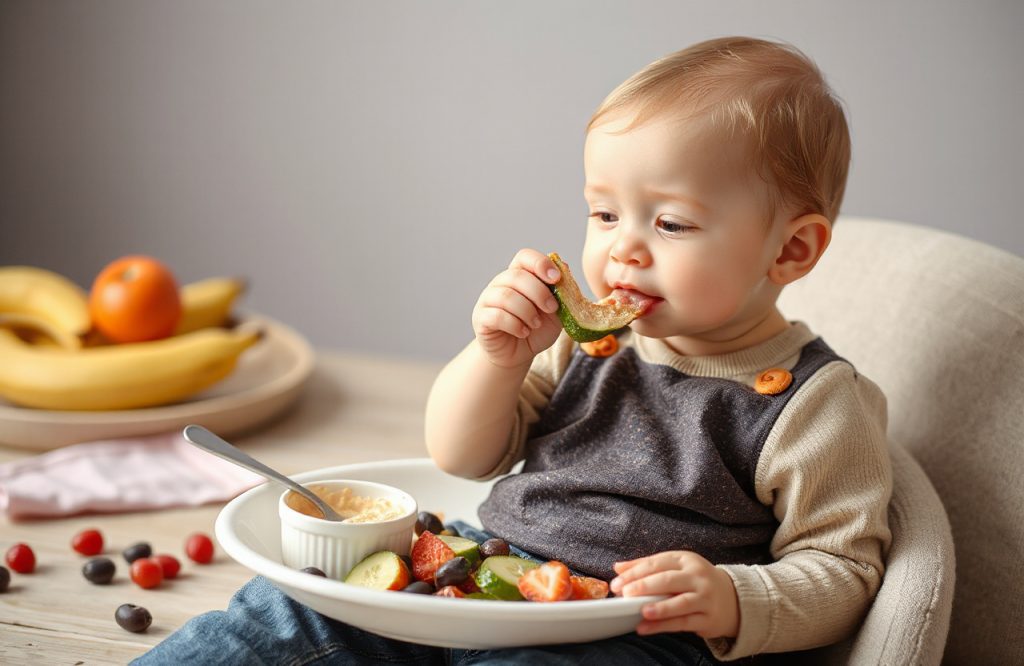
Study on Baby-Led Feeding vs. Traditional Spoon-Feeding
Objective of the Study
A recent study aimed to investigate whether baby-led feeding results in a lower body mass index (BMI) in infants compared to traditional spoon-feeding methods. Researchers found that while BMI scores were similar in both groups, infants who were baby-led fed exhibited less food fussiness and a greater enjoyment of food compared to those in the control group.
Understanding Baby-Led Feeding
Baby-led feeding, also known as baby-led weaning, involves infants self-feeding with solid foods starting around six months of age rather than being spoon-fed. Advocates of this method claim several benefits, including improved energy self-regulation and a reduced risk of obesity. However, there are concerns that self-feeding may lead to inadequate food intake, particularly if infants struggle with self-feeding skills.
Research Background
Despite the growing interest in baby-led feeding, research on the subject has been limited. Before this study, no randomized clinical trials had explored its effects. The recent trial published in JAMA Pediatrics sought to compare the impacts of baby-led feeding on BMI, energy self-regulation, eating behaviors, and energy intake against traditional spoon-feeding approaches.
Details of the BLISS Clinical Trial
The Baby-Led Introduction to Solids (BLISS) clinical trial was conducted from December 19, 2012, to March 17, 2014, as part of a community intervention in Dunedin, New Zealand. A total of 206 women in late pregnancy participated, being randomly assigned to either the control or the BLISS intervention group. All families involved had access to government-funded midwifery services and regular pediatric checkups.
Mothers in the BLISS group received support from lactation consultants to encourage exclusive breastfeeding and to postpone introducing complementary foods until their infants reached six months. Additionally, they attended three face-to-face meetings with researchers at 5.5, 7.0, and 9.0 months.
Outcomes and Findings
The primary outcome measured was the BMI score at one and two years of age. Secondary outcomes included energy self-regulation and eating behaviors, assessed through questionnaires at 0.5, 1, and 2 years. Energy intake was evaluated using three-day weighed diet records collected at 7, 12, and 24 months.
Out of the original 206 participants, 166 were available for analysis at the 24-month mark. The mean BMI scores did not significantly differ between the control and intervention groups at either one or two years of age. At the two-year assessment, 10.3% of infants in the BLISS group were classified as overweight, compared to 6.4% in the control group.
However, parents of BLISS infants reported less food fussiness and greater enjoyment of food by 12 months.
Conclusions
The results of this study challenge previous concerns that infants following a baby-led feeding approach might not consume sufficient food, as no growth hindrance was observed. Furthermore, the BLISS infants demonstrated less food fussiness and a more positive attitude towards food compared to the control group.
While the baby-led feeding method did not appear to prevent obesity in this study, it seems to foster a healthier relationship with food among infants. Further research is needed to generalize these findings, but the study highlights the potential benefits of the baby-led feeding approach and can inform current and future parenting practices.
Reference
Taylor, R. W., Williams, S. M., Fangupo, L. J., Wheeler, B. J., Taylor, B. J., Daniels, L., & Davies, R. S. (2017). Effect of a baby-led approach to complementary feeding on infant growth and overweight: a randomized clinical trial. JAMA Pediatrics.