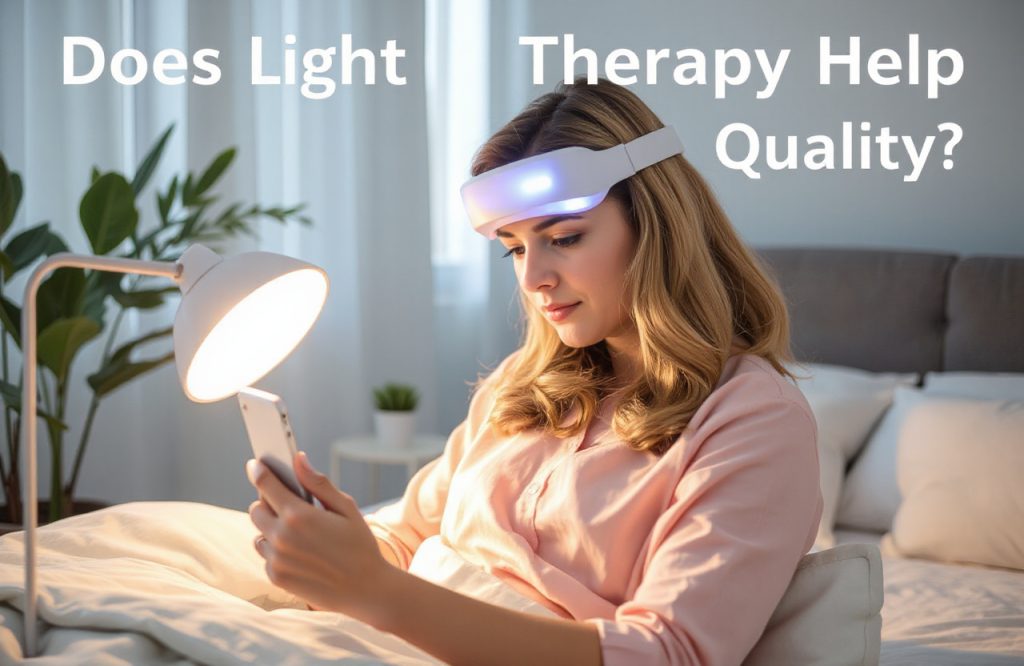
Effects of Light Therapy on Sleep Disturbances and Depression in Older Adults with Mild Cognitive Impairments
Understanding Mild Cognitive Impairment and Dementia
Pathological changes in the brain can lead to mild cognitive impairment (MCI), which often serves as a transitional stage between healthy aging and dementia. MCI is characterized by impairments in one or more cognitive domains. As cognitive impairment progresses, it can damage the brain regions responsible for regulating human circadian rhythms, leading to behavioral disturbances and sleep disorders in affected individuals.
Interrelationship Between Cognitive Impairment and Sleep Quality
Research indicates a direct correlation between cognitive impairment and sleep quality. Notably, 15% of Alzheimer’s patients experience impaired sleep quality. Sleep, influenced by melatonin and sunlight, becomes disrupted in these cases. Despite its significance, few studies have specifically explored the effects of light therapy on those with cognitive impairments and dementia.
Research Study on Light Therapy
A research team from Taipei Medical University in Hong Kong conducted a comprehensive analysis by combining data from multiple studies to assess the impact of light therapy on behavioral disturbances, depression, and sleep disorders in cognitively impaired adults.
Using data from nine randomized controlled trials, the researchers discovered that exposure to light with an intensity of 2,500 lux or greater had a significant effect on reducing depression among individuals with dementia. Additionally, light therapy demonstrated a moderately significant impact on behavioral disturbances and a smaller effect on nighttime sleep.
Publication and Implications of Findings
The findings of this study were published in The American Geriatrics Society, marking the first meta-analysis to investigate the effects of light therapy on sleep and depression in individuals with cognitive impairment. These results suggest a promising new therapeutic approach for those suffering from mild cognitive impairment and dementia, indicating that light therapy can alleviate behavioral disturbances, enhance sleep quality, and reduce symptoms of depression in cognitively impaired individuals.
Reference
Huei-Ling Chiu, MS, RN, Pi-Tuan Chan, RN, Hsin Chu, PhD, MD, Shu-Tai Sheen Hsiao, MSN, RN, Doresses Liu, PhD, RN, Chueh-Ho Lin, PhD, PT, and Kuei-Ru Chou, PhD, RN. *Effectiveness of Light Therapy in Cognitively Impaired Persons: A Metaanalysis of Randomized Controlled Trials*. American Geriatrics Society, 2017.