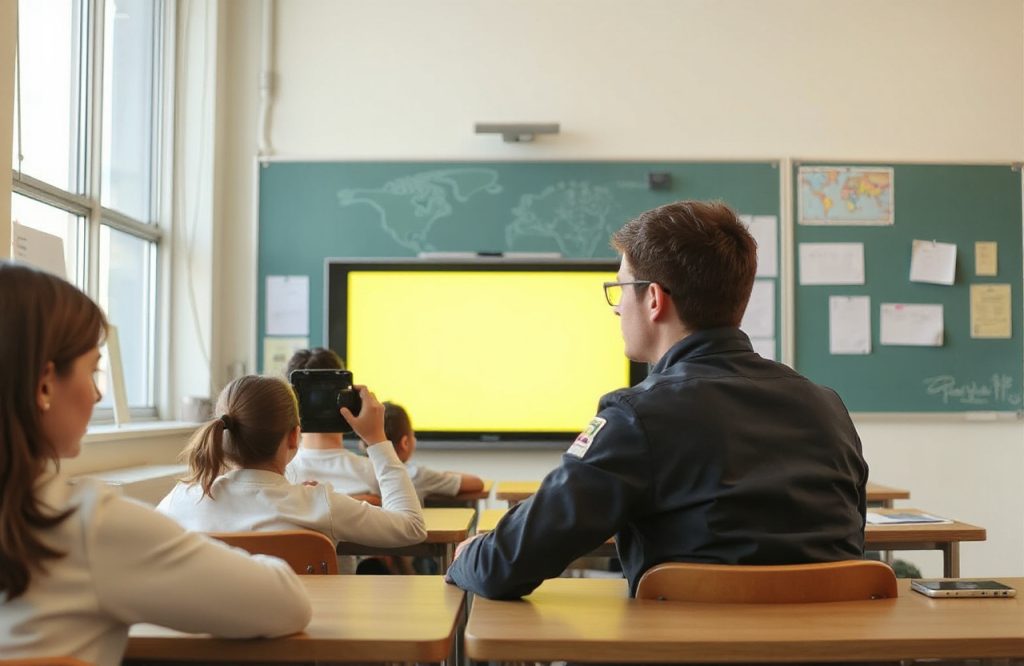
Study Investigates Phone Usage Policies in American Schools
Rising Smartphone Usage Among Youth
A recent study explores how American middle and high schools are managing students’ smartphone usage and the possible benefits of limiting screen time in educational settings. As smartphones become increasingly prevalent, the number of children and teenagers using them continues to rise.
While smartphones can offer advantages, such as teaching responsible internet use and enabling communication with parents, they also present potential drawbacks. Unregulated access to smartphones and social media can expose teenagers to irresponsible online behavior and cyberbullying. Furthermore, excessive smartphone use can distract students from their schoolwork, in-person interactions, and outdoor activities, leading to reduced academic performance, lower physical activity levels, and adverse mental health effects.
Excessive Screen Time Concerns
Current research indicates that many youths are exceeding the recommended daily limit of two hours of screen time. A 2019 report by Common Sense Media revealed that teenagers in the United States average 7 hours and 22 minutes of screen time daily, excluding school-related usage. This figure significantly surpasses the suggested amount, highlighting the need for schools to consider policies that could help reduce students’ daily screen time.
Overview of the Study
The study published in JAMA Network Open examined cell phone policies in 210 public middle and high schools across the United States. Principals were surveyed through online or telephone methods to collect information about their schools’ policies on limiting screen time. It is important to note that the study had a low response rate of 18.4%, as only 210 out of 1,140 contacted schools participated, which may limit its representativeness.
Findings on School Policies
The findings revealed that 97% of middle schools and 91% of high schools had established cell phone policies. Additionally, over 90% of principals expressed support for restricting student cell phone usage, with 80% believing that smartphone use during school hours could negatively impact academic performance. However, 33% of middle schools and 69% of high schools did not impose restrictions on smartphone use during lunch and recess, potentially missing an opportunity to decrease overall smartphone usage during the school day.
Need for Further Research
The study suggests that many schools lack comprehensive policies regarding cell phone use throughout the day. Additional research is necessary to evaluate the cell phone policies of more middle and high schools across the United States. Moreover, further investigation is needed to determine effective methods for teaching responsible smartphone use to benefit students in the long run.
Recommendations for Parents
Dr. Pooja Tandon from the Seattle Children’s Research Institute, a researcher involved in the study, offers several recommendations for parents to effectively manage their children’s smartphone use at home. These suggestions include keeping smartphones out of children’s rooms at night, establishing rules that limit phone use during specific times, and considering parental controls to restrict access to inappropriate media content.