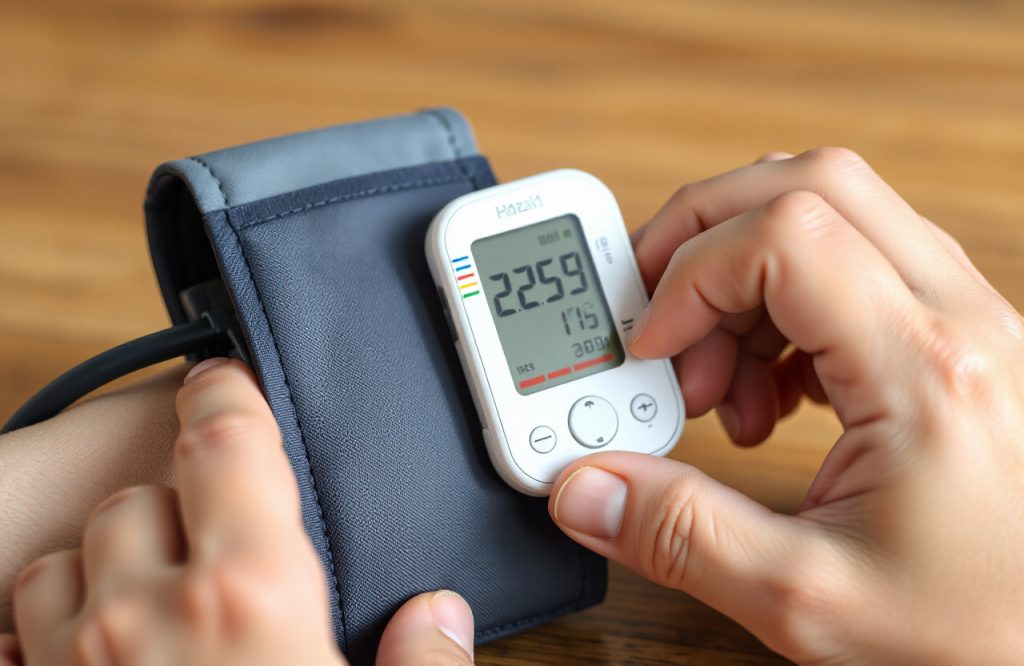
Wireless Blood Pressure Monitor Developed in Australia
Addressing Global Blood Pressure Issues
Researchers in Australia have created a wireless blood pressure monitor designed for continuous monitoring. Approximately 1.25 billion individuals globally experience blood pressure abnormalities, including both high and low blood pressure. These irregularities are significant risk factors for various health conditions.
Limitations of Traditional Blood Pressure Measurement
Traditionally, blood pressure is assessed using a sphygmomanometer and a stethoscope. This conventional method can cause discomfort, particularly for critically ill patients. Continuous monitoring often necessitates the insertion of a needle into the patient’s artery, which poses risks such as infection and potential limb loss.
Innovation from Monash University
Researchers from Monash University have introduced a wireless blood pressure monitor that continuously tracks blood pressure without invasive techniques. Their findings were published in the journal Nature. Previous devices utilizing radar technology for continuous blood pressure measurement fell short in terms of patient comfort and data accuracy.
Study Design and Methodology
The goal was to create a method that could monitor blood pressure throughout daily activities, allowing for a more comprehensive study. The wireless blood pressure monitor developed incorporates a radar sensor positioned on the patient’s breastbone, a sensor on the left earlobe, and ECG electrodes on the chest.
Participant Details and Experiment Sessions
The study involved 43 volunteers, each fitted with a wireless blood pressure monitor alongside a calibrated blood pressure cuff. Participants engaged in two experimental sessions. In the first session, they sat, stood, and lay down for six minutes each. The continuous blood pressure monitor gathered data from the breastbone sensor, earlobe sensor, and ECG throughout these activities.
Twenty-six participants were randomly selected for the second session, during which they performed handgrip exercises and cycled at varying resistances (low, medium, and heavy). Blood pressure readings were taken every three minutes from the blood pressure cuffs during these activities and recovery periods.
Results and Accuracy Findings
The researchers found that the wireless blood pressure monitor demonstrated a 93% accuracy rate during the first session and an 83% accuracy rate in the second session. Researcher Mehmet Yet stated, “The CWR sensors present a low-power, continuous, and potentially wearable system with minimal body contact to monitor aortic valve activities directly. Doctors would be interested to see such information for long-term better diagnosis of their patients. Results of this study demonstrate the potential superiority of CWR-based PEP extraction for various medical monitoring applications, including blood pressure monitoring.”
Additional Relevant Topics
For readers interested in related subjects, consider exploring the following topics:
– How to live healthily and reduce high blood pressure
– Why measure blood pressure in both arms?
– The role of spices and herbs in potentially reducing blood pressure
– The prevalence of high blood pressure in children
– The relationship between alcohol consumption and blood pressure
– The potential of blood pressure medications in treating Alzheimer’s disease
Reference
Pour Ebrahim, M., Heydari, F., Wu, T. et al. Blood Pressure Estimation Using On-body Continuous Wave Radar and Photoplethysmogram in Various Posture and Exercise Conditions. Sci Rep 9, 16346 (2019). https://doi.org/10.1038/s41598-019-52710-8