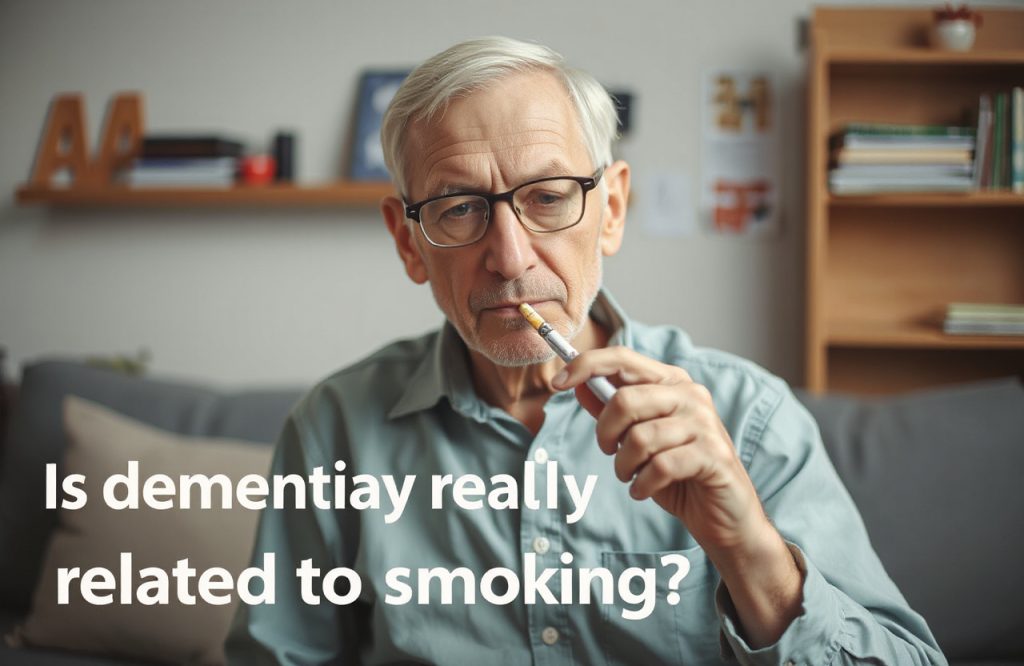
Investigating the Link Between Smoking and Dementia Risk
Study Background
Researchers in Kentucky aimed to explore whether smoking indeed increases the risk of dementia, building on findings from previous studies that suggested such a connection. Their investigation was published in the Journal of Alzheimer’s Disease, examining the relationship between tobacco smoking and dementia risk.
Limitations of Previous Research
While numerous studies have indicated a correlation between smoking and dementia, the Kentucky researchers noted that prior findings often overlooked smoking as a competing risk of death. This factor is crucial to consider since smoking is linked to premature mortality due to various health issues.
Understanding Competing Risks
The researchers highlighted that smoking could lead to death before dementia symptoms manifest. Thus, attributing dementia directly to smoking in these cases would be misleading. To address this, the study employed a mathematical analysis to assess whether smoking should be factored in when evaluating dementia risk.
Study Participants and Methodology
The study involved 531 adults aged over 60 with normal cognitive function at the outset, monitored over approximately 11.5 years by the University of Kentucky’s Alzheimer’s Disease Center. At the beginning, about 9% of participants were current smokers, while around 43% were former smokers.
Challenges in Data Collection
One limitation of the study is that smoking was self-reported only at the beginning, preventing researchers from accurately assessing participants’ overall tobacco exposure. They could not consider instances where former smokers may have resumed smoking or where current smokers may have increased their tobacco use. Additionally, data on secondhand smoke exposure, diet, and physical activity—factors that can influence dementia risk—were not collected. The study’s findings are also specific to the participant group from the university, limiting generalizability.
Findings on Smoking and Mortality
At the conclusion of the study, approximately 20% of participants were diagnosed with dementia, while about 45% died without developing dementia. The researchers’ statistical model, which accounted for the risk of death without dementia, indicated a similar risk level for both current and former smokers. However, current smokers exhibited a heightened risk of dying without dementia.
Implications of Competing Risks
After adjusting for the competing risk of death without dementia, the study found no association between smoking and new cases of dementia, a conclusion supported by neuropathological data from 302 participants. The concept of competing risks is complex but essential in interpreting health studies, as it can significantly influence results and conclusions.
Conclusions and Future Research Directions
In contrast to earlier studies, this research did not establish a direct link between smoking and dementia risk, as it considered other potential causes of death among participants. The authors recommend that future dementia research focus on variables beyond smoking and emphasize the importance of accounting for competing risks in similar studies.
Reference
Abner, E. et al. Tobacco Smoking and Dementia in a Kentucky Cohort: A Competing Risk Analysis. Journal of Alzheimer’s Disease. 68 (2019) 625–633.