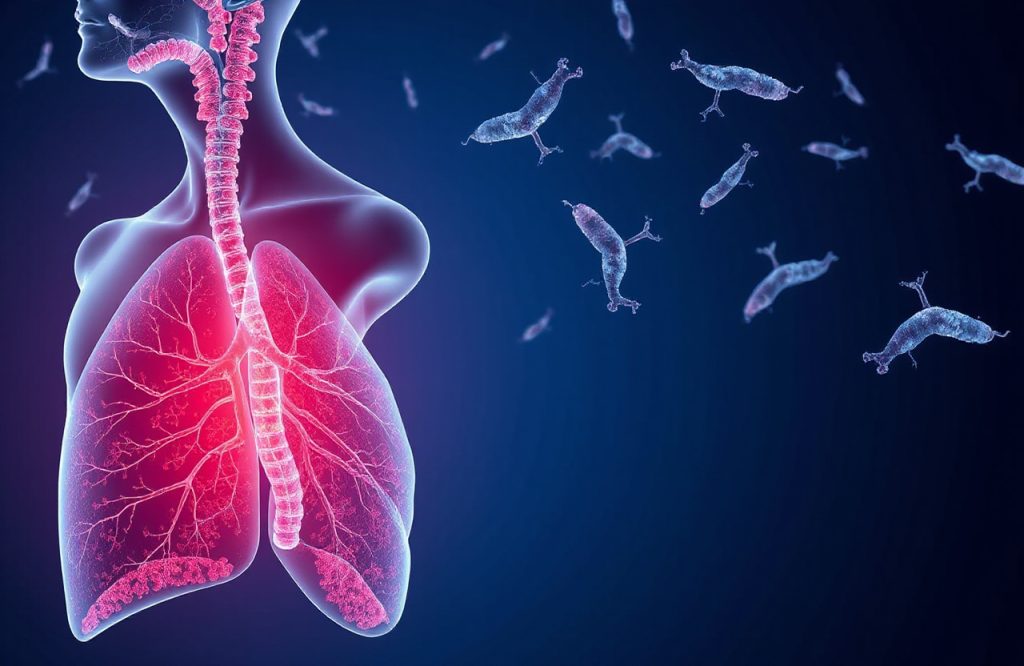
Link Between Upper Airway Microbiome and Asthma Severity
Research Findings
A recent study published in *Nature Communications* highlights a connection between the severity of asthma in children and the bacterial composition found in the upper airway. This discovery arose from nasal blow samples collected during a larger clinical trial involving 214 children. These samples were taken at two critical points: when asthma was under control and during exacerbations, referred to as the Yellow Zone (YZ).
Differences in Microbiome Composition
The study revealed notable differences in the upper airway microbiome between periods of controlled asthma and exacerbation. During controlled asthma, the microbiome was predominantly composed of beneficial bacteria such as Corynebacterium and Dolosigranulum. Children exhibiting these bacteria experienced a longer duration before facing at least two Yellow Zone episodes, indicating a potentially protective effect.
Pathogenic Bacteria During Severe Asthma
Conversely, when asthma symptoms intensified, the microbiome shifted to include more pathogenic bacteria, including Staphylococcus, Streptococcus, and Moraxella. The researchers observed that this transition from beneficial to harmful bacteria correlated with an increase in the severity of asthma symptoms.
Implications for Future Research
The limited number of Yellow Zone episodes in the larger clinical trial resulted in insufficient samples for detailed analysis. Moreover, samples were not collected after the Yellow Zone episodes during the return to controlled asthma, leaving a gap in understanding the relationship between the microbiome and asthma. This situation suggests a need for more research to explore the causality of these findings. The researchers are particularly interested in whether changes in the upper airway microbiome influence the severity of asthma symptoms, or if other factors, such as viral infections, play a role.
To further investigate this relationship, the researchers plan to utilize mouse models. Should bacteria indeed be implicated in severe asthma symptoms, there may be potential to modify the microbiome positively, thereby reducing asthma risk.
References
Zhou, Y., Jackson, D., Bacharier, L.B. et al. The upper-airway microbiota and loss of asthma control among asthmatic children. Nat Commun 10, 5714 (2019). doi:10.1038/s41467-019-13698-x
EurekAlert!. (2019). Asthma severity linked to microbiome of upper airway. [online] Available at: https://www.eurekalert.org/pub_releases/2019-12/wuso-asl121319.php [Accessed 20 Dec. 2019].
Image by Bob Williams from Pixabay.