Study Investigates Varicose Veins and Associated Blood Vessel Abnormalities
Understanding Varicose Veins
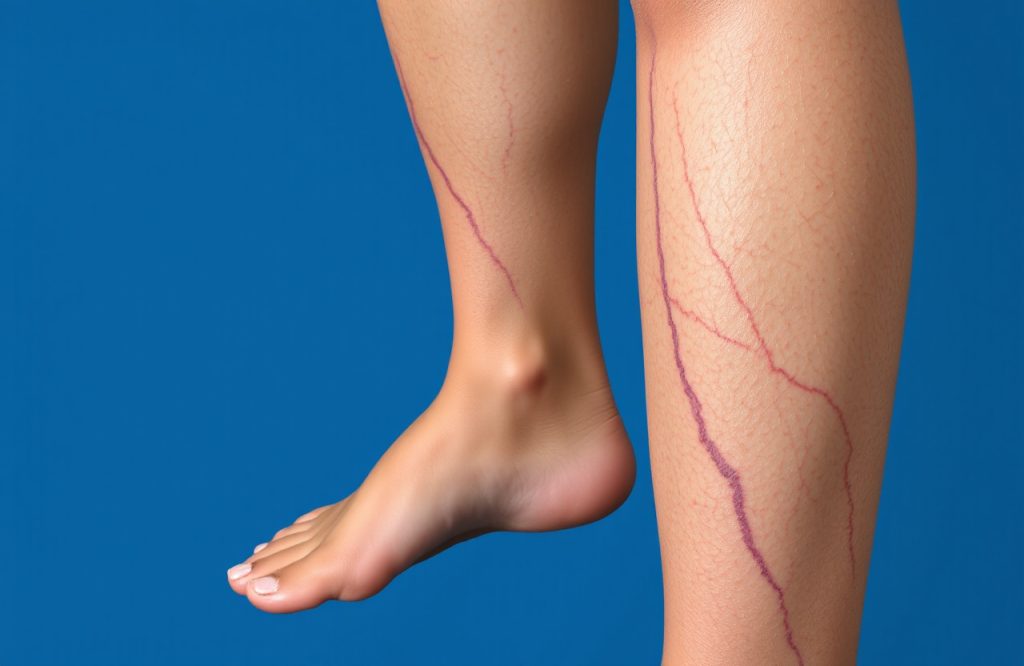
Varicose veins are a common condition, primarily affecting the legs, where veins fail to effectively transport blood back to the heart. The veins’ role is to return deoxygenated blood from the body’s tissues and organs, while arteries are responsible for supplying oxygen-rich blood. Together, these vessels form the circulatory system. Blood flow back to the heart from the legs relies on muscle contractions and small valves within the veins that prevent backflow. When these valves malfunction, blood can pool in the legs, leading to inflammation and various symptoms. Individuals with varicose veins may experience anything from mild discomfort to severe cramping, itching, or bleeding, with surgical intervention available for more painful cases.
Inflammation and Vascular Health
The prevalence of varicose veins is notable, with studies indicating that approximately 23% of adults in the United States are affected. Previous research has explored the impact of the inflammation associated with varicose veins on other vascular conditions. It is well-established that inflammation can contribute to issues like deep vein thrombosis, pulmonary embolism, and peripheral artery disease, which can obstruct blood flow and may lead to serious health complications. Researchers from Taiwan aimed to examine the potential links between varicose veins and these more severe vascular abnormalities.
Research Findings
The findings of this investigation were published in JAMA in February 2018, detailing a statistical analysis involving 212,984 adult patients diagnosed with varicose veins. The researchers analyzed insurance claims from medical visits to identify patients and subsequently searched for any occurrences of deep vein thrombosis, pulmonary embolism, or peripheral artery disease in their records. To ensure accurate comparisons, each patient with varicose veins was matched with a control patient of the same age and sex, who did not have these vascular conditions.
Increased Risk of Deep Vein Thrombosis
The study revealed a significant association indicating that adults with varicose veins are at a higher risk of developing deep vein thrombosis. Notably, the risk appeared to be most pronounced within the first year following the varicose vein diagnosis. However, the relationship between varicose veins and pulmonary embolism or peripheral artery disease was less definitive. The authors suggest that inflammation related to varicose veins may increase the likelihood of blood clot formation, potentially obstructing blood vessels.
Clarifying the Nature of the Association
It is crucial to understand that the study does not establish a direct cause-and-effect relationship between varicose veins and deep vein thrombosis. The design of the study only allows for the identification of an association, which may be influenced by various factors. For instance, obesity is a shared risk factor for both conditions.
Limitations of the Study
The researchers identified several limitations in their study. The data did not include individuals who did not file medical insurance claims, and the severity of the varicose veins among participants was not assessed, which could also correlate with the incidence of other vascular abnormalities.
Conclusion and Future Research
Despite these limitations, the study’s large sample size lends credibility to the observed association. The researchers concluded that further studies are needed to explore the potential causal relationship between varicose veins and deep vein thrombosis.
Written by Nicola Cribb, VetMB DVSc Dip.ACVS
Reference: Chang S-L, Huang Y-L, Lee M-C, et al. Association of Varicose Veins With Incident Venous Thromboembolism and Peripheral Artery Disease. Jama. 2018;319(8):807–817. doi:10.1001/jama.2018.0246.