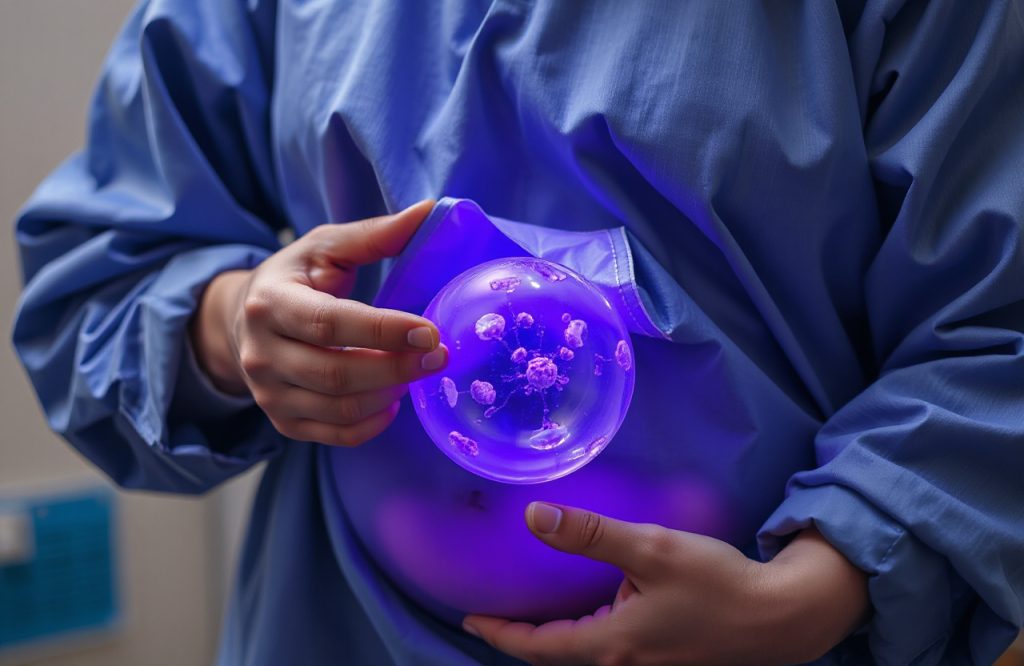
The Debate on the Human Womb Microbiome
Historical Assumptions
For over a century, the prevailing belief has been that the human womb is a sterile environment, devoid of microbes and lacking a microbiome. However, a recent study published in *Nature* has sparked a debate within the scientific community regarding the existence of a microbiome in fetuses before birth.
Understanding the Microbiome
The microbiome refers to a unique collection of microorganisms that inhabit a specific environment, forming a “mini-ecosystem.” In humans, this microbiome comprises various populations of symbiotic, commensal, and pathogenic bacteria. Traditionally, it was thought that the womb, unless compromised, did not harbor these microorganisms.
New Research Findings
Recent inquiries have challenged this long-held belief. A research team from St. Louis, Missouri, conducted an investigation by sampling placentas, leading to surprising results. Approximately one-third of the samples contained microorganisms. While the presence of bacteria often indicates an infection that can result in premature birth, the microorganisms identified in this study were non-pathogenic, with no signs of inflammation present.
Implications for Fetal Development
These findings suggest the possibility of a microbiome in the womb, raising critical questions about when microbes first settle in the human body. Previous assumptions indicated that microbial colonization began after birth through contact with the mother’s birth canal. If a womb microbiome does exist, it may play a significant role in pregnancy and the development of the immune system.
Continuing Skepticism
Despite accumulating evidence supporting the existence of a microbiome in the womb, skepticism remains among some scientists. Critics argue that what has been observed may simply be artifacts of DNA from cells or contamination during sample collection.
Examining the Placenta for Evidence
Initial Discoveries
The notion of a womb microbiome gained traction in 2014 when scientists detected bacterial DNA in placental tissue. If no microbiome exists in the womb, the bacterial makeup of the child’s microbiome should closely resemble that of the mother’s birth canal. However, researchers noted that infants were born with bacteria that did not match the maternal microbiome, suggesting the presence of microbes prior to birth.
Ongoing Research Challenges
While this groundbreaking study made headlines, many scientists remained skeptical, asserting that the presence of DNA alone is insufficient to confirm the establishment of a microbiome. Additional research teams have conducted similar analyses on placentas without finding evidence of a microbiome. A group in the United Kingdom reported comparable findings across numerous placental samples, highlighting the difficulty in identifying bacterial signals due to their low prevalence.
Microbial Absence in Laboratory Models
One of the strongest arguments against the existence of a womb microbiome stems from studies involving laboratory mice that are devoid of microbes. This raises questions about the potential for a microbiome in human fetuses.
Future Research Directions
Potential Discoveries
Future investigations may or may not succeed in identifying a microbiome in the womb. Nonetheless, many scientists concur that failure to find a definitive microbiome does not eliminate the possibility that the fetus encountered microbes during gestation. Additionally, the presence of some microbes does not necessarily indicate a complex and thriving microbiome.
Remaining Questions
Regardless of differing viewpoints, the topic presents intriguing questions that warrant further exploration. The scientific community continues to seek answers, and much remains to be learned about the potential microbiome in the human womb.
Reference
Willyard, C. (17 January 2018). Could baby’s first bacteria take root before birth? *Nature*, 553, 264-266. doi: 10.1038/d41586-018-00664-8.