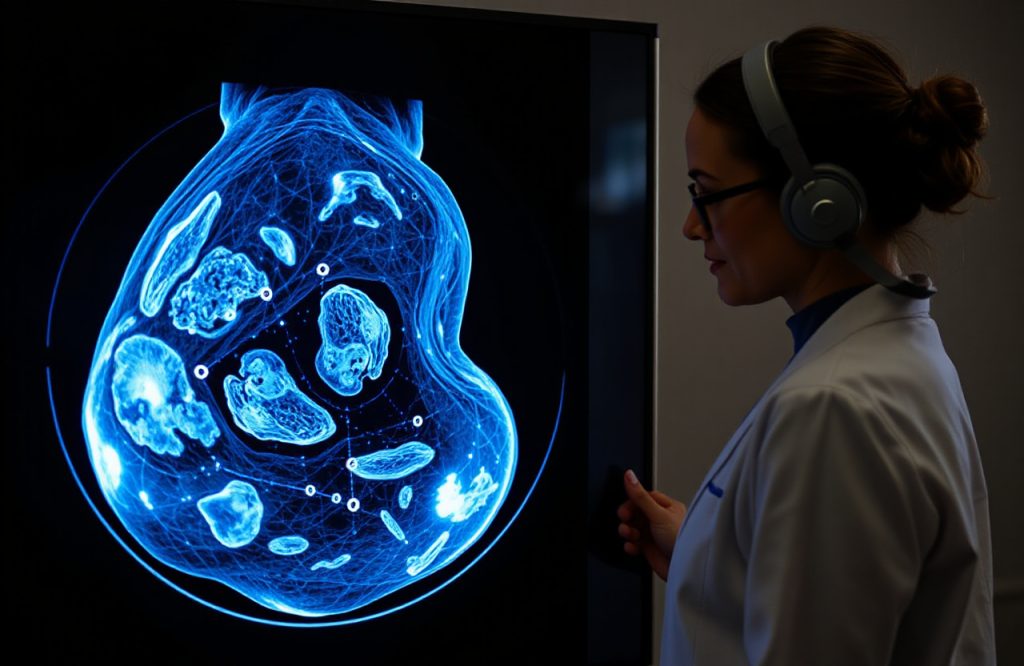
Study Evaluates Benefits of 3D Mammography in Breast Cancer Diagnosis
Introduction to Mammography Techniques
A recent study from Sweden, published in The Lancet Oncology, investigates the benefits of 3D mammography for breast cancer diagnosis. Mammography is a widely used x-ray diagnostic method in breast cancer screening. The 3D mammogram represents an evolution of traditional clinical breast examination techniques, potentially offering enhanced sensitivity and reduced discomfort during the procedure.
Research Methodology
Researchers conducted a comparative study to evaluate the effectiveness of 3D mammography against traditional breast cancer diagnostic tests. The study focused on English or Swedish speaking women attending Skåne University Hospital for routine breast cancer screenings. Volunteers were randomly selected to undergo 3D mammography in addition to the conventional method. Over a five-year period, the study analyzed results from approximately 15,000 women aged 40 to 75. Multiple radiologists reviewed each participant’s results, and a panel of experts identified the specific type of breast cancer if it was detected.
Findings on Sensitivity and Specificity
The researchers discussed the differences in specificity and sensitivity between traditional and 3D mammography methods. The findings revealed that 3D mammography is significantly more sensitive, detecting 34% of new breast cancer cases. However, this increased sensitivity came with a trade-off, as there were also instances of false positive diagnoses. These false positives resulted in some women being recalled for additional examinations to confirm the presence of cancer, which, while causing some system strain, ultimately benefited the patients.
Limitations of the Study
The authors acknowledged several limitations inherent to the study’s design. A key concern is that the research was conducted in a single hospital, raising questions about whether outcomes could differ in other healthcare settings.
Conclusion on Diagnostic Advancements
In conclusion, the study asserts that 3D mammography offers numerous advantages over traditional screening methods. It is quicker, more patient-friendly, and involves lower exposure to x-ray radiation. This pioneering clinical study positions 3D mammography as a leading new tool for improving breast cancer diagnosis.
Reference
Zackrisson S, Lång K, Rosso A, Johnson K, Dustler M, Förnvik D, Förnvik H, Sartor H, Timberg P, Tingberg A, Andersson I. One-view breast tomosynthesis versus two-view mammography in the Malmö Breast Tomosynthesis Screening Trial (MBTST): a prospective, population-based, diagnostic accuracy study. Lancet Oncology, 2018.