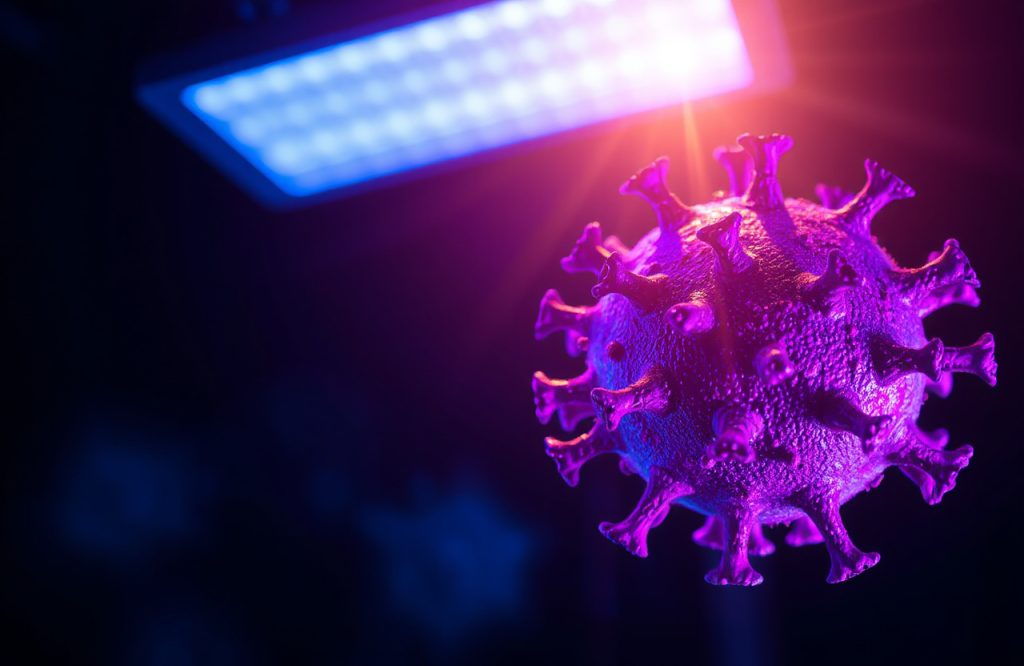
Effectiveness of UV Disinfection Against Coronavirus
Introduction to UV Disinfection Research
Recent research has demonstrated that a safe UV disinfection system can effectively eliminate the coronavirus. Studies indicate that SARS-CoV-2 can persist on surfaces for several days, raising concerns about hospitals potentially serving as transmission sources due to contaminated surfaces. In response to the COVID-19 pandemic, a study was conducted to evaluate the efficacy of UV disinfection on surfaces contaminated with SARS-CoV-2.
Understanding UV Disinfection Technologies
UV disinfection systems are increasingly utilized in healthcare settings to curb the spread of healthcare-associated infections. Typically, these systems emit UV radiation C (UVC) at around 254nm, which is known to be harmful to skin and eyes. However, prior research has indicated that 222-nm UVC light, categorized as far-UVC (207-222 nm), poses less risk while maintaining effective disinfection capabilities. Notably, earlier studies focusing on 222 nm UVC light primarily examined its effects on seasonal coronaviruses rather than specifically targeting SARS-CoV-2.
Study Overview and Methodology
Published in the American Journal of Infection Control, a study conducted by researchers from Hiroshima University utilized Ushio’s Care222TM krypton-chloride excimer lamp. In this experiment, sterile polystyrene plates were coated with a 100 microliter solution containing the coronavirus. Following drying in a biosafety cabinet at room temperature, a Far-UVC lamp was positioned 24 centimeters above the plates, delivering a radiation intensity of 0.1 mW/cm2. The plates were then analyzed for the presence of live virus after treatment.
Results of the UV Disinfection Study
The findings revealed that 99.7% of the SARS-CoV-2 coronavirus was eradicated after a mere 30-second exposure to 222 nm UVC irradiation at 0.1 mW/cm2. Traditional 254 nm UVC germicidal lamps, commonly used in healthcare facilities, are detrimental to skin and eyes, necessitating usage only in unoccupied spaces. In contrast, the 222 nm wavelength is significantly safer, allowing for potential use in occupied public environments.
Implications and Future Research
The researchers advocate for the adoption of a 222-nm UVC disinfection system in occupied areas, highlighting the need for effective strategies to mitigate the spread of SARS-CoV-2 through prevention measures such as UV disinfection. Nevertheless, they emphasize that additional studies are essential to assess the safety and effectiveness of 222 nm UVC irradiation in real-world conditions involving SARS-CoV-2 on surfaces.
Conclusion
This study represents a promising advancement in UV disinfection technology, offering a viable method to combat the spread of COVID-19. Continued research will be pivotal in validating these findings and ensuring the safe application of UVC disinfection systems in various environments.
References
Kitagawa, H., Nomura, T., Nazmul, T., Omori, K., Shigemoto, N., Sakaguchi, T. and Ohge, H., 2020. Effectiveness of 222-nm ultraviolet light on disinfecting SARS-CoV-2 surface contamination. American Journal of Infection Control. EurekAlert!. 2020. Study Shows First Proof That A Safer UV Light Effectively Kills Virus Causing COVID-19. [online] Available at: [Accessed 21 September 2020].
Image by Thor Deichmann from Pixabay.