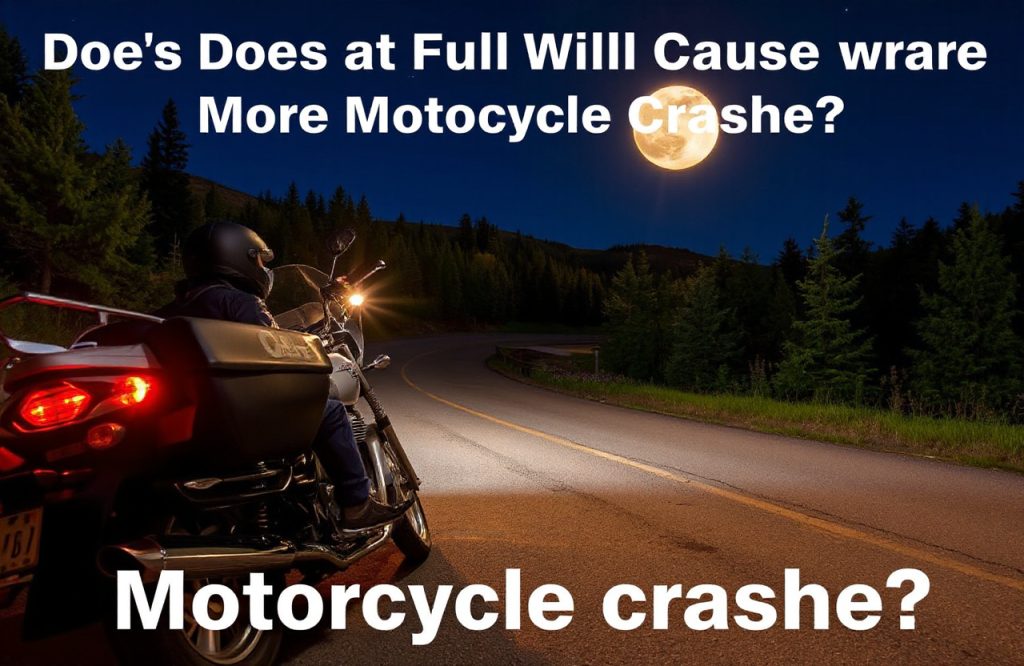
Impact of Full Moon on Motorcycle Crashes
Motorcycle Crashes and Mortality Rates
Motorcycle accidents are a significant cause of fatalities, accounting for at least 5,000 deaths annually in the United States alone. Research indicates that motorcyclists face a higher risk of death compared to a drunk driver without a seatbelt traveling the same distance. Despite this alarming statistic, advancements in engineering and law enforcement aimed at reducing motorcycle-related fatalities have been minimal.
The Fascination with Full Moons
Full moons occur 12 times a year and have long captivated human interest. Some speculate that the allure of a full moon may lead to increased motorcycle crashes by distracting drivers, thereby diverting their attention from the road. This hypothesis raises important questions about the relationship between lunar phases and road safety.
Study Overview
A recent study published in the British Medical Journal investigated the potential link between full moons and motorcycle-related deaths in the United States, Canada, the United Kingdom, and Australia. Canadian researchers utilized the Fatality Analysis Reporting System, an official database of fatal crashes in the U.S., to analyze incidents involving motorcycle fatalities from 1975 to 2014. They cross-referenced this data with full moon dates, which occurred 494 times during the study period, and included control points from a week before and after the full moons for comparison.
Findings of the Research
The study revealed that there were 13,029 motorcyclists involved in fatal crashes over the 1,482 nights assessed. Notably, 4,494 of these crashes occurred on nights with a full moon, while 8,535 occurred on control nights without a full moon. The findings show an average of 9.1 deaths on full moon nights compared to 8.6 on nights without one. Statistical analysis concluded that a full moon is associated with an increased risk of fatal motorcycle crashes. The authors recommend that motorcyclists exercise heightened caution during full moons and be aware of potentially distracted drivers.
Limitations of the Study
Despite its findings, the study has several limitations. It primarily compared full moon nights to two nights without one, neglecting other lunar phases that could provide a more comprehensive understanding of the full moon’s impact on motorcycle crashes. Additionally, key factors such as the age and gender of the motorist, weather conditions, travel speed, and crash causation were not analyzed. These variables may offer critical insights into the causes behind motorcycle accidents.
Conclusion
The study underscores the need for increased awareness and caution among motorcyclists during full moons. Further research is necessary to explore additional factors that may contribute to motorcycle-related fatalities, providing a more holistic view of road safety.
Reference
Redelmeier, Donald A., and Eldar Shafir. “The full moon and motorcycle related mortality: population based double control study.” BMJ 359 (2017): j5367.