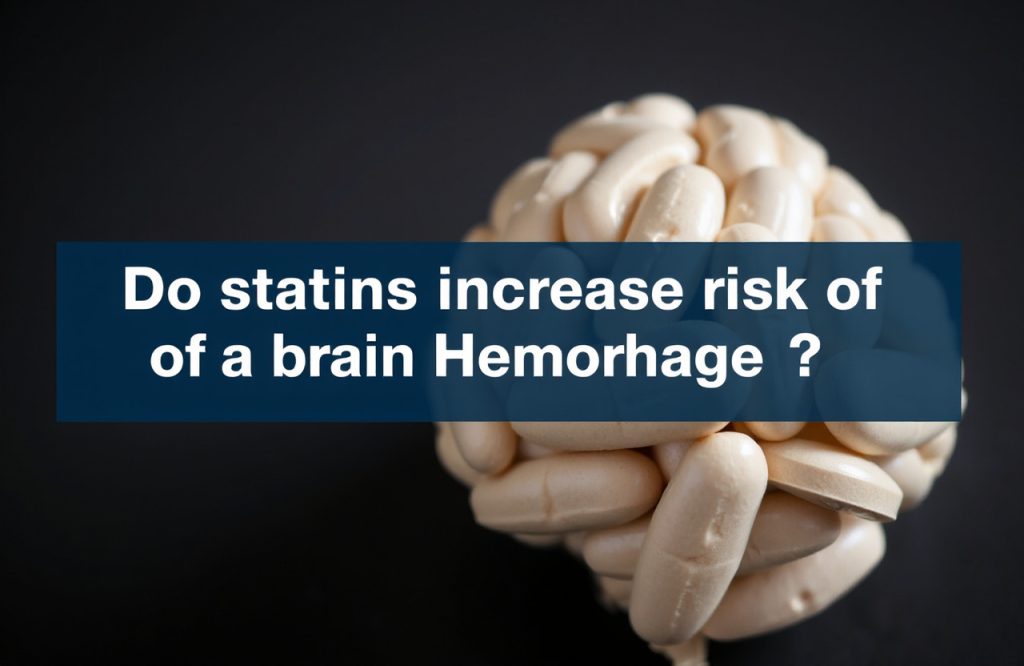
Largest Study on Statins and Brain Hemorrhage Risk
Introduction to Brain Hemorrhages
Researchers in Denmark are conducting the world’s most extensive study to assess whether statins increase the risk of brain hemorrhages in individuals without a history of stroke. A hemorrhagic stroke arises when bleeding occurs in the brain, leading to swelling and increased pressure that damages brain cells and tissues. There are two primary types of brain hemorrhages: intracerebral hemorrhages, which occur within the brain, and subarachnoid hemorrhages, which take place between the brain and its protective membranes. Intracerebral hemorrhages are more prevalent and challenging to treat, with various causes including hypertension, stimulant drugs, aging, and ischemia (a deficiency of blood flow to the brain).
The Paradox of Statins
It may seem paradoxical that a medication designed to prevent arterial blockages could contribute to brain hemorrhages, as statins work to open arteries and ensure a healthy blood supply to the brain. This raises the question: how are statins related to brain bleeding?
Understanding Statins
What Are Statins?
Statins are medications prescribed to lower high cholesterol levels, a condition known as hypercholesterolemia. They function by inhibiting an enzyme in the liver called 3-hydroxy-3-methylglutarylcoenzyme A (HMG-CoA) reductase, which is crucial for cholesterol production. By blocking this enzyme, statins prevent the conversion of HMG-CoA to L-mevalonic acid, a precursor to cholesterol, thereby reducing cholesterol levels in the bloodstream and preventing plaque buildup in blood vessels. Additionally, the inhibition of HMG-CoA reductase affects the production of other metabolic molecules, indicating that statins have effects beyond cholesterol reduction.
Statins and Blood Clot Prevention
Statins are believed to aid in preventing blood clotting through several mechanisms, including inhibiting platelet aggregation and enhancing fibrinolysis, the process of breaking down blood clots. These anticoagulant properties may contribute to an increased risk of intracerebral hemorrhage. Some researchers speculate that the reduction of cholesterol, a type of lipid, by statins may compromise the structural integrity of blood vessels, leading to ruptures and subsequent bleeding. However, these hypotheses remain unproven, and the exact mechanism by which statins might contribute to brain bleeding is not well understood.
The Impact of Statins on Stroke-Free Patients
Current Research Findings
Debate exists among scientists regarding the risk of brain hemorrhage and ischemic stroke in patients with prior strokes, with even more uncertainty surrounding the effects of statins on those without stroke histories. A recent study published in EClinicalMedicine sought to clarify this issue. This groundbreaking research involved over 519,894 individuals in Denmark, tracked over a decade using nationwide health registers. The large sample size, extensive observation period, and comprehensive follow-up provide robust data.
The researchers analyzed patients over the age of 50, categorizing them into statin and non-statin users. They employed statistical modeling to adjust for various factors such as age, sex, cohabitation status, education, income, and co-morbidities, including hypertension and diabetes, as well as treatments influencing stroke risk.
Results of the Study
The findings revealed that within the first six months of statin use, there was no significant difference in the risk of stroke or brain hemorrhage between statin and non-statin users. Notably, after six months, statin users exhibited a 22–35% lower risk of brain hemorrhages compared to their non-statin counterparts. These results could significantly influence public health, potentially alleviating concerns among physicians about prescribing statins to patients without stroke histories.
Expert Commentary
Dr. Anette Riisgaard Ribe, the lead author from the Danish Research Unit for General Practice, expressed the study’s implications, stating, “With our study, we can conclude that any concerns are unfounded among this group of patients, and that such concerns could even be potentially harmful if they lead to doctors having second thoughts about prescribing medicine so that the patient does not receive the correct treatment.”
Conclusion
The findings from this extensive study provide valuable insights into the safety of statins for stroke-free patients, potentially reshaping medical practices and enhancing treatment approaches for those at risk of high cholesterol.
References
Ribe, A. R. et al. Statins and Risk of Intracerebral Haemorrhage in a Stroke-Free Population: A Nationwide Danish Propensity Score Matched Cohort Study. EClinicalMedicine, doi:https://doi.org/10.1016/j.eclinm.2019.02.007 (2019).
Anette Riisgaard Ribe. Cholesterol-lowering drugs guard against brain haemorrhages (2019).
Lauer, A., Greenberg, S. M. & Gurol, M. E. Statins in intracerebral hemorrhage. Current atherosclerosis reports 17, 46 (2015).
Endres, M., Nolte, C. H. & Scheitz, J. F. Statin treatment in patients with intracerebral hemorrhage. Stroke 49, 240-246 (2018).
Wang, C.-Y., Liu, P.-Y. & Liao, J. K. Pleiotropic effects of statin therapy: molecular mechanisms and clinical results. Trends in molecular medicine 14, 37-44 (2008).
Sussman, E. S. & Connolly Jr, E. S. Hemorrhagic transformation: a review of the rate of hemorrhage in the major clinical trials of acute ischemic stroke. Frontiers in neurology 4, 69 (2013).