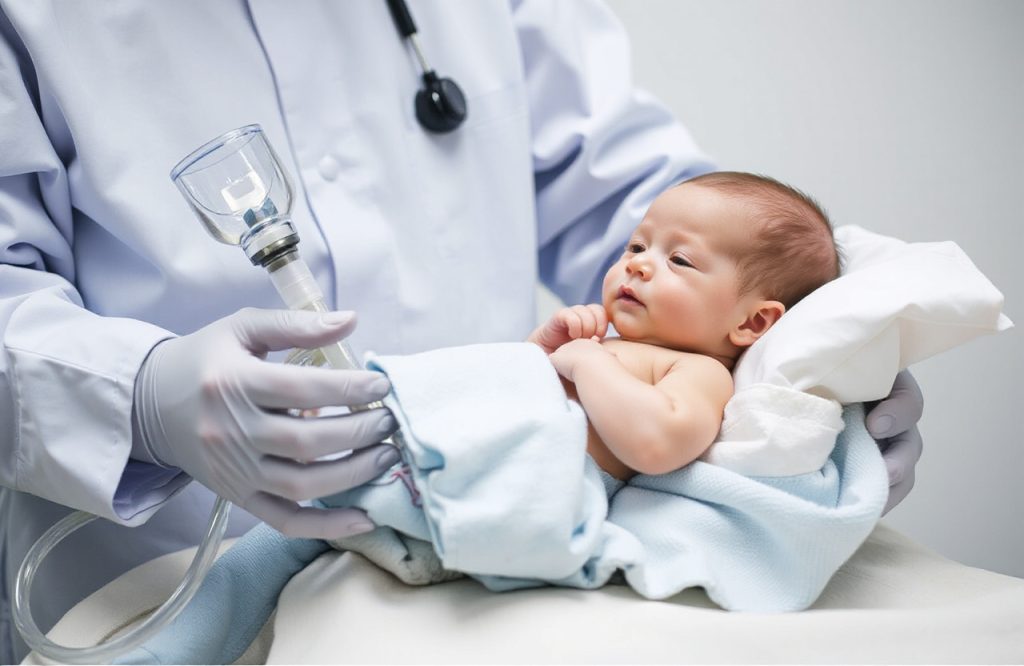
Challenges in Breathing for Extremely Preterm Infants
Need for Assisted Ventilation
Extremely preterm infants often struggle to breathe independently at birth, necessitating assisted ventilation. Despite advancements in less invasive ventilation techniques, a recent study indicates no significant enhancement in the long-term lung function of these newborns.
Evolution of Assisted Ventilation Techniques
Over the past 50 years, there have been considerable advancements in assisted ventilation methods. Currently, techniques have become less invasive, with one of the most common being nasal continuous positive airway pressure (CPAP). This non-surgical approach employs a machine to deliver a steady flow of air under pressure through the nose into the lungs, aiding preterm infants in breathing more easily.
Respiratory Challenges in Preterm Infants
Preterm infants frequently face respiratory issues due to their underdeveloped lungs, which hampers their ability to breathe on their own. Assisted ventilation is essential until these infants gain sufficient strength and maturity. However, the underdeveloped lungs are sensitive to oxygen levels; exposure to higher concentrations through assisted ventilation can potentially harm lung development.
Hypothesis and Study Overview
Given the less invasive nature of recent assisted ventilation techniques, Doyle and colleagues hypothesized that these advancements would correlate with decreased oxygen dependence and improved lung function by the age of eight. Their findings were published in The New England Journal of Medicine.
Methodology of the Study
The study assessed changes in assisted ventilation and oxygen therapy for extremely preterm infants (born before 28 weeks of gestation) during their newborn phase, followed by an evaluation of lung function at eight years of age. The research spanned three distinct periods: 1991-1992 (225 infants), 1997 (151 infants), and 2005 (170 infants) in Victoria, Australia. Data included the duration of all types of assisted ventilation and oxygen dependence at 36 weeks. Follow-up assessments of survivors occurred when the children reached approximately eight years of age.
Findings from the Study
Throughout the investigated periods, there was a notable increase in the duration of assisted ventilation, particularly with nasal CPAP. However, despite the rise in less invasive techniques, the duration of oxygen therapy and the rate of oxygen dependence at 36 weeks also increased. Additionally, children born in 2005 exhibited worse airflow compared to earlier cohorts, indicating no significant improvements in lung function by age eight.
Long-Term Implications of Lung Function
Abnormal lung function in childhood is associated with chronic obstructive lung disease in adulthood, making the impact of assisted ventilation on lung development in extremely preterm infants critically important for their lifelong health.
Advancements in Non-Invasive Ventilation
Since 2005, technological progress has introduced various new non-invasive assisted ventilation methods beyond nasal CPAP. These alternatives provide diverse options for preterm infants, including variations in flow, pressure, rate, and patient-triggering responses. While randomized trials have assessed short-term outcomes, long-term effects of these newer ventilation methods on lung function remain unexamined, making it premature to draw conclusions about their potential for improving long-term respiratory health.
Conclusion
Unfortunately, the study highlights that despite the increased use of non-invasive ventilation techniques in neonatal intensive care, there has been no improvement in lung function for preterm infants born between the 1990s and 2005.
Reference
Doyle LW, Carse E, Adams AM, Ranganathan S, Opie G, Cheong JLY; Victorian Infant Collaborative Study Group. Ventilation in Extremely Preterm Infants and Respiratory Function at 8 Years. N Engl J Med. 2017 Jul 27;377(4):329-337. doi:10.1056/NEJMoa1700827.