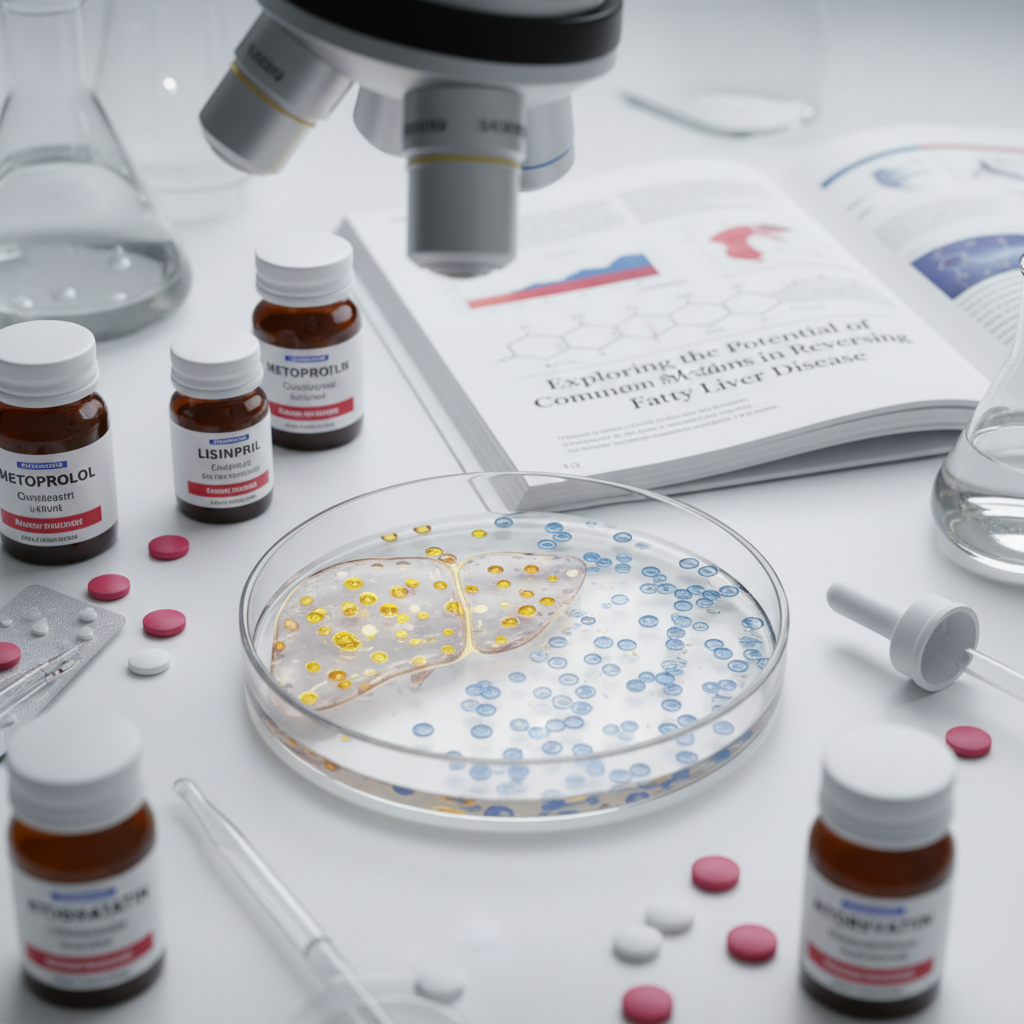
Heart Drug Combination May Reverse Fatty Liver Disease
Understanding Metabolic Dysfunction-Associated Steatotic Liver Disease
Metabolic dysfunction-associated steatotic liver disease (MASLD), formerly known as nonalcoholic fatty liver disease, is the most common chronic liver disorder, affecting nearly 40% of adults worldwide. Without timely intervention, MASLD can progress to severe liver complications, including cirrhosis and liver cancer. Unfortunately, treatment options for the disease in its early stages are currently limited.
Recent Research Findings
A recent study conducted with animal models has demonstrated that a combination of two commonly prescribed heart medications can reverse fat buildup in the liver. If these findings are confirmed through further research, they could lead to a novel treatment strategy for MASLD.
Rising Prevalence of MASLD
The prevalence of metabolic dysfunction-associated steatotic liver disease has increased over recent decades, currently impacting 38% of adults globally. While MASLD often exhibits few symptoms, untreated cases can escalate to more severe liver conditions. The disease is closely linked to cardiovascular issues, with both conditions sharing multiple risk factors, such as poor dietary choices, dysfunctional adipose tissue, insulin resistance, and chronic inflammation.
The Role of Weight Loss in Treatment
MASLD is often associated with overweight or obesity. One of the most effective non-pharmacological approaches for managing this condition is weight loss. Research indicates that individuals who are overweight or obese can alleviate the severity of MASLD by losing 3-5% of their body weight, and a 10% reduction may even reverse liver fibrosis. However, treatment options remain limited if weight loss is not effective.
Details of the Study
The study investigated the impact of two heart medications: pemafibrate, which reduces blood lipids, and telmisartan, used to control blood pressure. Researchers found that these medications significantly decreased fat accumulation in animal models of fatty liver disease. The findings, published in *Pharmacological Research*, suggest a promising potential for repurposing telmisartan and pemafibrate to treat MASLD.
Insights from the Research Team
Marta Alegret, DPharm, a pharmacology professor at the University of Barcelona and one of the study authors, shared her perspective on the study’s significance: “We have used a dietary rat model which mimics the initial stage of MASLD, simple steatosis without inflammation or fibrosis. These phases are often neglected because it is believed that they are benign, but the truth is that the risk of mortality is already increased. The importance of our findings is that we demonstrate that telmisartan and pemafibrate, alone or combined, effectively reduce liver lipid levels in this model.”