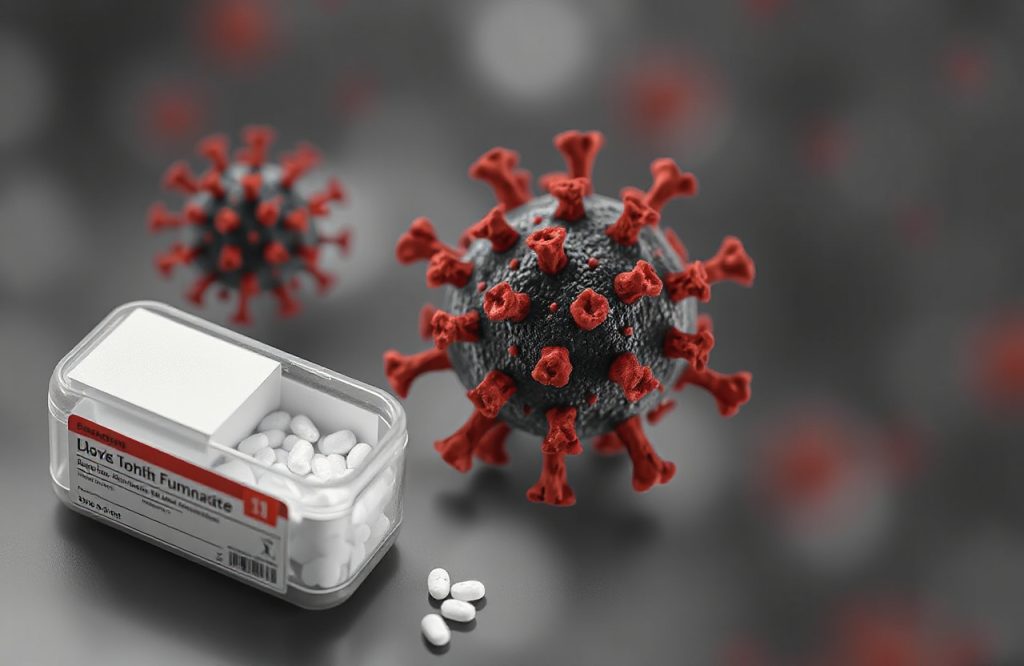
Research on Dimethyl Fumarate and COVID-19
Overview of the Study
Danish researchers conducted laboratory experiments to explore the effects of the multiple sclerosis medication dimethyl fumarate on the coronavirus. The COVID-19 pandemic, driven by the SARS-CoV-2 virus, underscores the necessity for a diverse array of effective antiviral drugs. Viral infections can harm humans by directly damaging cells and triggering inflammatory responses. In certain patients, SARS-CoV-2 induces severe inflammation, leading to serious health complications and potential fatalities.
Background of the Research
Prior to the COVID-19 outbreak, researchers at Aarhus University in Denmark were studying a group of antiviral drugs designed to inhibit the growth of various viruses while also possessing anti-inflammatory properties. With the emergence of the pandemic, they shifted their focus to testing these medications against SARS-CoV-2. Dimethyl fumarate, known for its use in treating multiple sclerosis—a condition where the immune system attacks nerve fibers—was among the drugs investigated. The findings were recently published in the journal Nature Communications.
Importance of Antiviral Drugs
Reducing Viral Growth and Inflammation
Initially, the researchers examined the effects of 4-octyl-itaconate, a drug similar to dimethyl fumarate, on the growth of viruses such as herpes, smallpox, and Zika in human cell cultures. Following the COVID-19 outbreak, they tested 4-octyl-itaconate against SARS-CoV-2 and discovered its ability to inhibit viral growth while reducing inflammatory pathways. Building on these promising results, they further evaluated dimethyl fumarate, which demonstrated comparable effects in inhibiting SARS-CoV-2 growth and mitigating the cellular inflammatory response.
Potential for Dimethyl Fumarate as a Coronavirus Treatment
Research Findings and Future Prospects
The researchers express optimism regarding their preliminary findings, yet emphasize that these studies are laboratory-based and not clinical trials involving patients. Dr. Christian Holm, a lead author of the study, stated, “As we’re doing basic research, we obviously don’t know whether the drug [dimethyl fumarate] works on infections in humans, and it’s up to the infectious disease experts to test for this. However, I have to say that I’m very optimistic.”
Advantages of Dimethyl Fumarate
An advantage of dimethyl fumarate is its existing approval for use in multiple sclerosis patients, potentially allowing for a swift transition to clinical trials. Dr. Holm noted, “You can really save a lot of time when you’re testing a medication that has already been approved and tested in another context.” The research team hopes that dimethyl fumarate will advance to human trials soon.
References
1. Olagnier D, Farahani E, Holm C, et al. SARS-CoV2-mediated suppression of NRF2-signaling reveals potent antiviral and anti-inflammatory activity of 4-octyl-itaconate and dimethyl fumarate. Nature Communications 11, Article number:4938 (2020). https://doi.org/10.1038/s41467-020-18764-3
2. Aarhus University, Press release Oct 2, 2020. Medicine for multiple sclerosis patients inhibits coronavirus – at least in a test tube. https://www.eurekalert.org/pub_releases/2020-10/au-mfm100220.php
Image by fernando zhiminaicela from Pixabay