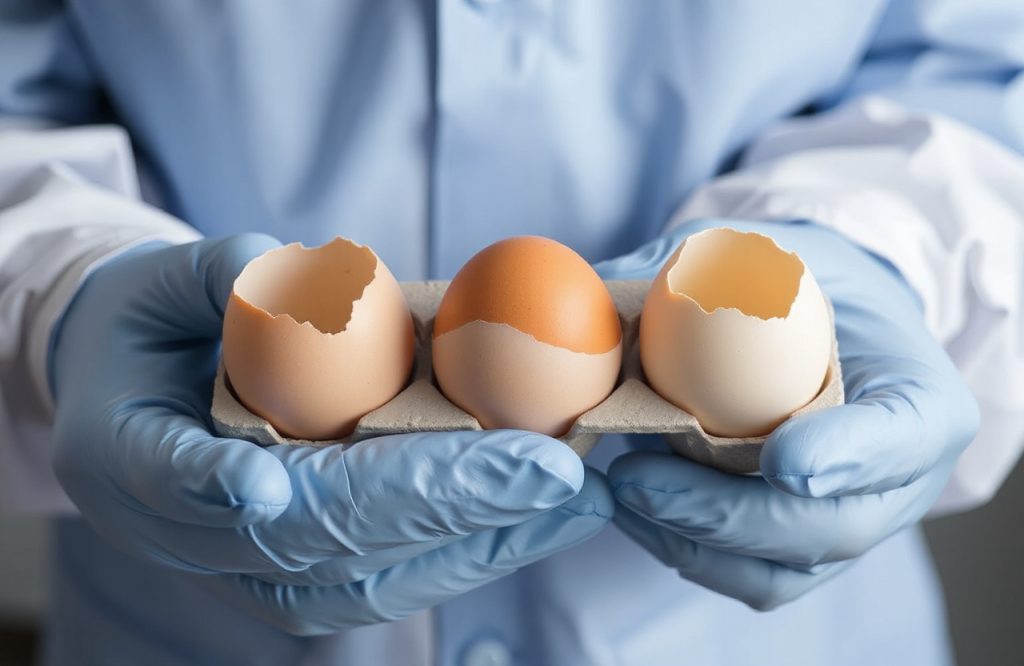
Potential for Lab-Cultivated Human Eggs from Ovarian Tissue
Introduction
Researchers are investigating the possibility of utilizing young ovarian tissue to cultivate mature human eggs in a laboratory setting. This innovative approach aims to assist women facing infertility challenges.
Understanding Ovarian Tissue and Follicle Development
Ovarian tissue comprises aggregates of cells known as primordial follicles. Within these follicles lie immature egg cells, which mature until puberty. Upon reaching puberty, these follicles rupture, releasing one egg each month. Previous studies using mouse models have successfully demonstrated that in vitro grown (IVG) eggs derived from primordial follicles can lead to offspring. However, the potential of this technique for human IVG eggs remains largely unexplored.
Research Goals and Methodology
Infertility, defined as a reproductive system disorder preventing pregnancy, could potentially be addressed by this technique, which minimizes the reliance on in vivo egg maturation. Researchers aimed to determine whether they could generate mature egg cells from primordial follicles using specific culture systems.
In a study published in the journal *Molecular Human Reproduction* and discussed in *Science*, Telfer and her team at the University of Edinburgh reported their findings on achieving complete egg development from human ovarian tissue containing primordial follicles.
The research team collected ovarian biopsies and carefully dissected them to isolate the primordial follicles. These follicles were cultured for eight days in a medium designed to promote the formation of secondary follicles. The secondary follicles were then cultured separately in a growth protein-rich medium that mimics the reproductive physiology occurring naturally in the human body. After an additional eight days, immature egg complexes were further cultured on a specialized matrix for four more days.
Results and Findings
At the conclusion of this process, eggs measuring over 100 microns in diameter were selected for in vitro maturation and analysis. Although the procedure demonstrated some success, it was not entirely efficient; only nine out of the original 87 secondary follicles yielded a mature egg. Microscopic examination confirmed that in vitro growth had led to the formation of a mature egg. Despite the successful development of a mature egg from primordial follicles, the egg’s potential for further development remains uncertain.
Study Limitations and Future Directions
Several limitations were noted in this study, including the small number of biopsies and the low efficiency of the culture system. The research team recognizes the need to refine their methods to enhance the production of mature eggs. Additionally, it is crucial to investigate the fertilization potential of these mature eggs to determine their viability for clinical applications.
This research offers hope for the future of infertility treatments, particularly for individuals who have undergone chemotherapy or young girls diagnosed with cancer before puberty. If scientists can optimize this technique, it may become possible for infertile women to preserve young ovarian tissue for later use in generating eggs for in vitro fertilization.
Conclusion
As research progresses, the possibility of lab-cultivated human eggs could revolutionize infertility treatments, providing new options for women seeking to conceive.
References
(1) McLaughlin, M., et al. 2018. Metaphase II oocytes from human unilaminar follicles grown in a multi-step culture system. Molecular Human Reproduction. doi:10.1093/molehr/gay002
(2) Service, Kelly. These lab-grown human eggs could combat infertility—if they prove healthy. Feb. 8, 2018. doi:10.1126/science.aat2684