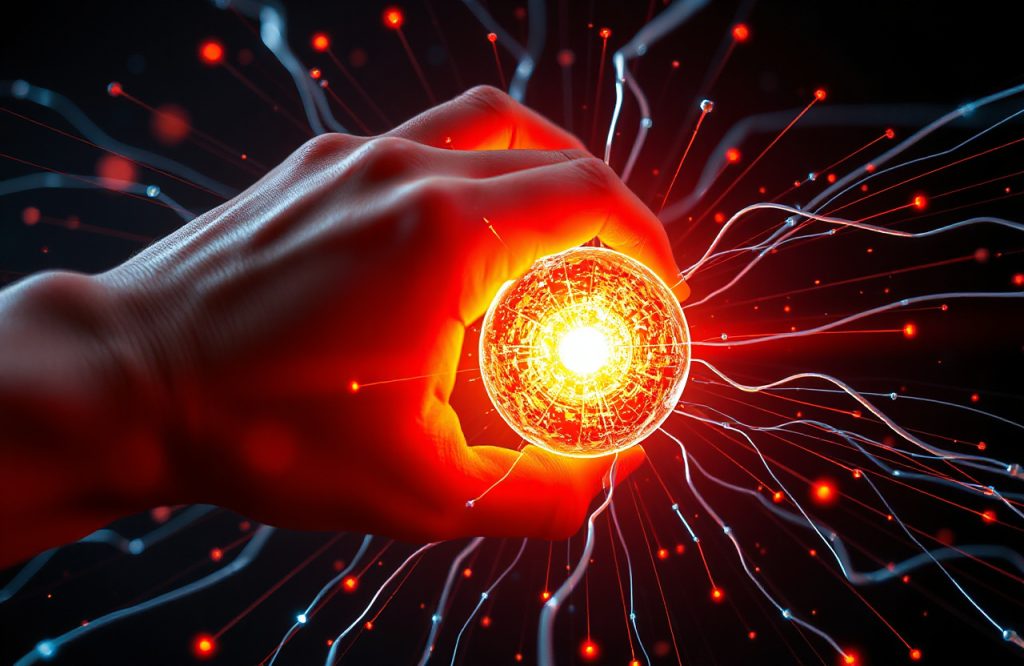
UCLA Researchers Utilize Magnetic Bioengineered Gels for Chronic Pain Management
Innovative Approach to Pain Management
Researchers at UCLA have unveiled a groundbreaking method for managing chronic pain using magnetic bioengineered gels. Unlike conventional therapeutics that target molecular irregularities, this approach employs physical forces to manipulate cells directly, a concept that has gained traction in recent studies.
Mechanism of Action
The research reveals that physical forces can modify the biophysical properties of cell membranes, enabling pain receptors to activate and facilitate rapid changes in ion channel activity. In individuals suffering from chronic pain, there is an increased presence of pain-sensitive channels, specifically TRPV4 and PIEZOZ2, in dorsal root ganglion (DRG) neurons. This heightened activity permits calcium ions to flow into the cells, which plays a crucial role in transmitting pain signals throughout the nervous system.
Use of Hyaluronic Acid-Based Gels
The UCLA team developed hyaluronic acid-based gels that encapsulate small magnetic particles. Hyaluronic acid is naturally present in nerve tissues, such as the brain and spinal cord, making these gels highly biocompatible. The researchers cultured DRG neurons within these gels and applied magnetic forces to stimulate the cells.
Application of Magnetic Forces
When magnetic stimulation was applied, the embedded particles reacted, generating minute mechanical forces that affected the neurons. This led to slight deformations in the cellular membranes, which altered calcium influx through the TRPV4 and PIEZOZ channels. Since calcium flow is critical for pain sensitivity, this modulation presents a promising avenue for chronic pain management.
Benefits of the Magnetic Method
The findings, published in the journal Advanced Materials, outline several advantages of this innovative approach. The biophysical properties of hyaluronic-acid-based gels align closely with those of neural tissues, allowing for deep tissue injections that minimize rejection risks associated with foreign materials. Additionally, these gels can be produced and transported in large quantities without requiring specialized handling.
Potential for Broader Applications
The authors suggest that this magnetic method could be adapted for various cell types, including cardiac cells and other cells expressing ion channels responsive to mechanical stimuli. However, they emphasize the necessity of optimizing the force applied to effectively modulate ion fluxes in pain-related channels.
Conclusion
This research marks a significant advancement in the field of chronic pain management, providing a novel approach that leverages the properties of magnetic bioengineered gels to influence neuronal activity.
Reference
Tay, A., Sohrabi, A., Poole, K., Seidlits, S., & Di Carlo, D. (2018). A 3D Magnetic Hyaluronic Acid Hydrogel for Magnetomechanical Neuromodulation of Primary Dorsal Root Ganglion Neurons. Adv Mater, e1800927. doi:10.1002/adma.201800927