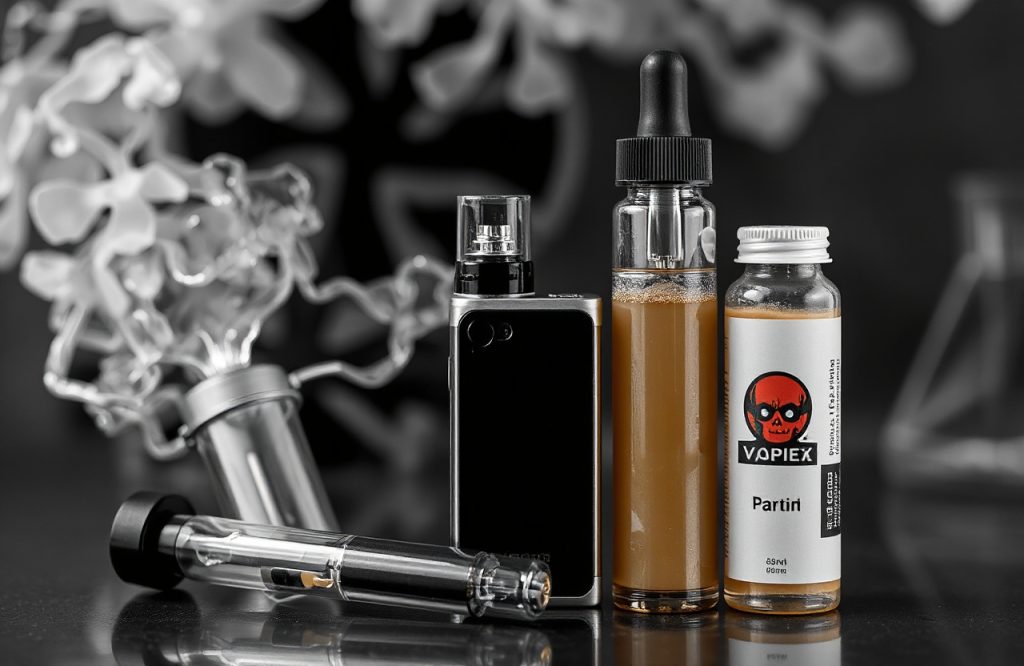
Examining the Flavor Components of E-Cigarettes
Introduction to E-Cigarette Flavors
Researchers have investigated the flavor components of e-cigarettes, commonly known as “e-liquids,” to assess their potential reactivity. The rise in popularity of e-cigarettes among youth can be attributed to their wide array of flavors, including vanilla and cherry. These flavors are derived from fragrant aldehydes, which combine with nicotine, propylene glycol (PG), and glycerol (VG) to create standard e-liquids. PG and VG are composed of chemical alcohols, and their interaction with aldehydes raises questions about possible reactions that could produce acetals.
Potential Toxicity of E-Cigarette Flavors
The ongoing debate surrounding the irritant and toxic potential of these chemical compounds is significant. Some aldehyde species have been identified as irritants, prompting Erythropel and colleagues to investigate whether a reaction occurs between aldehyde flavors and PG. Their study, published in the journal *Nicotine & Tobacco Research*, aimed to determine the potential toxicity of e-cigarette flavors.
Stability and Reactivity of E-Cigarette Flavors
Experimental Approach
The researchers conducted experiments involving chemical mixtures of e-cigarette flavors and PG or PG/VG combinations in vials. These mixtures were analyzed using a gas chromatograph, an instrument capable of detecting aldehydes and PG acetals. The team also examined commercial e-liquids and e-vapor to identify the presence of aldehydes, PG acetals, and nicotine.
Findings on Composition Changes
The results indicated that the vials containing e-cigarette flavors did not exhibit significant changes in composition over time. However, some flavors demonstrated the formation of PG acetals. The researchers noted that the ratio of PG/VG and the specific type of e-cigarette flavors influenced the rate at which PG acetals formed. In tests with commercial e-liquids, findings showed that a considerable amount of PG acetals could transfer into the respiratory airways, even in vapor form, with estimates ranging from 50% to 80%.
Implications for Safety and Toxicology
The study revealed that e-cigarette flavors do not completely break down into harmless substances within the airway surfaces, indicating a need for further investigation into their toxicological and biological effects. The authors utilized cell models to explore whether e-cigarette flavors could activate irritant receptors in human respiratory pathways. They found that PG acetals activated these pathways, often eliciting a stronger response than other irritant aldehydes.
Conclusions and Recommendations
Reactivity and Regulatory Needs
The findings suggest that e-cigarette flavors are reactive and likely irritating to users. The authors emphasize the necessity for additional testing and the establishment of safety regulations. These regulations should ensure that labeling, storage, and consumer information about e-cigarettes and vapors align with current research findings.
Future Considerations
The authors propose that a more comprehensive review of the entire lifecycle of e-cigarette products is warranted, as their chemical composition may change from the initial production phase to ingestion or inhalation by users.
Reference
Erythropel HC, et al. Formation of flavorant–propylene Glycol Adducts With Novel Toxicological Properties in Chemically Unstable E-Cigarette Liquids. Nicotine Tob Res. 2018; 1-11. doi:10.1093/ntr/nty192.