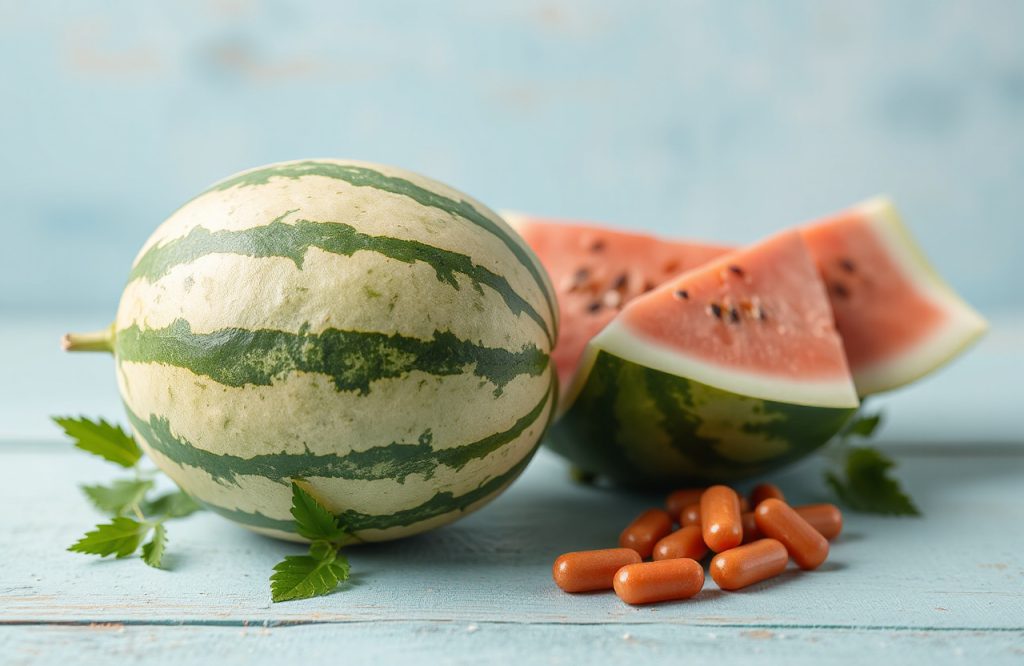
Watermelon Supplements and Their Impact on Obesity in Mice
Study Overview
Obese mice that received watermelon supplements exhibited lower blood sugar levels, reduced insulin concentrations, and decreased inflammation. This research is particularly relevant as over half of Americans struggle with obesity, leading to serious health concerns such as high blood pressure and type 2 diabetes. While lifestyle modifications, including exercise and healthy eating, are recommended, many individuals find it challenging to maintain a low-fat diet.
Research Focus
A study published in The Journal of Nutrition explored an alternative approach to lifestyle changes aimed at reducing the metabolic risks associated with obesity: the use of watermelon supplements. Watermelon by-products—comprising skin, rind, and flesh—are recognized for their potential in managing diabetes and lowering blood pressure. The researchers aimed to determine whether a powdered form of these by-products could enhance metabolic function in obese subjects.
Methodology
To assess the effects of watermelon supplements, researchers administered five distinct diets to mice over ten weeks: a low-fat diet, a high-fat control diet, and three high-fat diets supplemented with watermelon skin, rind, and flesh. The team monitored the mice’s weights and glucose levels at both the start and conclusion of the trial.
Findings on Weight and Blood Glucose Levels
At the end of the study, it was observed that the body weight of the high-fat control group was comparable to that of the high-fat groups receiving watermelon supplements, suggesting that these supplements did not significantly influence body weight. However, there was a notable reduction in blood glucose levels among the watermelon supplement groups, which were nearly equivalent to those in the low-fat diet group. Insulin levels showed a similar trend, being lower in the watermelon supplement groups compared to the high-fat control group. This is likely attributed to the reduced blood glucose levels, as insulin is essential for glucose storage and regulation.
Inflammation Reduction
The researchers also noted a decrease in inflammation among mice treated with watermelon supplements when compared to the high-fat control group. The control group displayed increased levels of compounds associated with inflammation, indicating that a high-fat diet may contribute to chronic inflammation. Remarkably, the group receiving watermelon flesh supplements had the lowest levels of inflammatory compounds, aligning closely with those of the low-fat diet group. This finding marked the first documented instance of watermelon consumption leading to a reduction in inflammation.
Implications for Human Health
Although these findings are based on mouse models, they suggest that watermelon supplements could offer a potential strategy to address the adverse health effects linked to obesity if similar outcomes are observed in human clinical trials.
References
Becraft, A., Sturm, M., Mendez, R., Park, S., Lee, S., and Shay, N. (2019). Intake of Watermelon or Its Byproducts Alters Glucose Metabolism, the Microbiome, and Hepatic Proinflammatory Metabolites in High-Fat–Fed Male C57BL/6 J Mice. The Journal of Nutrition.
EurekAlert!. (2019). Watermelon supplements bring health benefits to obese mice. [online] Available at: https://www.eurekalert.org/pub_releases/2019-12/osu-wsb121919.php [Accessed 27 Dec. 2019].
Image by Aline Ponce from Pixabay.