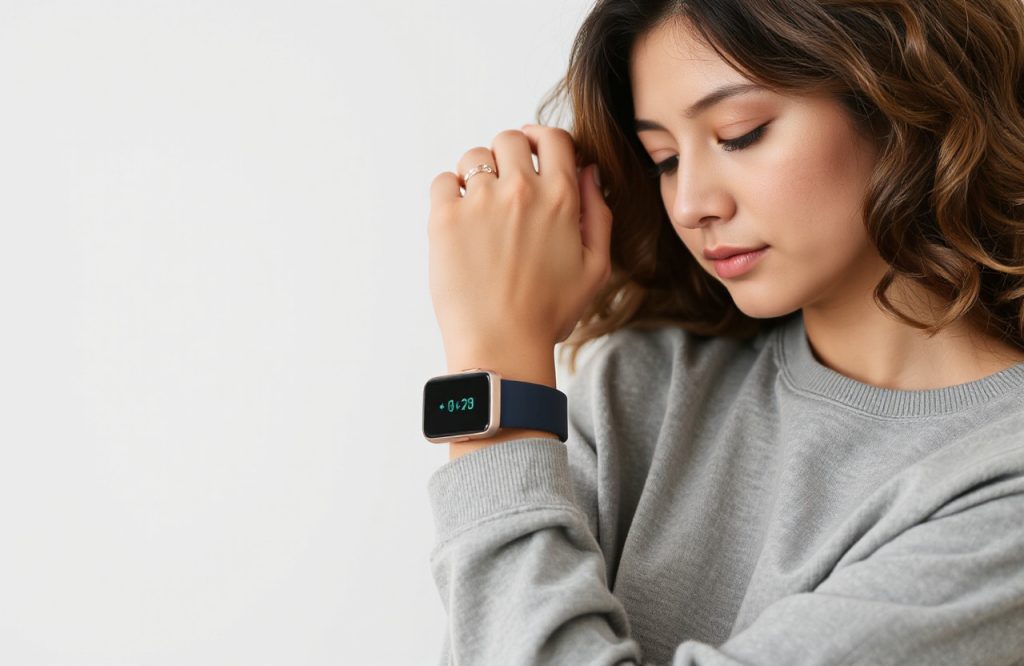
Investigating the Fitbit Charge 2 for Clinical Sleep Tracking
The Gold Standard in Sleep Tracking
Polysomnography has been recognized as the gold standard for assessing sleep-wake states and the composition of sleep stages. Recent research has explored the utility of the Fitbit Charge 2 for clinical sleep tracking.
Understanding Sleep Stages
A typical sleep cycle begins with two stages of light sleep, progresses to deep sleep, and concludes with rapid eye movement (REM) sleep, where dreams and memories occur. Healthy adults cycle through non-REM (light and deep sleep) and REM sleep multiple times each night. Each sleep stage is characterized by distinct brain waves, muscle, and eye activity, allowing researchers to identify when a person enters each stage and to measure the duration spent in each.
Polysomnography Technologies
Polysomnography gathers sleep data through multiple technologies, including electroencephalography (EEG) for brain wave measurement, electromyography (EMG) for muscle activity, and electrooculography (EOG) for eye movement. This comprehensive approach ensures the validity of the data collected.
The Rise of Consumer Wearables
Consumer wearable devices like the Fitbit Charge 2 are emerging as cost-effective and less intrusive alternatives for collecting sleep data. These devices allow for automatic detection and storage of sleep data through the Fitbit app, facilitating sleep analyses outside traditional sleep laboratories. This innovation could reduce costs and enhance accessibility for patients.
Insights into Sleep Patterns
Validity and Reliability Concerns
Despite the advantages of using the Fitbit Charge 2, questions regarding the validity and reliability of its sleep data have been raised. A recent study aimed to compare the sleep data collected by the Fitbit Charge 2 with that obtained through polysomnography.
Study Design and Participants
The study involved 44 healthy adults without medical conditions or drug use that could affect sleep stages. Nine participants with periodic limb movement during an initial test were excluded from the main analysis. Participants were monitored overnight in a sleep laboratory using both the Fitbit Charge 2 and polysomnography.
Data Comparison and Accuracy Assessment
The study compared sleep data from the Fitbit device to that from polysomnography to evaluate the accuracy of the Fitbit in detecting sleep stages and estimating time spent in each stage. Researchers also assessed the Fitbit Charge 2’s sensitivity in recognizing when participants were awake versus asleep based on polysomnography data.
Findings on Sleep Stage Estimations
The findings revealed that while the Fitbit Charge 2 accurately estimated REM sleep duration, it significantly overestimated light sleep and underestimated deep sleep duration. The device demonstrated strong accuracy in detecting sleep stages, but only achieved an accuracy of 0.49 for deep sleep detection. Additionally, the Fitbit showed limited ability to specify waking states compared to polysomnography. Overall, the Fitbit Charge 2 correctly identified 82% of polysomnography sleep cycles, showing no significant difference.
Further Studies and Limitations
Comparative Study in Clinical Populations
Following the initial study, researchers conducted a comparative analysis of the Fitbit Charge 2 and Fitbit Alta HR against polysomnography in patients with obstructive sleep apnea. This study aimed to address limitations identified in the previous research by evaluating sleep data in a diagnosed population.
Study Results and Implications
Of the 65 participants, 55 were confirmed to have obstructive sleep apnea. Similar to the earlier study, participants were monitored overnight in a sleep laboratory. The results indicated that only the Fitbit devices’ measure of REM sleep aligned with polysomnography findings, while other sleep outcomes differed significantly. For instance, wakefulness after sleep onset was underestimated, and total sleep time was overestimated.
Clinical vs. Consumer Use
While Fitbit devices may provide reasonable detection and monitoring of sleep stages for personal use, their limitations in accurately detecting wake states and deep sleep stages render them insufficient for clinical applications. Errors in estimating wake states or failing to detect deep sleep in the general population may not pose risks, but inaccuracies in clinical patients could lead to misdiagnoses.
Conclusion on Future Applications
Although the potential benefits of conducting sleep assessments outside a laboratory with more affordable devices are appealing, the need for valid and reliable sleep tracking remains paramount. The Fitbit devices show promise in altering sleep assessment approaches, but advancements in technology are necessary before they can adequately match the reliability of polysomnography.
References
de Zambotti M, Goldstone A, Claudatos S, Colrain IM, Baker FC. A validation study of Fitbit Charge 2™ compared with polysomnography in adults. Chronobiol Int. 2018 Apr;35(4):465-476. doi: 10.1080/07420528.2017.1413578. Epub 2017 Dec 13. PMID: 29235907.
Moreno-Pino F, Porras-Segovia A, López-Esteban P, Artés A, Baca-García E. Validation of Fitbit Charge 2 and Fitbit Alta HR Against Polysomnography for Assessing Sleep in Adults With Obstructive Sleep Apnea. J Clin Sleep Med. 2019 Nov 15;15(11):1645-1653. doi: 10.5664/jcsm.8032. PMID: 31739855; PMCID: PMC6853383.