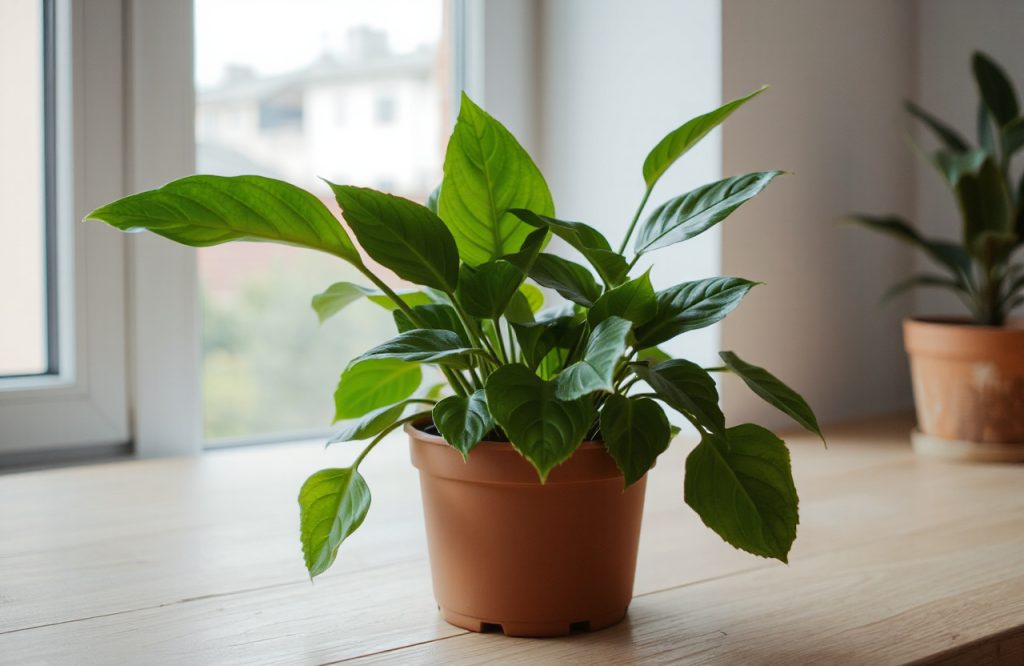
Genetically Modified Houseplant Cleans Indoor Air
Introduction to Air Pollution in Homes
Scientists at the University of Washington, USA, have engineered a genetically modified version of a common houseplant that effectively purifies the air in our homes. Notably, indoor air can often be more polluted than outdoor air due to substances like cooking residues, paints, furnishings, and chlorinated water. Among these pollutants, volatile organic compounds (VOCs), which include harmful chemicals such as benzene, formaldehyde, and chloroform, raise significant health concerns.
Limitations of Traditional Air Filtration Methods
Conventional air purifiers mainly target larger particulate pollutants, such as dust and pollen. However, they fall short in eliminating smaller VOCs, which are not captured by standard air filters like HEPA. Alternatives, like activated carbon filters, rely on adsorption, where VOCs cling to the surface of materials. Unfortunately, maintaining these filters can be costly and labor-intensive, often resulting in environmental impact. Researchers are now exploring the potential of houseplants to address these limitations, a strategy known as the “green liver” concept.
Natural Air-Purifying Abilities of Plants
Plants possess unique features that make them suitable for air purification. They have expansive surface areas for gas exchange, energy reserves to break down pollutants, and they require minimal maintenance. For instance, certain plants can absorb and metabolize formaldehyde, a common indoor pollutant. Yet, the natural capacity of plants to cleanse the air may not suffice for larger spaces without numerous plants.
Innovative Approach: Mimicking the Human Liver
Drawing inspiration from the human liver, researchers at the University of Washington utilized cytochrome P450 2E1, a protein that metabolizes VOCs like benzene and chloroform in liver cells, to enhance the capabilities of pothos ivy. Led by Dr. Stuart Strand, the team demonstrated that the modified pothos ivy effectively removed these harmful chemicals from the air, unlike its unmodified counterparts. Their findings were published in the December 2018 issue of the journal Environmental Science & Technology.
Creating a Synthetic Gene
The researchers synthesized a version of the 2E1 gene and integrated it into the pothos ivy plant. This choice was strategic, as pothos ivy is resilient and thrives in various indoor conditions. Additionally, it does not flower indoors, which prevents any risk of it spreading outside.
Testing the Modified Plant’s Effectiveness
To evaluate the modified pothos ivy’s ability to eliminate benzene and chloroform, scientists conducted experiments in a sterile environment, introducing these chemicals to test tubes with the modified plants. They tracked the chemical concentrations over 11 days and compared results with unmodified plants and control tubes without plants.
Results of the Study
The results were promising; within three days, chloroform levels decreased by 82%, becoming nearly undetectable after six days. Benzene levels also fell, with a reduction of approximately 75% after eight days. In contrast, no changes were observed in the control tubes with unmodified plants.
Limitations and Future Research
While these tests were conducted in a controlled environment, replicating the same results in a typical room would require airflow to direct pollutants towards the plants. Despite this minor challenge, the benefits of having low-maintenance houseplants purifying indoor air are significant. Encouraged by their findings, researchers aim to further enhance the detoxifying capabilities of these modified plants by incorporating additional genes to tackle pollutants like formaldehyde.
Conclusion
The implications of this research highlight a sustainable approach to indoor air purification. As summarized in a press release, “Without proteins to break down these molecules, we’d have to use high-energy processes to do it. It’s so much simpler and more sustainable to put these proteins all together in a houseplant.”
References
Zhang L, Routsong R, Strand SE, Greatly Enhanced Removal of Volatile Organic Carcinogens by a Genetically Modified Houseplant, Pothos Ivy (Epipremnum aureum) Expressing the Mammalian Cytochrome P450 2E1 Gene. Environmental Science and Technology, December 19, 2018.
Ferris R, Indoor Air Can Be Deadlier Than Outdoor Air, Research Shows. CNBC.com, 22 April 2016.
Researchers develop a new houseplant that can clean your home’s air (2018) Retrieved from https://www.eurekalert.org/pub_releases/2018-12/uow-rda121418.php.