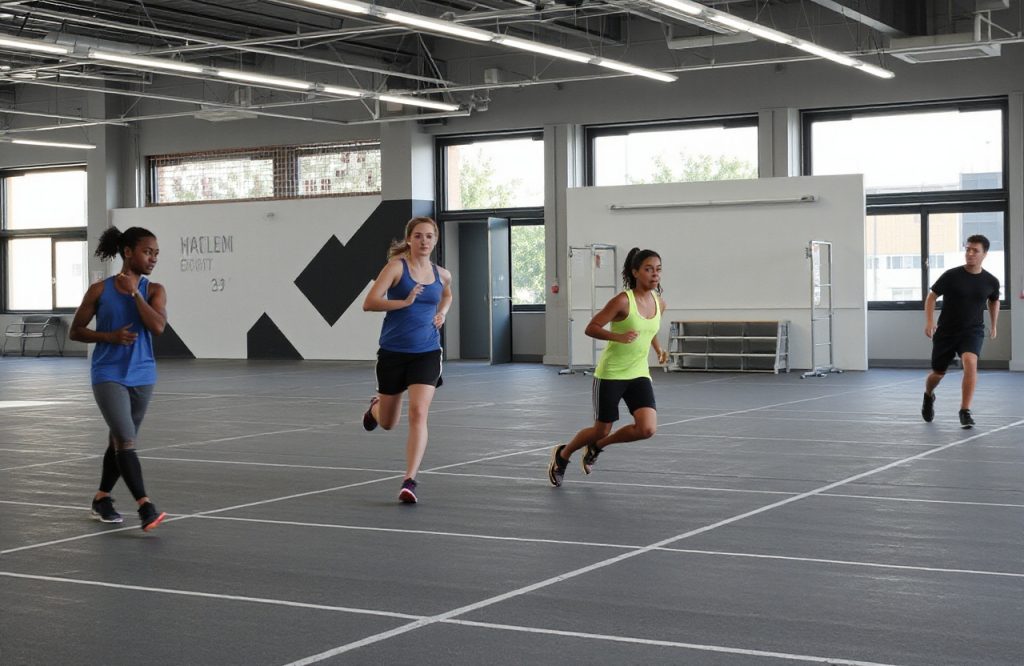
WHO Study on Adolescent Physical Activity Trends
Overview of the Study
A recent study conducted by the World Health Organization (WHO) examined data from 146 countries to explore trends in physical activity levels among adolescents. Engaging in exercise and physical activity during adolescence is crucial for numerous health benefits, including enhancing muscle, bone, heart, and lung health, as well as improving physical coordination and brain development. Maintaining a healthy weight and supporting mental health are also significant advantages of physical activity. The benefits acquired during adolescence are believed to extend into adulthood.
Current Recommendations
The WHO currently advises that children and adolescents aged five to 17 should engage in at least one hour of moderate-to-vigorous physical activity every day. Activities can include outdoor games, sports, walking, cycling, or even household chores.
Insufficient Physical Activity Among Adolescents
Historical Context
Past research indicated that the majority of adolescents were not meeting the WHO’s physical activity recommendations. In 2008, the global prevalence of insufficient physical activity among school-going children aged 13-15 was reported at 80.3%. Subsequent estimates in 2010 reflected similar trends.
Global Action Plan Initiatives
In response to the health risks associated with physical inactivity, the WHO launched a global action plan titled “More Active People for a Healthier World” in 2018. This initiative set a target for a 15% reduction in the global prevalence of insufficient physical activity among adults and adolescents by 2030. The recent study published in The Lancet Child & Adolescent Health focused on analyzing trends in insufficient physical activity among adolescents.
Findings from the Study
Analysis of Data
The researchers reviewed data from 298 school-based surveys conducted in 146 countries between 2001 and 2016, encompassing a total of 1.6 million students aged 11 to 17. The surveys collected information on various forms of physical activity, including play, sports, domestic chores, walking, cycling, and physical education.
Global Trends in Physical Activity
As of 2016, 81% of students aged 11 to 17 failed to meet the WHO’s recommendation of one hour of moderate-to-vigorous physical activity daily. Notably, girls were less active than boys, with 85% of girls and 78% of boys classified as insufficiently active. Although there was a slight improvement in physical activity rates among boys from 2001 to 2016, the rates for girls remained stagnant at approximately 85%. In 2016, 27 countries reported that over 90% of girls did not achieve sufficient activity levels, in contrast to only two countries for boys.
Regional Differences in Activity Levels
Some of the lowest rates of insufficient physical activity among boys were observed in Bangladesh (63%) and India (72%), potentially linked to a strong emphasis on sports like cricket in those regions. In the United States, the rate for boys was lower at 64%, which may be attributed to effective physical education programs, access to sports facilities, and media coverage of sports.
No distinct pattern was identified concerning country income groups. High-income Asia Pacific recorded the highest prevalence of insufficient activity in 2016, with 89.0% for boys and 95.6% for girls. In contrast, high-income western countries showed the lowest rates for boys at 72.1%, while South Asia had the lowest for girls at 77.5%. Boys in the Philippines and girls in South Korea exhibited the highest inactivity, while Bangladesh had the lowest levels of physical inactivity for both genders.
Call for Action
Need for Urgent Programs
The researchers concluded that most adolescents do not comply with WHO physical activity guidelines. They emphasize the necessity of enhancing existing effective policies and introducing new initiatives to promote physical activity, especially among girls. Such efforts require collaboration across various government sectors, including education, urban planning, and road safety, to foster an environment that encourages increased activity among young people.
Dr. Regina Guthold, the lead author of the study, stressed the importance of urgent policy actions to boost physical activity, particularly for girls. Co-author Dr. Fiona Bull highlighted the need for strong political commitment to address the alarming statistic that four out of five adolescents are not experiencing the benefits of regular physical activity. Policymakers and stakeholders are urged to take immediate action for the well-being of current and future generations of youth.
References
Guthold R, Stevens GA, Riley LM, et al. Global trends in insufficient physical activity among adolescents: a pooled analysis of 298 population-based surveys with 1.6 million participants. Lancet Child & Adolescent Health Published online Nov 21, 2019.
The Lancet, Press Release, 21 Nov 2019. “The Lancet Child & Adolescent Health: Majority of adolescents worldwide are not sufficiently physically active putting their current and future health at risk.” https://www.eurekalert.org/pub_releases/2019-11/tl-pss111919.php
Image by StockSnap from Pixabay