Overview
Breakthrough in Lung Cancer Treatment
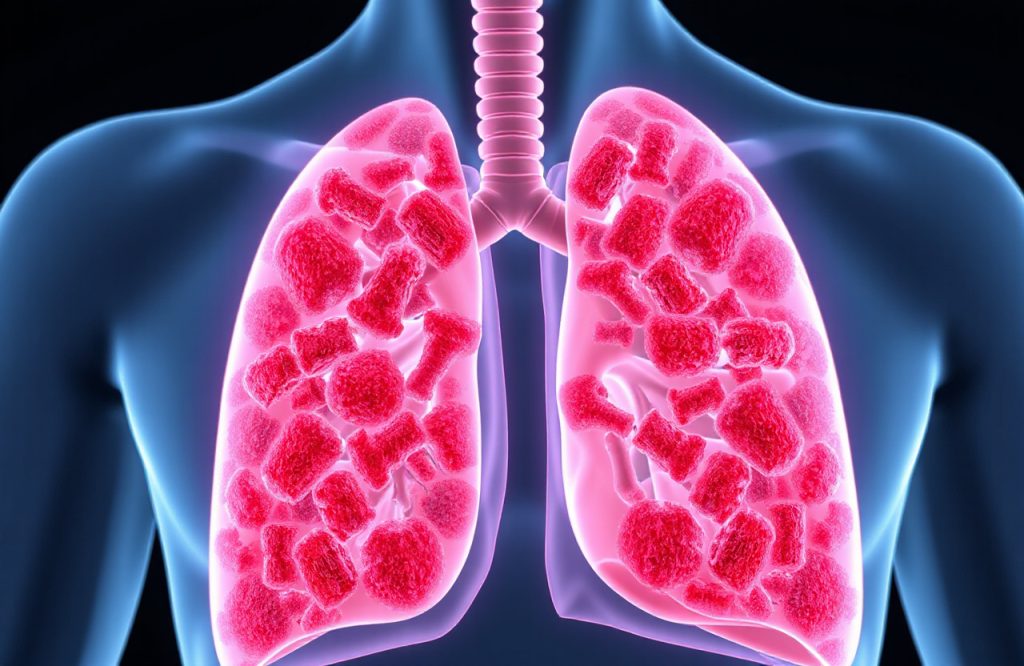
Recent research from the UF Health Cancer Institute reveals a significant advancement in lung cancer treatment. Despite 80% of lung cancer patients not benefiting from immunotherapy, scientists have identified a gut bacteria molecule that could potentially double response rates. The compound, named Bac429, originates from gut bacteria and has demonstrated a 50% reduction in lung tumor growth when combined with immunotherapy in mouse models.
Research Findings and Implications
Published in Cell Reports Medicine, the study led by Rachel Newsome, Ph.D., and Christian Jobin presents a promising development in the fight against one of the deadliest forms of cancer. The findings suggest that Bac429 is now ready for human trials and may revolutionize how lung cancer is treated, particularly for patients who currently have limited options.
Understanding Immunotherapy Response
Immunotherapy, specifically immune checkpoint inhibitors, works by enhancing the immune system’s ability to combat cancer. However, only about 20% of patients across various cancers respond to this treatment, with lung cancer showing the lowest response rates. Research indicates that the gut microbiome plays a crucial role in determining which patients benefit from immunotherapy, as responders possess different bacterial compositions compared to non-responders.
Decoding the Microbiome
The research team utilized innovative methods to unlock the secrets of the microbiome:
1. **Fecal Transplantation**: By transplanting stool from immunotherapy responders into tumor-bearing mice, non-responders began to show positive responses to treatment.
2. **Isolation of Beneficial Strains**: From an analysis of over 180 bacterial strains, the researchers isolated six bacteria that independently enhanced the effectiveness of immunotherapy.
3. **Identification of Bac429**: The team pinpointed Bac429, a metabolite produced by these beneficial bacteria. When injected directly into lung tumors, Bac429 resulted in a 50% reduction in tumor growth following immunotherapy.
Future Directions and Potential Impact
According to Christian Jobin, Bac429 functions similarly to the six bacteria but serves as a simpler drug, eliminating the need for complex fecal transplants. The compound likely activates immune cells in the gut, which then migrate to tumors, thereby enhancing the effects of immunotherapy. This research not only holds promise for improving response rates from 20% to 40-50% but also aims to achieve these outcomes without the addition of surgery or chemotherapy.
The rapid advancements in microbiome science highlight the potential of Bac429 as a pivotal player in cancer treatment. Human trials are on the horizon, which could significantly reduce lung cancer mortality rates and expand the efficacy of immunotherapy to a broader patient population. This research represents not merely a new drug but a step toward understanding the microbiome’s role in cancer treatment, potentially reshaping oncology as we know it.
Reference
Newsome, R. C., et al. (2025). Microbial-derived immunostimulatory small molecule augments anti-PD-1 therapy in lung cancer. Cell Reports Medicine. doi: 10.1016/j.xcrm.2025.102519. https://www.cell.com/cell-reports-medicine/fulltext/S2666-3791(25)00592-0
Speaker Profile
Anshika Mishra is a committed scholar currently pursuing a Master’s degree in Biotechnology. Her passion lies at the intersection of science and healthcare, aiming to contribute meaningfully to the medical field. In 2023, she joined Medic Helpline to further explore healthcare journalism and make an impact in the realm of scientific communication.