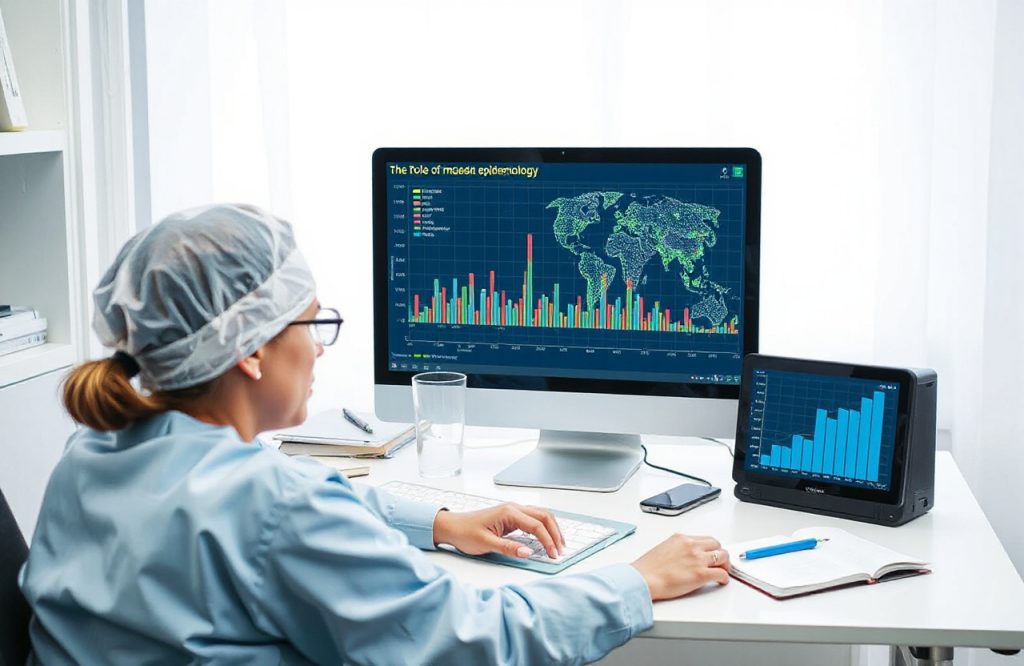
Understanding Modern Epidemiology Through Data
The Role of Data in Public Health
Finding patterns has always been fundamental to epidemiology. However, in today’s fast-paced world, these patterns are harder to discern and can change rapidly. Data now acts as a crucial guide for public health decisions, from anticipating virus outbreaks to preventing global pandemics. Modern epidemiology relies heavily on information, and the manner in which this data is shared and utilized can be the determining factor between effective control and chaos.
Data as a Powerful Tool
Fifty years ago, epidemiologists dedicated significant time to investigating outbreaks through phone calls and paper records. Today, advanced modeling and real-time reporting allow them to observe disease spread as it happens. During the COVID-19 pandemic, scientists employed this level of tracking to map infection rates across cities. The Johns Hopkins University COVID-19 Dashboard, for instance, garnered over 1.2 billion views daily, showcasing data as both a scientific and public resource.
However, success in data usage goes beyond mere volume; it demands accuracy and actionable insights. As Dr. David Banach from Woodbridge, Connecticut, noted, “The numbers don’t merely tell us what has happened; they guide us on where we should focus next. Data is your flashlight in the dark.”
Analyzing Data Effectively
Separating Signal from Noise
While there is an abundance of data available, not all of it is beneficial. The challenge lies in distinguishing valuable insights from irrelevant information. For example, in influenza tracking, only specific patterns—such as age, geography, and severity—are crucial. Analysts look for significant variations indicating broader trends.
A 2023 analysis by the CDC revealed that integrating Electronic Health Record (EHR) data with local testing results enhanced early flu detection accuracy by 45%. This improvement represents a significant advancement in both preventive and responsive public health measures.
The Art of Prediction
Epidemiologists function not only as data collectors but also as historians and forecasters. They utilize models to predict how diseases will propagate within populations, considering factors like contact rates, population density, vaccination status, and travel patterns. When calibrated correctly, these models can forecast outbreak peaks, identify hot spots, and inform resource distribution.
Dr. Banach described modeling as “biology mixed with math mixed with psychology,” emphasizing that it provides a potential outlook based on human behavior.
The Importance of Transparency
Building Public Trust
The efficacy of data hinges on public trust. Some dashboards became vital information sources during the pandemic, while others faced scrutiny for inaccuracies. Public confidence flourished when governments openly shared data, clarifying what was included and what was omitted. Conversely, hidden or contradictory data often fueled rumors.
Transparency doesn’t require revealing everything at once; it involves consistently highlighting what matters. For instance, a Connecticut hospital began publishing weekly infection summaries in straightforward language, leading to a 30 percent increase in staff confidence regarding infection control.
Real-Time Response and Community Engagement
Shifting to Real-Time Analysis
Traditionally, epidemiology focused on retrospective data analysis. Now, the emphasis is on real-time responses. Many hospitals and health departments employ syndromic surveillance to monitor patient symptoms before formal diagnoses. For example, if several patients report fever and cough in a particular area, alert systems can detect a potential outbreak days ahead of lab confirmations.
This early warning capability enables communities to act swiftly, resulting in fewer infections. A 2022 World Health Organization report indicated that early warning systems reduced the average response time to outbreaks by 60 percent globally.
The Human Element in Data
While epidemiology can be highly technical, it’s essential to remember that data represents real lives, not just numbers. As Dr. Banach articulated, “You can’t flatten people onto points on a graph.” Each data point corresponds to a family, a narrative, and a chance for improvement. Effective epidemiologists balance empathy with analytical skills, seeking to understand not just what is happening but why.
Addressing Challenges in Data Interpretation
The Risks of Misleading Data
Even reliable data can lead to misinterpretations if incomplete or misunderstood. During the initial COVID-19 phase, testing shortages obscured true infection rates, costing valuable response time. Moreover, rural areas often appear to have fewer cases due to lower testing rates rather than actual safety.
Renowned epidemiologists are naturally skeptical, routinely challenging data before acting on it. As one statistician famously stated, “In God we trust, all others bring data.” Yet even data must be contextualized to be useful.
Future Directions in Epidemiology
Improving Data Systems
The future of epidemiology depends on enhancing systems for data collection, sharing, and analysis. Standardized reporting across hospitals and laboratories is vital for seamless data flow. Investment in personnel who can translate data into actionable policy is equally important.
Public education is also crucial; empowering individuals to understand data and its significance enables informed health decisions.
Actionable Steps for Improvement
– Invest in data infrastructure: Upgrade reporting tools for faster, more accurate results.
– Train multidisciplinary teams: Merge epidemiology with computer science, sociology, and communication.
– Promote open data sharing: Encourage collaboration among hospitals, universities, and governments.
– Focus on community engagement: Translate statistics into actionable local health plans.
– Audit and refine models: Regularly check predictive tools for bias and accuracy.
Looking Ahead
The role of data in modern epidemiology continues to grow, crucial for identifying threats, shaping policies, and ensuring community safety. However, data alone cannot combat outbreaks; it requires skilled interpretation, collaboration, and fostering public trust.
The next generation of epidemiologists will need to blend analytical abilities with communication and storytelling. As Dr. Banach stated in a recent lecture, “Data does not save lives. People with good, timely, and reliable data do.” This vision encapsulates the future of epidemiology, where intelligence translates into action, ultimately enhancing public health for all.