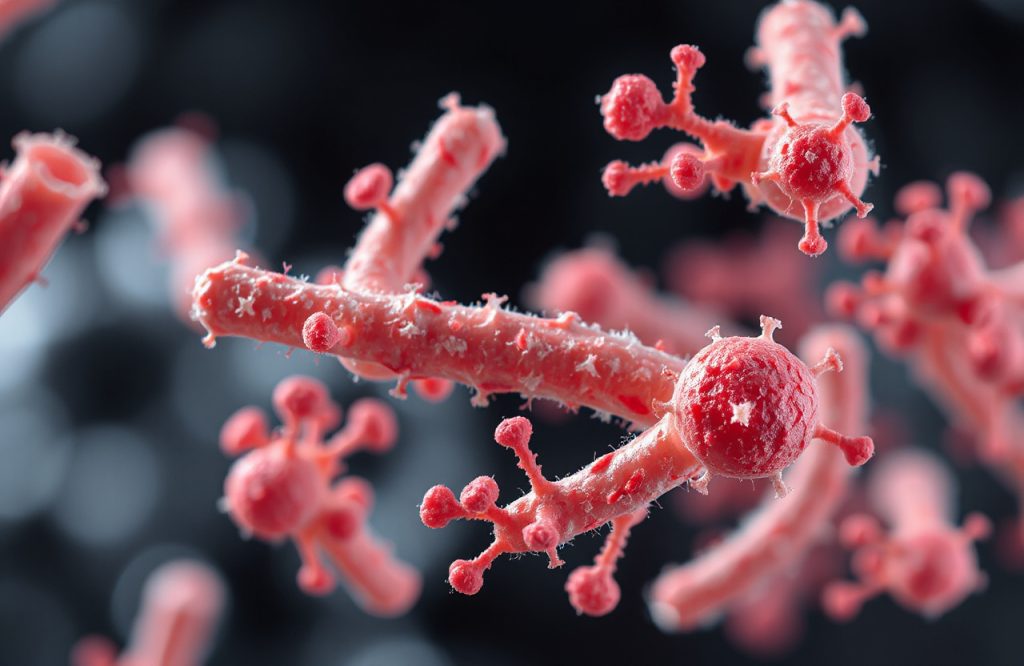
Exploring Weakened Bacterial Systems in Cancer Immunotherapy
Recent Insights from Frontiers of Oncology
A recent review published in *Frontiers of Oncology* highlights the potential of weakened bacterial systems as promising agents in cancer immunotherapy. The success of immunotherapeutic agents has revitalized the medical community’s efforts to identify innovative strategies that leverage the immune system’s capacity to combat cancer.
Historical Roots of Cancer Immunotherapy
The concept of immunotherapy is not new; it traces back to pioneering experiments by Dr. William Coley, a physician based in New York. In 1893, Dr. Coley recognized the potential of using bacteria to enhance the immune response against cancer. He created a mixture of bacterial extracts, including *Streptococcus* and *Bacillus*, which he injected into tumors in human patients. Remarkably, some patients experienced tumor regression as a result of this treatment.
Dr. Coley later refined his approach, developing a bacteria-based cancer vaccine known as Coley’s toxin. This vaccine involved weakening the pathogenicity of bacteria, such as *Streptococcus pyogenes* and *Serratia marcescens*, while preserving their ability to elicit an immune response. He utilized this vaccine to treat various cancers, including sarcomas, carcinomas, lymphomas, myelomas, and melanomas.
The Concept of Bacterial Immunotherapy
The fundamental idea behind bacterial immunotherapy is to deploy one disease agent (bacteria) to combat another (cancer). This involves modifying the infectivity of bacteria so that they do not harm the host but still stimulate an immune response capable of targeting tumors. The immune system typically activates a range of immune cells to combat bacterial infections, and studies have shown that injecting weakened *Salmonella typhimurium* can trick the immune system into eliminating melanoma cells in mice.
Research has revealed that these tumors often contain high levels of various immune cells in their vicinity, including tumor-associated macrophages, dendritic cells, tumor-associated neutrophils, and CD4+ and CD8+ tumor-infiltrating lymphocytes. These immune cells are biochemically equipped to eliminate cancer cells through multiple mechanisms.
Challenges in Immune Clearance of Cancer Cells
Cancer cells can evade immune clearance through various mechanisms. To prevent excessive immune activation and protect against self-damage, the body has developed several inherent immune checkpoints that reduce the activity of killer immune cells after they have completed their tasks. Regulatory T cells and myeloid-derived suppressor cells (MDSCs) serve as inhibitory cells that can suppress the function of killer T cells. Cancer cells can exploit this mechanism by promoting the expansion of MDSCs, thereby limiting the effectiveness of T cells against tumors.
Potential of Weakened Bacterial Strains
Research indicates that injecting weakened strains of salmonella can diminish the suppressive activity of MDSCs, thereby enabling T cells to perform their cancer-killing functions. Additionally, injecting *Salmonella typhi* into areas adjacent to tumors can reduce the population of regulatory T cells, leading to a re-activation of killer T cell responses in mice.
Bacterial injections can also shift the balance of macrophage types, promoting those that inhibit tumor growth. Tumor-associated macrophages (TAMs) can contribute to cancer progression by aiding in the formation of new blood vessels that supply tumors with nutrients. However, the introduction of salmonella can reprogram macrophages to adopt anti-cancer properties.
Furthermore, certain strains of salmonella can be genetically engineered to enhance immune activity against cancer by expressing genes such as IL-2, TNF-alpha, and IFN-gamma, which primes natural killer cells to target melanoma.
Barriers to Clinical Translation
Despite the promising preclinical results, few bacterial immunotherapeutic agents have advanced to clinical application. A significant challenge lies in the fact that many of these agents fail safety evaluations in later stages of drug development. Since these weakened bacterial systems originate from potentially harmful pathogens, ongoing research is crucial to mitigate their adverse effects while harnessing their ability to activate the immune system against cancer cells.
Conclusion
The exploration of weakened bacterial systems as immunotherapeutic tools offers a fascinating avenue for cancer treatment, building on historical insights and modern scientific advancements. Continued research is essential to unlock their full potential and ensure safety in clinical applications.
Reference
Kaimala, S., Al-Sbiei, A., Cabral-Marques, O., Fernandez-Cabezudo, M. J., & Al-Ramadi, B. K. (2018). Attenuated Bacteria as Immunotherapeutic Tools for Cancer Treatment. Front Oncol, 8, 136. doi:10.3389/fonc.2018.00136