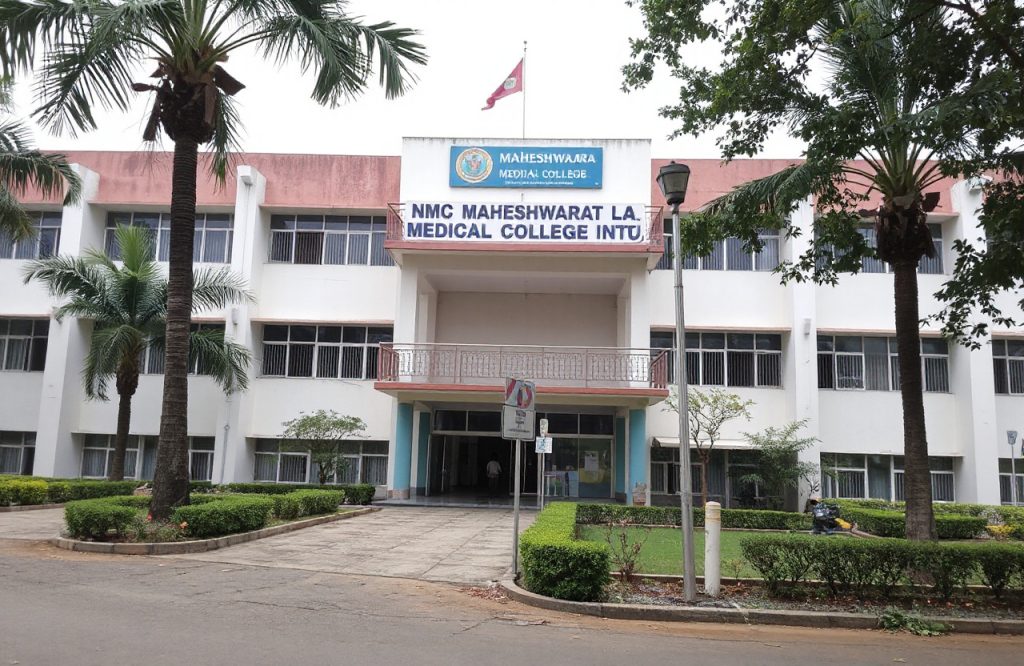
Telangana High Court Dismisses Maheshwara Medical College Plea
Overview of the Case
The Telangana High Court has dismissed a petition filed by Maheshwara Medical College, which contested the decision made by the National Medical Commission (NMC) and its Medical Assessment and Rating Board (MARB). The NMC had limited the increase of postgraduate seats for the academic year 2025-26.
Court’s Ruling
Justice Nagesh Bheemapaka, presiding over the Single Bench, stated that the concerns regarding infrastructure, faculty strength, and clinical material are matters that fall under the jurisdiction of expert statutory authorities. He emphasized that judicial intervention is only justified in cases where there is clear mala fide intent, a breach of natural justice, or a jurisdictional error.
The court noted, “Matters relating to adequacy of infrastructure, faculty and clinical material fell within the domain of expert statutory bodies, and courts could not sit in appeal over such technical determinations unless there was mala fide, patent perversity, violation of natural justice or jurisdictional error.”
Claims by Maheshwara Medical College
In its plea, Maheshwara Medical College argued that it met the necessary criteria for 58 postgraduate seats based on its infrastructure and faculty strength. However, the college claimed that the NMC initially approved only 12 seats and later allowed only a limited increase, leading to their challenge of the decision.
The college asserted that the decision was arbitrary and claimed eligibility for full postgraduate seat approval. They also contended that deficiencies cited by the regulators, such as inflated data and low figures regarding death rates and IVP, were based on factual inaccuracies.
High Court’s Observations
The High Court remarked that a show-cause notice had been issued, allowing the college an opportunity to respond. Furthermore, the court highlighted that the institution had exercised its statutory remedies by filing an initial appeal with the NMC and a subsequent appeal to the Central Government.
Finding no substantial grounds for interference, the High Court concluded that the principles of natural justice were upheld and that the college did not suffer any prejudice. Consequently, the writ petition was dismissed.
Context on NMC Regulations
In January 2024, the PG Board of the NMC published the final Post-Graduate Minimum Standard Requirements (PGMSR-2023), which set the criteria for medical institutions across the nation to offer postgraduate medical courses. The NMC stated that all medical institutes initiating postgraduate courses must adhere to the conditions related to physical infrastructure, teaching personnel, clinical material, and hospital facilities as detailed in the MSR document.
Subsequently, in August 2024, the NMC released the PGMSR-2024, which introduced a new MSR document outlining minimum requirements for medical institutes offering both undergraduate and postgraduate courses. This document specifies requirements regarding faculty strength, bed occupancy, clinical material workload, and other essential criteria for different specializations.
In January 2025, the NMC clarified that the PGMSR-2024 should be interpreted as a Revised PGMSR-2023 (modified as of August 23, 2024) in accordance with the Post-Graduate Medical Education Regulations, 2023, to ensure clarity and avoid misinterpretation.