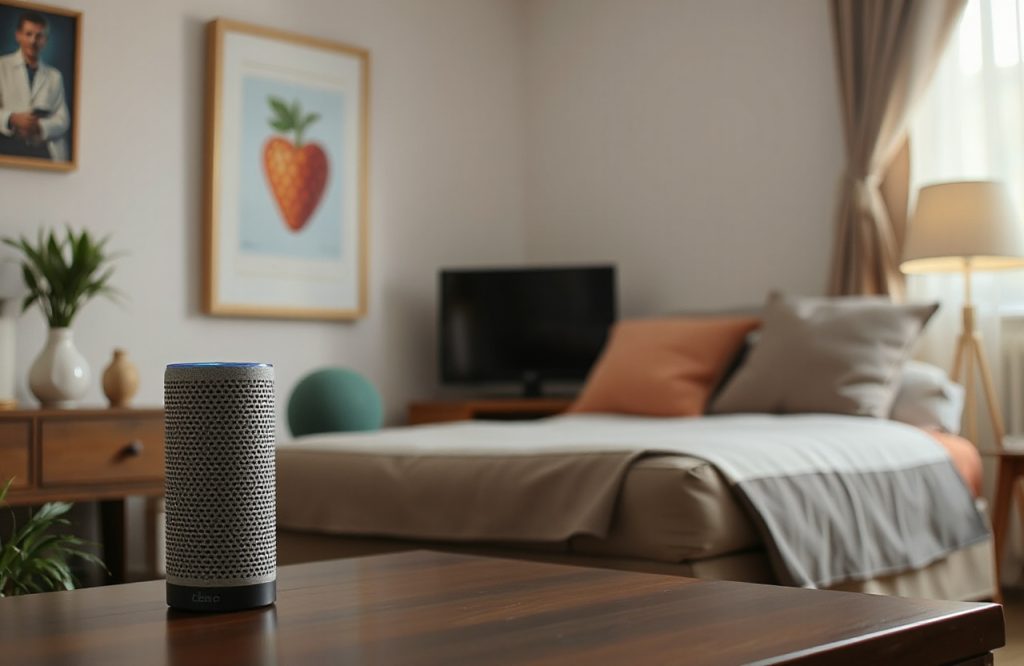
Innovative Study on Cardiac Arrest Detection Using Smart Devices
Introduction
A recent study explores the potential of smartphones and smart speakers in detecting cardiac arrests at home. With smart devices projected to be present in approximately 75% of U.S. households by 2020, researchers from the University of Washington are investigating how these technologies could save lives during emergencies.
Cardiac Arrest Statistics
Cardiac arrests that occur outside of hospitals lead to nearly 300,000 fatalities annually in North America. Alarmingly, two-thirds of these incidents happen at home. This highlights the urgent need for effective detection methods.
Research Focus: Agonal Breathing
The researchers concentrated on ‘agonal breathing’, a gasping respiratory pattern that occurs when blood flow to the brain diminishes. This type of breathing is reported in nearly 50% of cardiac arrest cases.
Methodology
To conduct their study, the team analyzed agonal breathing sounds recorded from 911 calls between 2009 and 2017. They then tested various smartphones and smart speakers, including Alexa, iPhone 5s, and Samsung Galaxy S4, to capture these sounds in a controlled bedroom environment.
The researchers simulated different distances to assess how the sounds would be picked up if the patient was located in various positions within the room. Additionally, they introduced common household noises, such as pets and traffic, to ensure accurate detection. To refine their algorithm, they also created a ‘negative dataset’ with recordings of typical sleep sounds, like snoring and sleep apnea, to avoid misidentification.
Results of the Study
Published in npj Digital Medicine, the study found that smart speakers were able to detect agonal breathing with an accuracy of 97% from distances of up to 20 feet.
Future Directions
The researchers emphasize that further testing is necessary to validate the algorithm’s accuracy across a larger population. There are plans to commercialize this life-saving technology.
The algorithm could potentially be integrated into smart speakers or smartphones as a passive feature that operates while users sleep. The envisioned system would continuously monitor for agonal breathing, alerting nearby individuals to administer CPR, and automatically calling 911 if no one responds.
References
Justin Chan, Thomas Rea, Shyamnath Gollakota, & Jacob E. Sunshine. (2019). “Contactless cardiac arrest detection using smart devices” npj Digital Medicine volume 2, Article number: 52. Available at: https://www.nature.com/articles/s41746-019-0128-7
Press release: ‘Alexa, monitor my heart’: Researchers develop first contactless cardiac arrest AI system for smart speakers. Available at: https://www.eurekalert.org/pub_releases/2019-06/uow-rdf061319.php
Photo credit: Sarah McQuate/University of Washington