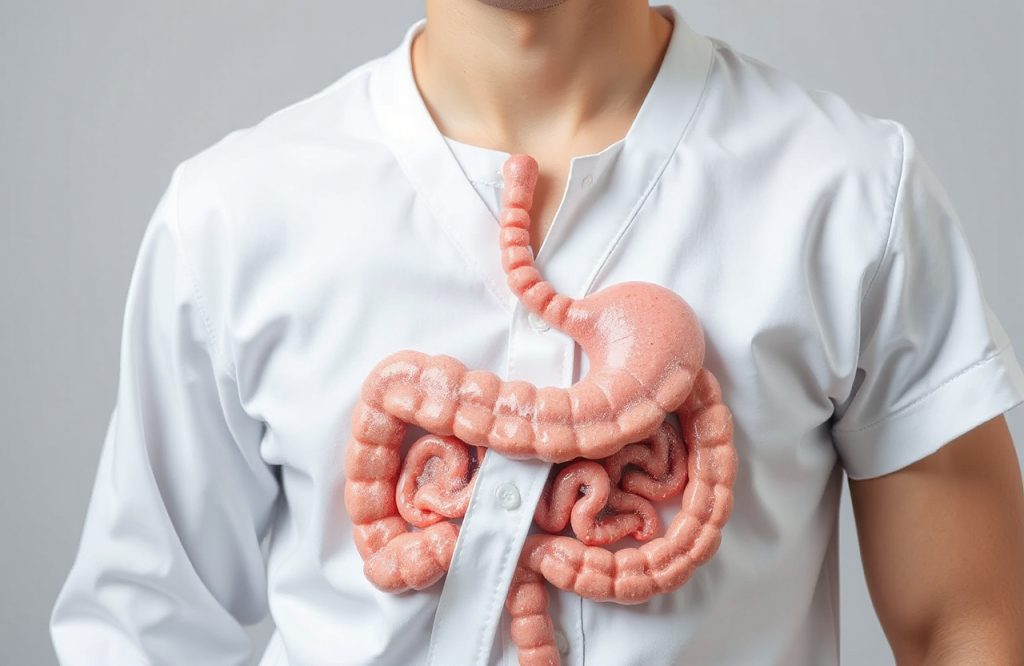
Impact of Artificial Sweeteners on Gut Bacteria
Study Overview
A recent investigation explored the effects of common artificial sweeteners on two bacteria present in the human gut. The study revealed that consuming the equivalent of two cans of diet soda significantly enhanced the pathogenicity of these bacteria on human gut cells. The findings were published in the International Journal of Molecular Sciences, focusing on Escherichia coli (E. coli) and Enterococcus faecalis (E. faecalis), both of which are native to the human gut from birth.
The Gut Microbiome and Its Importance
The human gut microbiome consists of over 100 trillion microorganisms, some of which are beneficial for health, while others can be harmful. Both E. coli and E. faecalis are essential components of a healthy gut microbiome.
Research Methodology
Researchers from Anglia Ruskin University in the U.K. investigated how E. coli and E. faecalis interact with gut lining cells when exposed to three artificial sweeteners: saccharin, sucralose, and aspartame. The experiments were conducted in vitro using bacterial cultures and a model of human gut cells known as Caco-2 cells.
Effects on Biofilm Production
The researchers assessed the impact of each sweetener on biofilm formation, which can enhance bacterial resistance to antimicrobial treatments and increase the likelihood of toxin release. When exposed to all three sweeteners, E. coli showed significant biofilm formation. In contrast, significant biofilm growth in E. faecalis was observed only with aspartame.
Bacterial Adhesion and Invasion
The adhesion and invasion capabilities of the bacteria were analyzed using the Caco-2 cell model. E. faecalis, in particular, has been known to penetrate the gut lining and potentially enter the bloodstream, leading to conditions such as sepsis. The study found that all three sweeteners notably increased bacterial adhesion, while aspartame and sucralose also significantly enhanced the invasive properties of both bacteria. Only E. faecalis exhibited increased invasiveness in response to saccharin.
Toxin Production Enhancement
The research also examined the substances released by the bacteria. E. coli exposed to saccharin and sucralose produced compounds that significantly decreased the viability of intestinal cells. Meanwhile, E. faecalis released substances that reduced cell viability when exposed to aspartame and sucralose.
Conclusions and Future Research
Prior studies have indicated that artificial sweeteners can alter the composition of gut bacteria. According to Dr. Hayoyi Chichger, a co-author of the study, “Our study is the first to show that some of the sweeteners most commonly found in food and drink – saccharin, sucralose, and aspartame – can make normal and ‘healthy’ gut bacteria become pathogenic.”
While artificial sweeteners have been effective for weight loss and managing type 2 diabetes, Dr. Chichger cautioned against reverting to high-calorie natural sweeteners like sucrose as a safer alternative. Further research is needed to understand the health risks associated with artificial sweeteners, enabling individuals to make informed choices about their use.
References
1. Green, J. (2021). Study shows potential dangers of sweeteners. EurekAlert! Accessed on July 1, 2021. Retrieved from https://www.eurekalert.org/pub_releases/2021-06/aru-ssp062321.php.
2. Shil, A. and H. Chichger. (2021). Artificial Sweeteners Negatively Regulate Pathogenic Characteristics of Two Model Gut Bacteria, E. coli and E. faecalis. International Journal of Molecular Sciences; 22(10): 5228. Doi: 10.3390/ijms22105228.
3. Ghoshal, U.C. et al. (2002). Strongyloides stercoralis infestation associated with septicemia due to intestinal transmural migration of bacteria. Journal of Gastroenterology and Hepatology; 17(12): 1331-1333. Doi: 10.1046/j.1440-1746.2002.02750.x.
4. Wells, C.L. et al. (1990). Evidence for the Translocation of Enterococcus faecalis across the Mouse Intestinal Tract. The Journal of Infectious Diseases; 162(1): 82-90. Doi: 10.1093/infdis/162.1.82.
5. Suez, J. et al. (2014). Artificial sweeteners induce glucose intolerance by altering the gut microbiota. Nature; 514: 181-186. Doi: 10.1038/nature13793.
6. Blackburn, G.L. et al. (1997). The effect of aspartame as part of a multidisciplinary weight-control program on short- and long-term control of body weight. The American Journal of Clinical Nutrition; 65(2): 409-418. Doi: 10.1093/ajcn/65.2.409.
7. Gardner, C. et al. (2012). Nonnutritive sweeteners: Current use and health perspectives: A scientific statement from the American Heart Association and the American Diabetes Association. Diabetes Care; 35: 1798–1808.