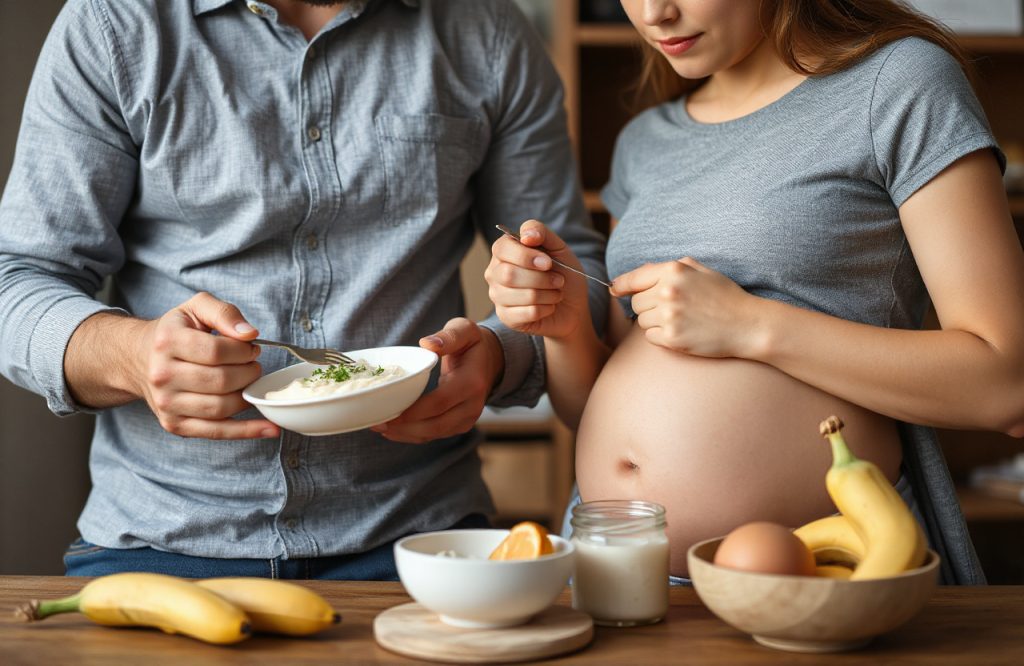
Impact of Father’s Diet on Children’s Health
Research Overview
A recent study explored the potential effects of a father’s unhealthy eating habits on the health of their children. Evidence indicates that healthy, fertile men possess higher-quality sperm compared to those with poor eating habits, obesity, smoking, excessive drinking, and type 2 diabetes. However, while there is ample information available for mothers regarding diet and conception, the same cannot be said for fathers.
Significance of Male Reproductive Health
Male reproductive health plays a crucial role in ensuring a healthy pregnancy. During conception, men contribute not only half of the genetic material but also vital factors that support a successful pregnancy. Seminal plasma, a component of seminal fluid, acts as a protective medium for sperm as they travel through the female reproductive tract and influences pregnancy outcomes. Therefore, the health of the father is a key consideration in reproductive health.
Link Between Father’s Health and Child Development
While it is well-established that a mother’s diet during pregnancy impacts a child’s development, the question remains: does a father’s health at conception affect the child’s development and long-term disease risk? A study conducted in the United Kingdom sought to address this gap by examining the long-term effects of a father’s eating habits on his offspring.
Study Methodology
Researchers from the University of Nottingham developed a mouse model to investigate the effects of a poor-quality diet on sperm quality, fetal development, and the overall health of adult offspring. Male mice were divided into two groups, with one group receiving a normal diet and the other a low-protein diet. The results were published in the Proceedings of the National Academy of Sciences (PNAS).
Key Findings
The study revealed that male mice on a low-protein diet produced sperm with fewer chemical modifications in their DNA, which are essential for gene expression. Additionally, seminal fluid from these mice showed a reduced ability to suppress inflammatory and immunological responses in the mother’s womb, crucial for a healthy pregnancy. The offspring of these mice were more likely to be obese or overweight and exhibited a decreased expression of genes involved in fat metabolism, alongside symptoms resembling type 2 diabetes.
Although this study utilized an animal model, researchers believe the implications extend to humans, suggesting that both the embryo’s development environment and the father’s genetic contribution are significant.
Need for Educational Resources
In conclusion, the study highlights the importance of a father’s diet on the development and long-term health of their children, shedding light on the mechanisms behind these effects. It underscores the necessity for improved educational resources addressing diet, unhealthy eating habits, and lifestyle choices for prospective fathers.
References
Watkins AJ, Dias I, Tsuro H, et al. Paternal diet programs offspring health through sperm- and seminal plasma-specific pathways in mice. Proc Natl Acad Sci. August 2018. http://www.pnas.org/content/early/2018/08/21/1806333115.abstract.
Father’s diet could affect the long-term health of his offspring. EurekAlert! Science News website https://www.eurekalert.org/pub_releases/2018-08/uon-fdc082918.php. Accessed September 14, 2018.