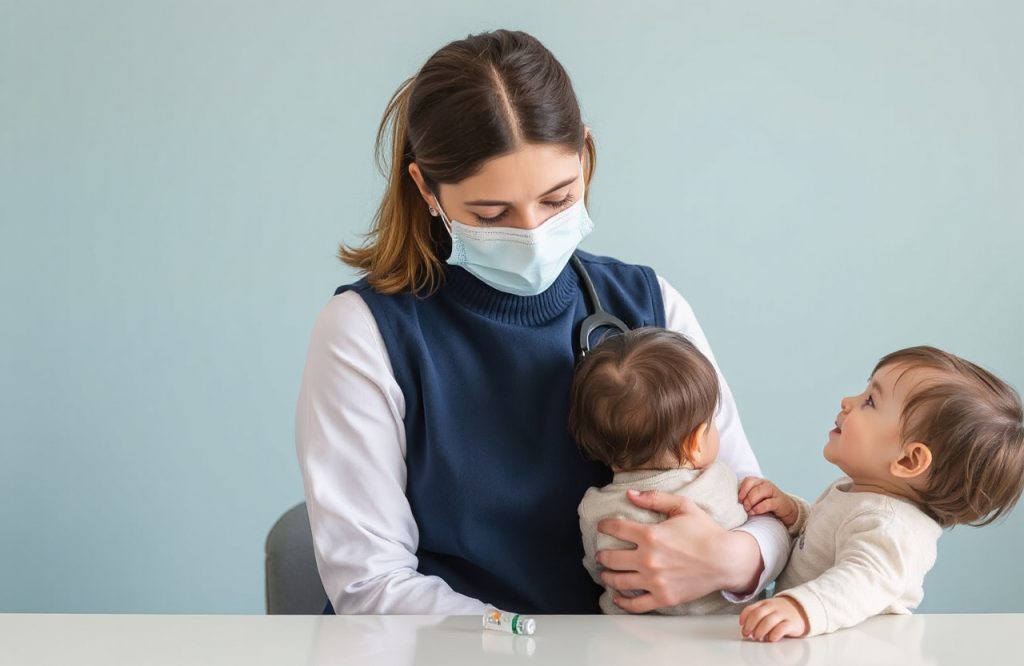
Impact of Maternal Antibodies on Infant Immune Response to Vaccination
Study Overview
A recent study has revealed that maternal antibodies present in an infant’s serum, transferred through the placenta during the third trimester, may diminish the infant’s immune response to vaccinations given after birth. The research also indicated that the timing of the first vaccination plays a significant role, with older infants demonstrating a stronger immune response.
Significance of Immunization
Immunization against infectious diseases such as smallpox, polio, diphtheria, pertussis, measles, and tetanus is recognized as one of the most effective public health measures in history. However, the recommended vaccination schedules differ across various regions, particularly concerning the age at which infants receive their first vaccine.
Safety of Vaccines During Pregnancy
Inactivated vaccines, including those for tetanus, diphtheria, pertussis, polio, and hepatitis B, are deemed safe for use during pregnancy. This maternal immunization can elevate antibody levels in the mother, potentially impacting the infant’s immune response to subsequent vaccinations.
Research Findings
Despite existing studies that indicate maternally acquired antibodies can lower vaccine response in infants, there remains limited data on the degree of this reduction, the specific vaccines affected, and the contributing factors. This recent analysis combined serological data from 32 randomized clinical trials, encompassing 7,630 infants across 17 countries.
Study Demographics
The enrolled infants, averaging 9 weeks of age and comprising 51.2% boys, were vaccinated according to one of four schedules: 6, 10, and 14 weeks; 2, 3, and 4 months; 2, 4, and 6 months; or 3, 4, and 5 months. Researchers measured antibody levels to specific vaccine antigens before vaccination, one month following the primary vaccine dose, prior to booster doses, and one month after receiving boosters.
Effects of Maternal Antibodies
The study found that infants with preexisting maternal antibodies exhibited a reduced response to the priming dose for 20 out of 21 vaccine antigens tested, which included key vaccines for polio, pertussis, diphtheria, tetanus, hepatitis B, pneumococci, meningococci, and Haemophilus influenzae. The only exception was the serotype 7F pneumococcal polysaccharide. Notably, the inactivated polio vaccine showed the most significant reduction, with higher maternal antibody levels correlating with a 20-28% decrease in post-vaccination antibody levels.
Influence of Conjugate Vaccines
For conjugate vaccines, such as PCV7 and PCV10, the presence of maternal antibodies against diphtheria and tetanus was found to decrease the infant’s immune response to corresponding pneumococcal antigens.
Age at First Vaccination
The study highlighted that for every additional month added to an infant’s age at the first immunization, post-vaccination antibody levels increased by 10-71% for 18 of the 21 antigens evaluated. The most significant increase of 71% was noted for antibodies against the type b polysaccharide capsule of Haemophilus influenzae.
Link Between Antibody Levels and Booster Vaccination
Lower antibody levels before booster doses at 12-24 months were associated with pre-existing maternal antibodies for 16 vaccine antigens. Additionally, decreased antibody levels prior to booster vaccinations were linked to the infant’s age at the initial vaccination. Following booster doses, lower antibody levels were still connected to maternal antibodies for diphtheria, pertussis, polio, and several pneumococcal serotypes, while older infants showed enhanced antibody levels for 9 of the 21 antigens studied.
Implications of Delaying Vaccination
Antibody levels in infants decline within days to months. As such, postponing the first immunization could mitigate maternal antibody interference. For pertussis, delaying the first immunization by 2.2-5.04 weeks could counteract 2-5 fold higher maternal antibody levels from prenatal immunization. Similar adjustments for diphtheria and tetanus showed potential benefits by delaying the first immunization by 2.6-5.9 and 1.7-3.9 weeks, respectively.
Conclusion
These findings underscore the critical importance of timing in the first immunization to optimize vaccine-induced immunity in young children. This has significant implications for developing both prenatal and infant vaccination schedules. Countries with established prenatal immunization programs may find that strategically delaying the first postnatal vaccination can enhance the protective effects of maternal antibodies while ensuring robust immunity through subsequent vaccinations as maternal antibodies wane.
Written By: Usha B. Nair, Ph.D. Add to Flipboard Magazine.