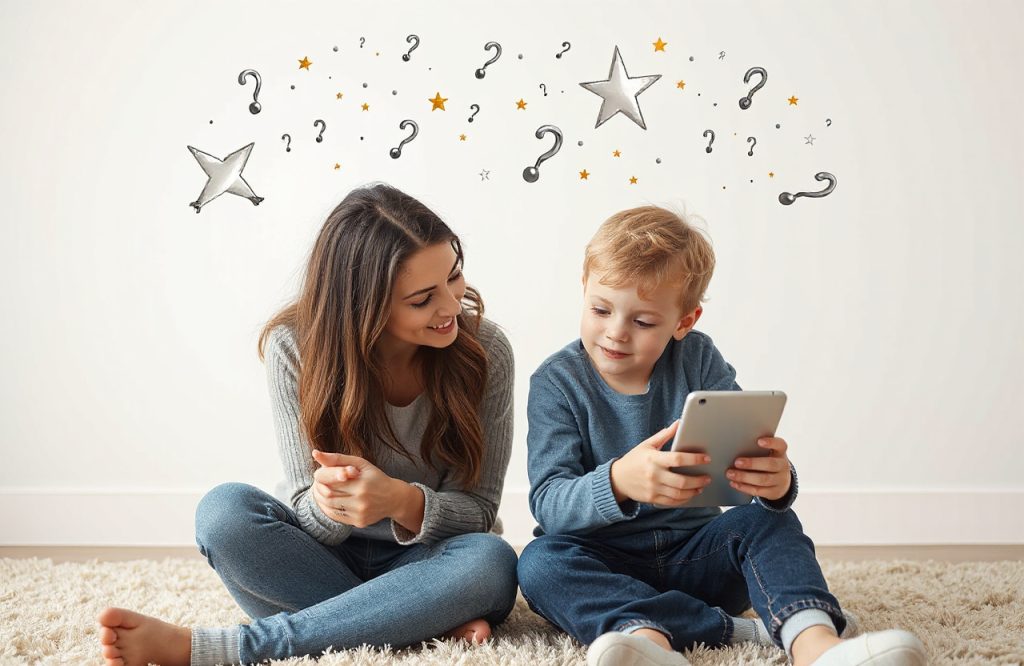
Cambridge Study Explores Mother-Baby Bond Through Play
The Significance of Play in Child Development
Cambridge neuroscientists have uncovered that the bond formed between mothers and babies through play extends beyond emotional connections; it plays a crucial role in shaping how babies learn. The researchers assert that the brain waves of parents and children synchronize during play, highlighting an intriguing aspect of social interaction.
The Role of Social Interaction in Learning
Humans are inherently social creatures, with most of our experiences revolving around interactions with others. Learning often occurs through these social exchanges. While extensive research has been conducted on individual brain activity related to learning and attention, studies examining the interaction of brain activity between two individuals in a social context are scarce. Recent research from the UK has shed light on how a parent’s brain activity interacts with that of their child.
Understanding Brain Activity Through EEG
The study utilized electroencephalograms (EEGs) to monitor brain activity, revealing specific wave patterns associated with cognitive processes. Infants exhibit theta waves during prolonged instances of attention and social engagement. The research led by Dr. Sam Wass and colleagues aimed to investigate how neural activity in social relationships impacts learning and attention, specifically questioning whether brain activity synchronizes during play. Their findings were published in the journal PLOS Biology.
Methodology of the Study
Researchers assessed one-year-old infants and their mothers in two distinct scenarios: playing together and playing separately. Data were gathered from 20 pairs during joint play and 22 pairs during solo play. The participants were predominantly well-educated Caucasian families from Cambridge. In the joint play scenario, the pairs interacted with a toy together, while a 40-centimeter barrier separated them during solo play.
Analyzing Brain Activity and Attention
To measure visual attention, the researchers recorded video footage at a rate of 30 frames per second while simultaneously conducting EEG measurements. The analysis followed a three-step approach. First, it examined the relationship between individual EEG readings and attention levels for both joint and solo play. Second, it compared the parents’ EEG activity with the children’s visual attention in both contexts. Lastly, it evaluated EEG changes based on individual visual focus.
Findings on Brain Synchronization During Play
When an infant concentrates on an object, theta waves are present, and an increase in these waves correlates with the infant’s attention span. Interestingly, the increase in theta wave power was less pronounced during joint play with the mother. The researchers discovered that heightened brain activity in mothers resulted in increased attentiveness in their children. Notably, the intrinsic factors of the child had a diminished impact on their brain activity while engaging with their mothers.
Implications of Synchronization on Learning
This study marks the first instance of demonstrating that parental interactions during play lead to brain synchronization between mothers and their children. The findings suggest that children exhibit longer attention spans when their mothers respond to their focus. According to Dr. Wass, “Our findings suggested that, when a baby pays attention to things, the adult’s brain tracks and responds to her infant’s looking behavior—as if her infant’s actions are echoed in the parent’s brain activity.”
The Influence of Mothers on Learning
The research underscores the significance of mother-child bonding in terms of neural activity, highlighting that parents are intricately connected to their children’s cognitive processes. Mothers’ brain responses can influence their child’s attention and learning. Interestingly, the study indicated that while children showed increased attentiveness with their mothers, they had less control over their own brain activity during these interactions. However, it is important to note that this study involved a limited, literate, affluent demographic, which may not represent the broader population.
Future Research Directions
Further studies are needed to explore whether similar patterns exist in father-child relationships and to investigate other aspects of social interactions that may enhance learning and interpersonal connections.
References
Wass SV, Noreika V, Georgieva S, Clackson K, Brightman L, Nutbrown R, et al. (2018) Parental neural responsivity to infants’ visual attention: How mature brains influence immature brains during social interaction. PLoS Biol 16(12): e2006328. https://doi.org/10.1371/journal.pbio.2006328
Parents’ brain activity ‘echoes’ their infant’s brain activity when they play together [Internet]. EurekAlert! 2019. Available from: https://www.eurekalert.org/pub_releases/2018-12/p-pba120518.php