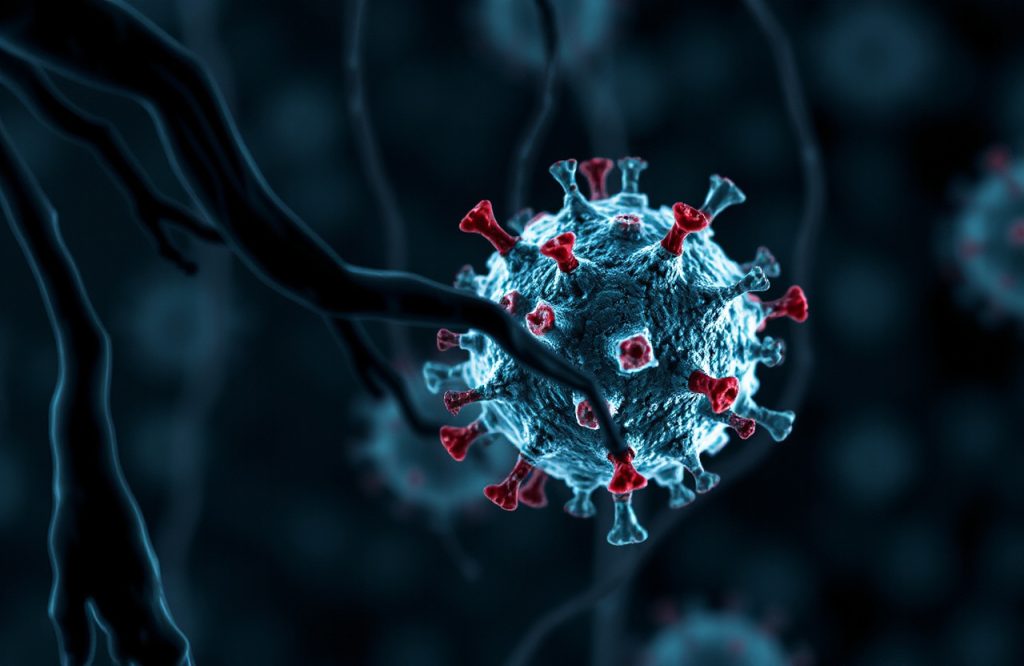
Human Herpes Virus Subtype HHV-6A Linked to Multiple Sclerosis Risk
Understanding Multiple Sclerosis
Multiple sclerosis (MS) is an autoimmune condition where the immune system mistakenly attacks the protective sheath surrounding neurons in the central nervous system. This damage disrupts the transmission of information throughout the body. While researchers continue to explore the precise causes of MS, a recent study suggests that human herpes virus subtype HHV-6A may be a contributing factor.
Research Findings from Karolinska Institutet
A team of researchers at the Karolinska Institutet in Sweden has made significant strides in identifying potential risk factors for multiple sclerosis. Their study, published in *Frontiers in Immunology*, involved serological tests on two groups: patients diagnosed with multiple sclerosis and a pre-MS cohort of individuals experiencing relapsing-remitting MS, characterized by flare-ups followed by periods of remission.
Previous research hinted at a connection between human herpesvirus (HHV) and multiple sclerosis; however, distinguishing between the two subtypes, HHV-6A and HHV-6B, had posed challenges. The Swedish researchers utilized a novel testing method capable of differentiating the antibodies associated with each subtype.
Methodology of the Study
The researchers measured IgG antibody levels in patient serum, targeting the proteins IE1A and IE1B, which correspond to HHV-6A and HHV-6B, respectively. IgG antibodies are crucial components of the immune response, helping to fend off bacterial and viral infections.
Key Associations Found
The study revealed a notable correlation between elevated IE1A antibody responses and the presence of multiple sclerosis. Specifically, individuals in the pre-MS cohort with heightened IE1A responses were more likely to develop progressive forms of MS later in life. Interestingly, those under 20 years old displaying a high response to IE1A were approximately three times more likely to progress to these forms of the disease.
Additionally, the researchers explored potential interactions between HHV-6A, HHV-6B, and other herpesviruses like Epstein-Barr virus (EBV) and cytomegalovirus (CMV). They discovered a significant additive effect between IE1A and EBV concerning MS risk.
Implications of the Findings
Crucially, the elevated IE1A responses were also detected in samples collected prior to the onset of progressive MS, indicating that these antibody levels may be indicative of disease risk rather than merely a result of the disease itself. This suggests that variations in antibody levels might precede clinical symptoms of multiple sclerosis.
If HHV-6A is indeed implicated in the development of MS, the study’s age-related findings indicate that early exposure to HHV-6A may play a pivotal role in triggering the disease later in life.
Conclusion and Future Research Directions
These findings contribute to the understanding that multiple sclerosis is likely influenced by a combination of genetic and environmental factors, which may weaken the immune system and facilitate the onset of autoimmune conditions. The study highlights the previously unclear role of HHV-6A in the etiology of MS. However, the specific causal mechanisms linking HHV-6A to multiple sclerosis remain to be elucidated and warrant further investigation.
Continued research into the risk factors associated with multiple sclerosis is essential for enhancing our understanding of this complex and debilitating disease, ultimately aiming to reduce the risk of its onset.
References
Engdahl, E., Gustafsson, R., Huang, J., Biström, M., Lima Bomfim, I., & Stridh, P. et al. (2019). Increased Serological Response Against Human Herpesvirus 6A Is Associated With Risk for Multiple Sclerosis. *Frontiers In Immunology*, 10. doi: 10.3389/fimmu.2019.02715
Blood Test: Immunoglobulins (IgA, IgG, IgM) (for Parents) – Nemours KidsHealth. (2019). Retrieved 30 November 2019, from https://kidshealth.org/en/parents/test-immunoglobulins.html
MS linked to variant of common herpes virus through new method. (2019). Retrieved 30 November 2019, from https://www.eurekalert.org/pub_releases/2019-11/ki-mlt112519.php
Relapsing-remitting MS (RRMS). (2019). Retrieved 30 November 2019, from https://www.nationalmssociety.org/What-is-MS/Types-of-MS/Relapsing-remitting-MS
What is MS?. (2019). Retrieved 30 November 2019, from https://mssociety.ca/about-ms/what-is-ms