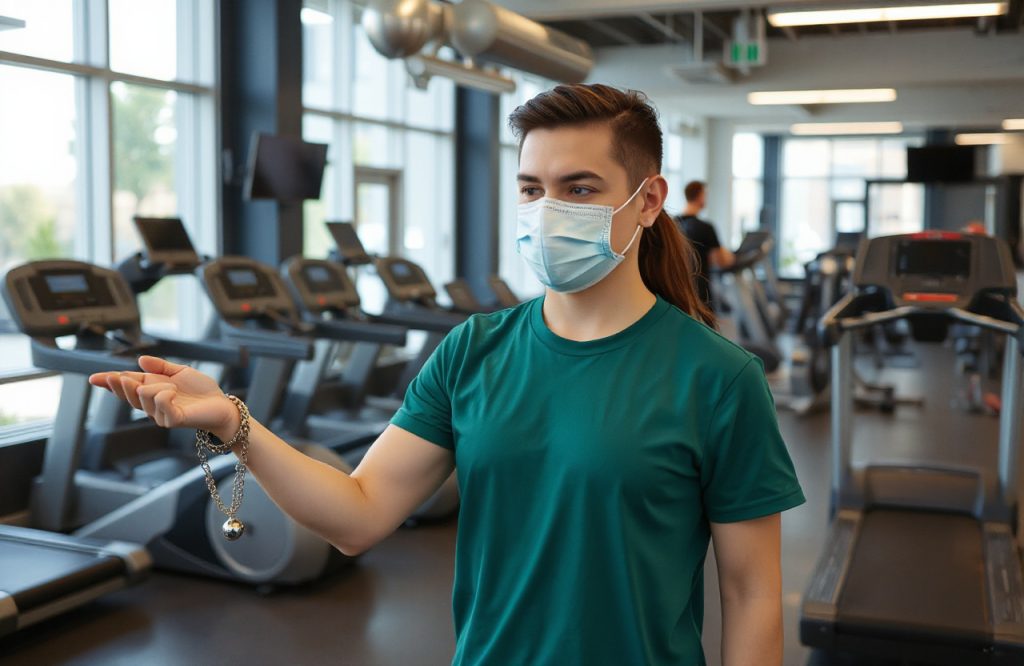
Investigating Indoor Air Quality in Fitness Centers
Overview of Air Pollution and Health Risks
A recent review conducted by researchers explores the connection between air quality and human health in fitness centers. According to the World Health Organization (WHO), air pollution was responsible for one in eight deaths globally as reported in 2012. In environments where physical activity levels are high, such as fitness centers, individuals may inhale significant amounts of pollutants due to increased air intake. Furthermore, intense exercise often leads to mouth breathing, which bypasses the nasal cavity’s particle-filtering function and heightens associated health risks.
Research Methodology
To address these concerns, researchers Andrade and Dominski examined the indoor air quality of fitness centers by systematically reviewing existing studies on the subject. Their findings were published in the Journal of Environmental Management. The researchers conducted searches in online libraries that index health, sports, and environmental science journals from their inception until April 13, 2017. They utilized keywords such as “air pollution,” “air pollutants,” “air quality,” “physical exercise,” “physical activity,” and “sport,” while limiting their search to articles in English focused on indoor air quality in fitness centers.
Data Analysis and Findings
From their search, the researchers identified 34 articles that met their inclusion criteria. While some studies addressed gymnasiums and fitness centers, a significant number focused on indoor ice skating and hockey rinks in the United States and Canada. The pollutants most frequently studied included carbon monoxide, particulate matter, and nitrogen oxide. Notably, nine out of twelve studies indicated that indoor fitness centers exhibited higher concentrations of certain pollutants compared to outdoor environments.
Two studies explored interventions aimed at improving indoor air quality, and seven studies established that pollutant concentrations were influenced by both the number of occupants and the intensity of physical activity. Additionally, seven of the 34 studies assessed the impact of indoor air pollution on human health.
Conclusions and Future Research Directions
The review highlights a trend where previous research predominantly focused on ice skating rinks, while more recent studies target gymnasiums and fitness centers. Although most evaluated pollutants remained within established guideline limits, certain studies indicated negative health effects. Given the increased potential exposure to pollutants in environments designed for physical exercise, a more comprehensive assessment of pollution’s impact in these settings is warranted. Further research is necessary to deepen the understanding of the relationship between air pollution and health outcomes.
Written by Asongna T. Folefoc
Reference: Andrade A, Dominski FH. Indoor air quality of environments used for physical exercise and sports practice: Systematic review. Journal of Environmental Management. 206 (2018) 577e586 https://doi.org/10.1016/j.jenvman.2017.11.001