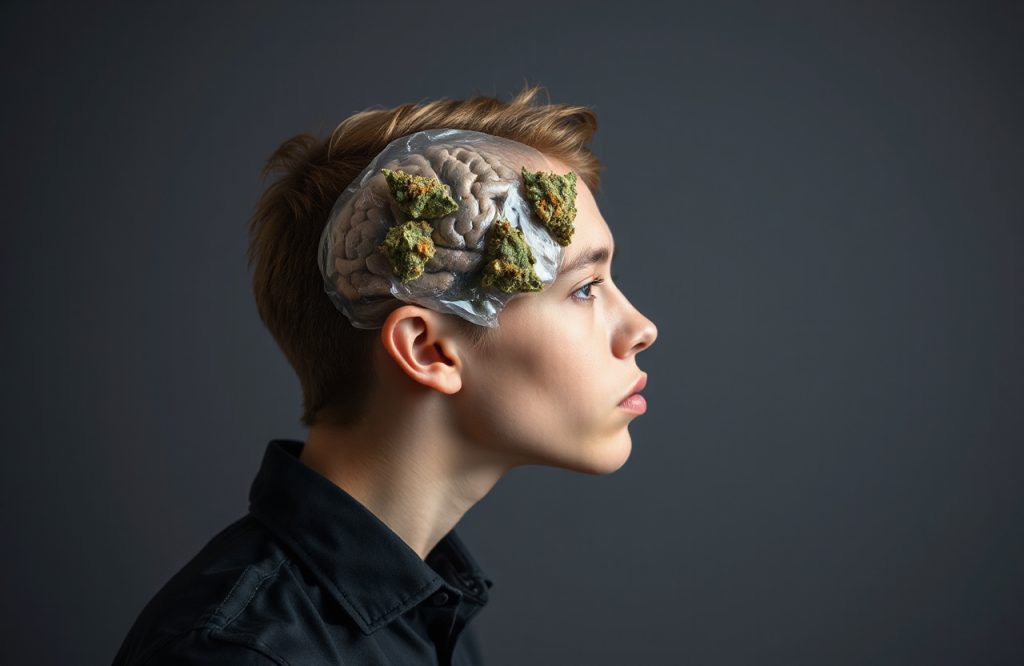
Study on Alcohol and Marijuana Use Impact on Teen Cognitive Functioning
Importance of Understanding Cannabis Effects
A recent study explored the connection between alcohol and marijuana use and the cognitive abilities of teenagers. With recent policy changes regarding marijuana, particularly its legalization in Canada, understanding the effects of cannabis on adolescent brains is increasingly crucial. Numerous studies conducted over the past few decades have addressed this topic, revealing that cannabis use may correlate with diminished functioning in learning, memory, attention, and working memory.
Alcohol Use and Cognitive Deficits
Similar to cannabis, alcohol consumption during adolescence is associated with poor verbal fluency, deficits in working memory, and impairments in executive functions and inhibitory behavior. Research indicates that certain brain regions, including the prefrontal cortex and hippocampus, may exhibit reduced volume due to substance use.
Current Research Overview
The current study, published in the American Journal of Psychiatry, examined the relationship between substance use and cognitive functioning in 3,826 Canadian adolescents from grades 7 to 10. The authors highlighted that “few studies have investigated the relationship between cognitive functions and substance use repeatedly over time; most studies simply test differences in cognition at one time point and again after a given follow-up interval.”
Methodology and Findings
The researchers aimed to assess the effects of alcohol and marijuana on the teenage brain at various time intervals, comparing changes in substance use behavior with cognitive impairments. The findings indicated that cannabis use predicted cognitive impairments in working memory, perceptual reasoning, inhibition, and recall memory. Notably, an increase in cannabis use was linked to a decline in performance on inhibitory tasks a year later, suggesting that marijuana users may be at higher risk for further substance abuse.
Comparative Impact of Alcohol and Cannabis
While alcohol use also predicted cognitive impairments, cannabis had a significantly stronger effect on the cognitive functioning of teenagers. One aspect, working memory, was found to be related to substance use in general, rather than to any specific substance.
Long-Term Effects of Substance Use
Although some cognitive effects were temporary, others, particularly deficits in inhibitory control and working memory, were found to be long-lasting. The researchers noted that while the effects on working memory were marginal, the deficits in inhibition were substantial.
Implications for Youth Protection
Given these findings and the increasing availability of marijuana, it is vital to protect children and teenagers from its adverse effects. Further research using similar methodologies is necessary to explore strategies for shielding youth from these risks.
References
Morin, J. G., Afzali, M. H., Bourque, J., Stewart, S. H., Séguin, J. R., O’Leary-Barrett, M., & Conrod, P. J. (2018). A Population-Based Analysis of the Relationship Between Substance Use and Adolescent Cognitive Development. American Journal of Psychiatry. doi:10.1176/appi.ajp.2018.18020202
Teen cannabis use is not without risk to cognitive development. (2018). Retrieved October 23, 2018, from https://www.eurekalert.org/pub_releases/2018-10/uom-tcu100118.php