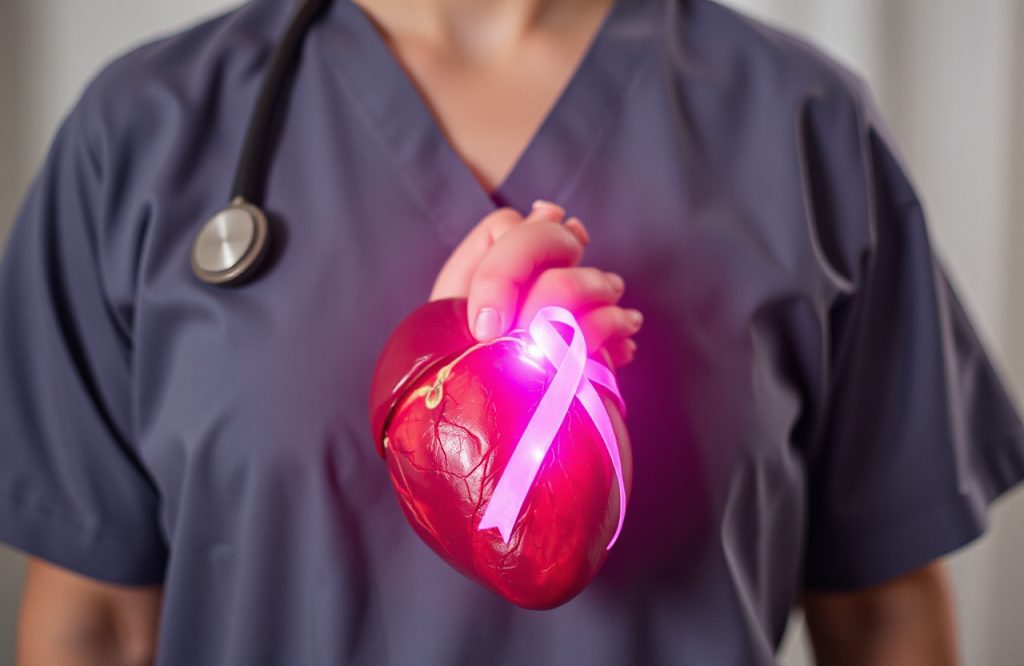
Impact of Chemotherapy on Heart Function in Breast Cancer Patients
Overview of Cardiovascular Complications
A recent study published in Circulation has examined the mechanisms that lead to adverse effects of chemotherapy on heart function in breast cancer patients. Cardiovascular complications rank as the primary cause of morbidity and mortality among cancer survivors. These complications, including reduced heart function, are believed to be partially attributable to anti-cancer therapies.
Trastuzumab and Heart Dysfunction
Trastuzumab, commonly known as Herceptin, is an effective treatment for breast cancer patients with the human epidermal growth factor receptor 2 (HER2) protein. However, it is associated with a high incidence of heart dysfunction in these patients. Therefore, it is crucial to investigate the potential negative cardiac effects of chemotherapy, along with the impact of other cancer medications on overall heart health.
Study Methodology
In the study, researchers utilized heart cells derived from stem cells of both healthy individuals and breast cancer patients to explore the mechanisms behind trastuzumab-induced heart dysfunction. They isolated and developed cardiac muscle cells from stem cells of three healthy participants and seven breast cancer patients.
Findings on Cell Functionality
The administration of trastuzumab resulted in reduced contraction strength in heart cells from breast cancer patients compared to those from healthy individuals. No significant differences were noted in cell death or the structure of components responsible for heart contraction. These findings align with clinical observations that HER2-positive breast cancer patients experience diminished heart contraction following trastuzumab treatment. The authors suggest that stem cell-derived heart cells from breast cancer patients can serve as a valuable model for studying chemotherapy’s effects on cardiac cells.
Metformin’s Role in Mitigating Heart Dysfunction
Further investigations revealed that trastuzumab interferes with how cells utilize energy. Additional experiments demonstrated that metformin, an FDA-approved medication for type 2 diabetes, enhanced the contractile strength of trastuzumab-weakened cells and improved glucose uptake. This suggests that boosting the cells’ energy absorption could strengthen their contractile force.
Potential for Clinical Applications
The authors of the study believe their findings offer new insights into how trastuzumab induces cardiac toxicity in breast cancer patients. They propose that metformin could be an effective approach to counteracting chemotherapy’s harmful effects on heart health.
Future Research Directions
Looking ahead, the researchers intend to conduct a prospective study involving breast cancer patients undergoing treatment with trastuzumab. This study aims to assess whether patients who also take metformin for diabetes experience fewer cardiac side effects compared to those who do not. If successful, this research could enable clinicians to isolate cardiac cells from breast cancer patients treated with trastuzumab and evaluate their risk of heart dysfunction. Furthermore, these cells could be used to determine whether patients would benefit from metformin or other medications to mitigate the heart toxicity associated with chemotherapy.
Reference
Kitani, T., Ong, S. G., Lam, C. K., Rhee, J. W., Zhang, J. Z., Oikonomopoulos, A., … & Witteles, R. M. (2019). Human Induced Pluripotent Stem Cell Model of Trastuzumab-Induced Cardiac Dysfunction in Breast Cancer Patients. Circulation.