School District’s Initiative for Healthier Lunch Options
Removal of Flavored Milk
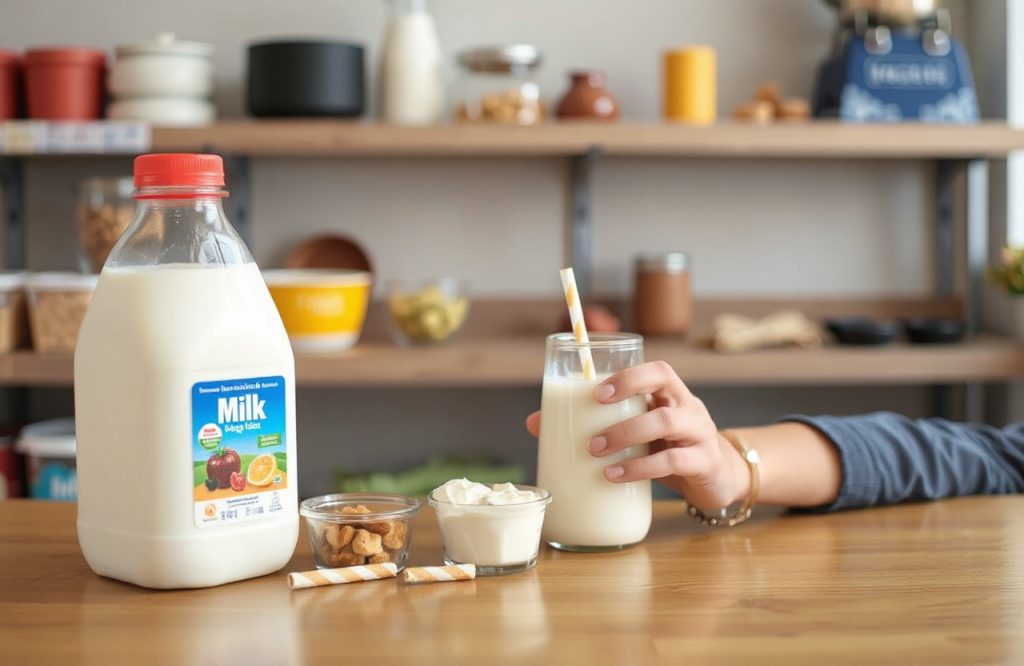
In an effort to enhance lunchtime nutrition, a school district has decided to eliminate flavored milk, which is known for its high sugar, sodium, and artificial flavor content. The goal is to assess whether this removal will lead to an increase or decrease in overall milk consumption among students. This initiative aligns with the objectives of America’s National School Lunch Program (NSLP), which aims to promote healthier meal choices for students.
Background of the Decision
The decision to remove flavored milk, including chocolate and strawberry varieties, was implemented in the 2010-2011 school year. It was replaced with healthier options such as 1% plain and non-fat milk.
Research Study Overview
A study published in the Journal of the Academy of Nutrition and Dietetics aimed to determine the impact of this change on milk consumption among students from kindergarten to eighth grade. Researchers collected data over two academic years, specifically 2010-2011 (Time 1) and 2012-2013 (Time 2), resulting in 40 days of observations. The study also analyzed a 100% fruit juice option offered at one school, yielding an additional 15 days of data.
Study Demographics
The research focused on students from two schools in an urban district in New England, predominantly comprising Black/African American and Latino/Hispanic populations. The study included a total of 13,883 observations, with many students qualifying for free lunches.
Research Hypotheses
Researchers tested four main hypotheses:
1. Whether the selection of plain milk would increase over two years.
2. Whether overall milk consumption would rise after two years.
3. Whether students would prefer 100% fruit juice over plain milk when both options were available.
4. Whether students would choose 1% or nonfat milk on days influenced by behavioral or economic factors.
Behavioral and Economic Influences
The study examined four behavioral and economic elements to encourage plain milk selection:
– Marketing plain milk through images of school administrators with milk mustaches.
– Positioning plain milk containers strategically in the lunch line.
– Offering small rewards for “lucky” milk cartons.
– Automatically including milk containers on lunch trays.
This hypothesis testing was conducted at a single school within the district.
Findings and Implications
The data provided valuable insights to school-district officials regarding the cost-benefit and food-waste implications of eliminating flavored milk. Results indicated that older students increasingly preferred 1% or nonfat milk over the two-year period. Additionally, boys consumed more plain milk than girls across various grade levels.
On days when fruit juice was offered, a higher number of students opted for it. However, the behavioral and economic strategies employed did not yield significant effects on milk choice.
Strengths and Limitations of the Study
The study is notable for its comprehensive approach, incorporating variables such as age, ethnicity, gender, and their effects on milk and fruit juice choices. The researchers provided valuable guidance for future studies that could further support their findings.
However, they acknowledged limitations, including the small number of participating schools and districts, which may influence the generalizability of the results to different populations. Additionally, they suggested that more frequent testing over an extended period might yield different outcomes.
Conclusion
For parents of children in the studied schools, the findings provide reassurance that their children are making healthier milk consumption choices during lunchtime.
Written by Susan Mercer Hinrichs, MA, MBA, CPhT
Reference: Schwartz MB, Henderson KE, Read M, et al. Acceptance of Plain Milk Increases Significantly 2 Years after Flavored Milk is Removed from School Cafeterias: An Observational Study. Journal of the Academy of Nutrition and Dietetics. DOI: http://dx.doi.org/10.1016/j.jand.2017.05.021